








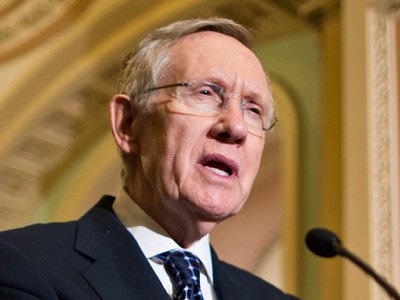
Senate leaders reached a tentative deal Thursday for modest changes to the filibuster rules, a blow to progressive lawmakers pushing for more dramatic reform.
Senate Majority Leader Harry Reid and Minority Leader Mitch McConnell presented details of the package with their respective parties. If the deal garners enough support, the Senate is expected to approve it later in the day.
Filibusters serve as stalling tactics by the minority party to bottleneck or kill a piece of legislation. But in recent years, Republicans have used the tactic, which was once reserved only for major legislation, to grind the Senate to virtual halt. (Check out this chart posted by msnbc analyst Ezra Klein to see how the use of the filibuster has skyrocketed lately.)
The new deal would cut down on the number of times opponents can filibuster and the length of debate on certain bills and nominations. But reformers say that although the tweak might speed up confirmations, it wouldn’t do nearly enough to end the GOP’s delaying tactics and get the Senate working properly again.
What remains the same: It will still take 60 votes from out of the 100 senators to stop a filibuster.
The announcement on the deal earned one giant slow clap from left-leaning groups who are disappointed in the lack of sweeping reform, and slammed the deal as a lost chance to fix the broken Senate.
Fix the Senate Now, a coalition of progressive organizations including the Sierra Club and the United Auto Workers, summed up the likely deal as “a missed opportunity to provide meaningful filibuster reform, while advancing some decent procedural improvements.” “While the provisions included in the likely agreement may help with streamlining certain nominations, potentially a significant step forward, the agreement avoids measures that would actually raise the costs of Senate obstruction,” the group said in a statement issued Thursday. “Neither the talking filibuster provision nor the shifting the burden provision is expected to be included in the final package.” Newer Democrats to the Senate, Jeff Merkley of Oregon and Tom Udall of New Mexico, backed by Elizabeth Warren of Massachusetts, led the charge for stricter limits in the use of filibusters. They wanted a package that would force the minority to use a “talking filibuster,” made famous by a breathless Jimmy Stewart in the movie Mr. Smith Goes Washington, instead of being able to silently object. In effect, this would make it more difficult to casually block legislation—a method that’s become routine among Republicans under the Obama administration. (See Affordable Care Act.) Reid initially backed the reform a few months ago. He wanted to ban the filibuster on “motions to proceed”—when the Senate tries to begin debate on a measure—and threatened to use the “nuclear option,” using a 51-vote majority to carry out the change. But he backed down after lobbying from a group of older senators who feared the consequences of dramatically changing the rules.
Sarah Muller Recommended


