








Laying out his stance on how to avoid the impending “fiscal cliff,” President Obama struck a confident note Friday, declaring he won’t back down on requiring the richest Americans to pay more in taxes. He cited his election win as proof that the American people are on his side.
“‘I’m open to compromise,” Obama said during an appearance in Washington. “But I refuse to accept any approach that isn’t balanced. I’m not going to ask students and seniors and middle-class families to pay down the entire deficit, while people like me, making over $250,000, aren’t asked to pay a dime more in taxes.”
And he added: “This was a central question in the election. It was debated over and over and over again. And on Tuesday night, we found out that a majority of Americans agree with my approach. So our job now is to get a majority in Congress to reflect the will of the American people.”
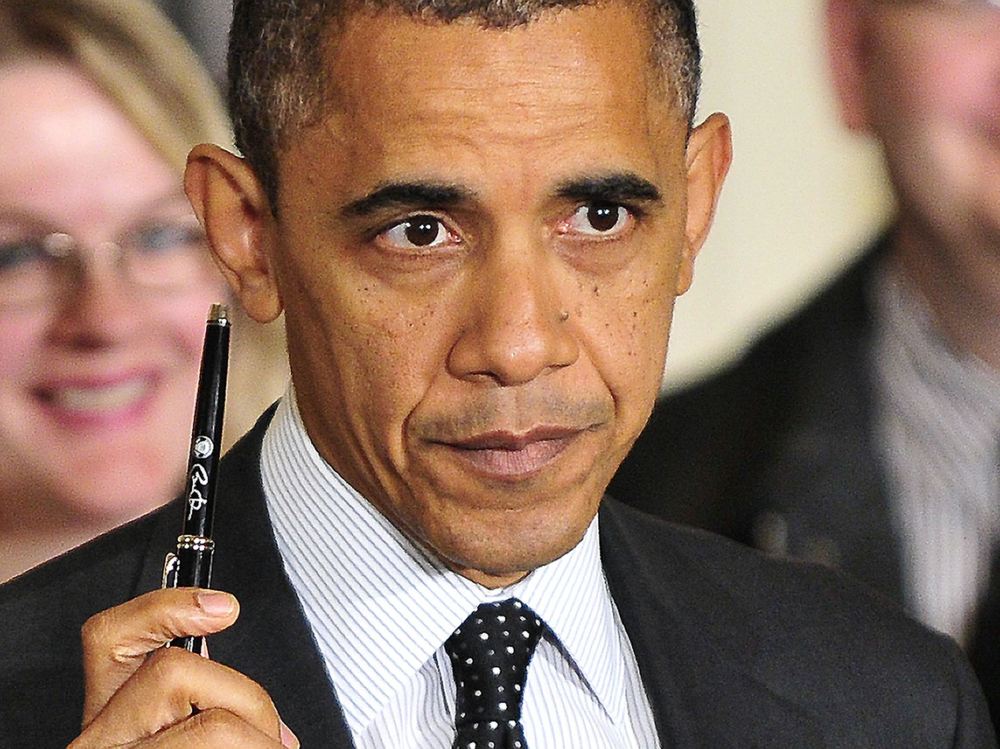
Obama also appeared to call Republicans’ bluff on the issue. Brandishing a pen, he said he was ready to sign a bill “right away” to extend the Bush tax cuts for the bottom 98%. Both parties have said they support doing that, but Republicans have in the past said they won’t do so unless the richest taxpayers also get a tax cut.
Obama was going directly at the key sticking point in negotiations between the parties. Democrats have largely insisted that the top tax rate must go up from 35% back to its Clinton-era level of 39.6%. But Republicans, while signaling an openness to raising more tax revenue by closing loopholes and deductions, have remained adamantly opposed to raising the top rate.
House Speaker John Boehner on Wednesday called for reducing tax rates. At a press conference held Friday before the president spoke, Boehner said raising rates would “destroy jobs,” and claimed his own mandate.
“There’s a Republican majority here in the House,” he said. “The American people re-elected a Republican majority.”
Despite Tuesday’s election results, early indications suggest Democrats may be more willing to compromise than Republicans. Sen. Chuck Schumer, a key Democratic negotiator, said Thursday he might be OK with leaving the top rate at 35% after all, as long as the loopholes that were closed affected the rich, not the middle class.
“If you kept them at 35, it’s still much harder to do,” Schumer told The New York Times, “but obviously there is push and pull, and there are going to be compromises.” Roberton Williams of the Tax Policy Center said it’s technically true that there’s a way to raise more than enough revenue to avert the fiscal cliff simply by eliminating loopholes and deductions. Indeed, the Simpson-Bowles commission found that getting rid of almost every loophole and deduction would let you *reduce* the top rate to 23%, while raising $1.1 trillion a year. But as you’d expect, the GOP appears no more willing to raise taxes on the rich by closing loopholes than to do so by boosting rates. Case in point: The current system of taxing capital gains at 15%, Williams said, represents a “huge tax break for the wealthy.” So switching to a system that instead treats capital gains as ordinary income would be an obvious part of the solution. But Republicans have shown no willingness whatsoever to consider such a move. Indeed, many GOP presidential candidates, including Mitt Romney, ran on a plan to lower the capital gains tax rate. And closing other loopholes, like the mortgage interest deduction for homeowners, would hurt middle-class families, not to mention the still-fragile housing sector, Williams said, so they’re likely non-starters. A CBO report released Thursday underlined the dire consequences of failing to come to a deal. It found that that the automatic spending cuts and tax hikes that are set to go into effect at the end of the year would throw the economy back into a recession, and cause unemployment to rise by more than a full percentage point.
Zachary Roth Recommended


