








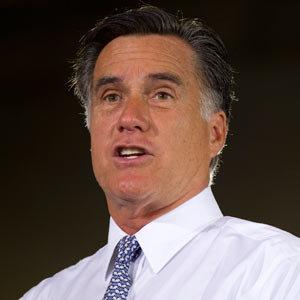
Mitt Romney wants us to learn the lesson of Wisconsin, which is apparently that it’s OK to defund teachers’ unions and rob them of their collective bargaining rights. Check, and check. Maybe it’s a good time, then, to talk about Romney’s answer to teachers’ unions: vouchers.
As his pro-voucher speech at the U.S. Chamber of Commerce suggests, Romney believes in a market-based approach to overhaul the country’s education system. In essence, Romney’s plan would give individual grants to K-12 students from a $25 billion federal fund, allowing parents to choose the best school for their child. “Parental choice will hold schools responsible for results,” Romney said, confident marketplace dynamics will force institutions to either improve or die. Moreover, these vouchers will work on any type of school — public, private, charter, or online.
It’s hard to doubt Romney’s sincerity when he proposes a plan like this. The man seems to have implicit faith in the power and good sense of free market economics. Indeed, he was a key figure in the mid-20th century revolutions that injected meritocracies into the heart of corporate America.
Voucher programs remain very controversial in the education field. Critics argue there’s not enough empirical data proving schools — more importantly, students — actually benefit from the competition. School districts that have experimented with vouchers have had mixed results. Romney cites the popular Washington D.C. voucher program, “The Opportunity Scholarship Program,” as a model for the country.
Meanwhile opponents often cite the 20-year-old “Milwaukee Parental Choice Program,” in which students using vouchers performed “similar or worse” than those in public schools, as a model for how the voucher system is flawed. One main argument: since private schools have the ability to reject applicants, they will inevitably choose only the best students to improve their standing, their “public report cards,” leaving slower students (and disabled students) behind. As a result, the schools could lose funding, further off-setting opportunities for all students. This much is clear: Romney wants the federal government to quit micromanaging our nation’s schools. He vowed to “expand parental choice in an unprecedented way” and “will hold schools responsible for results.”
Evan Puschak Recommended


