








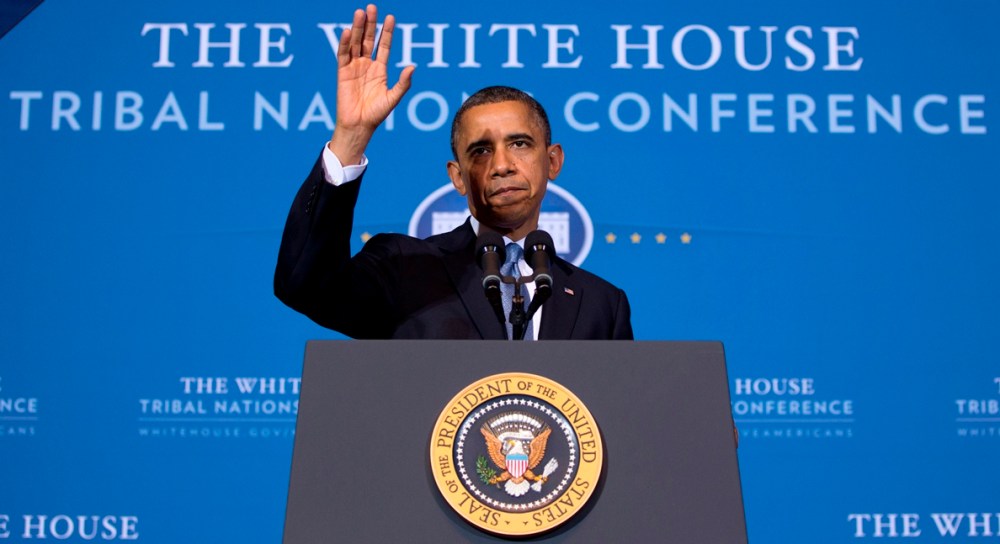
On the surface, the White House Tribal Nations Summit, the fourth such annual meeting designed to reach out to native Americans, was another success for President Obama.
For instance, remember when Toni Morrison called Bill Clinton the “first black president?” On Wednesday, President Obama was called the “first American Indian president.”
During his introduction, Swinomish Nation Chairman Brian Cladoosby joked, “Think about it for a second, the president loves basketball. He has an Indian name, he knows what it’s like to be poor, and he hasn’t forgotten where he came from. And his theme song is ‘Hail to the Chief.’ I think he definitely qualifies as the first American Indian president. Do I have a motion to that effect?”
The audience loved it. Cladoosby also said the president has “kept his promise,” holding the fourth consecutive White House Tribal Nations Conference.
Most major news organizations reported that during their meeting with the president, the leaders of the 566 federally recognized tribal nations mainly expressed concern about how devastating proposed Republican budget cuts could be. The Hill reports:
Cuts at the sequester level of 8.2 percent, or deeper, to investments in education, housing, roads, law enforcement, tribal courts, natural resources, energy development, job training, and health care will deal a devastating blow to already dire economic conditions in Indian Country.
But it turns out the “fiscal cliff” issue barely scratches the surface of political concerns for millions of Native Americans. While President Obama is being named an honorary tribal member, off camera, tribes are fighting the Obama administration sometimes for their basic civil rights.
Let’s start with the premise that in the recent series of meetings the president has held at the White House, from CEO’s to labor organizers to Latino and African-American leaders, the tribal leaders represent the poorest of these groups.
Forbes magazine reports America’s poorest 1% live on the country’s 310 Indian reservations. The Census Bureau reports the median income of American Indian and Alaska Native households is $35,062. That’s almost $15,000 less than the nation’s as a whole.
More than 28% of American Indians and Alaska Natives were living in poverty in 2010. Compare that to the poverty rate for the rest of the nation, which was 15.3%. And 29.2% of American Indians and Alaska Natives don’t have health insurance. The national average is 15.5%.
So headlines about tribal leaders expressing “concern” about the “fiscal cliff” would seem to be vast understatements. The tribal leaders are leaving the White House to return to communities in multi-generational poverty.
And what about the legal tension between so many of these tribal leaders and the Obama administration? The Associated Press reported last week that four tribes in the Dakotas finally reached a $100 million dollar settlement deal after years of legal wrangling with the federal government. The tribes claimed tribal money and trust lands had been mismanaged.
In April, the Justice Department under President Obama also agreed to pay more than $1 billion to dozens of tribes after allegations that the government mismanaged royalties for oil, gas, grazing, and timber rights on tribal lands. Further north, tribes are grappling with the federal government over disturbing child abuse allegations. The federal Bureau of Indian Affairs (BIA) claims it has handled more than 100 reports of suspected child abuse or neglect on the Spirit Lake reservation in North Dakota since it took over control of the tribe’s social services. That is 100 reports of child abuse and neglect since October. The Bureau is now placing some kids in foster care. But there’s a communication problem. Members of the tribe are picketing tribal headquarters, claiming the federal workers are withholding information about the child abuse cases. Meanwhile, the Obama administration is mediating a land dispute in Wetumpka, Ala. The Muscogee (Creek) Nation claims the Poarch Band of Creek Indians is desecrating ceremonial burial grounds. The Poarch are building a casino. The Kickapoo Tribe in Kansas is fighting a federal legal battle over its primary source of water. The Associated Press reports the tribe has been filing federal lawsuits since 2006 trying to reach a resolution. President Obama is asking tribal leaders to join in the larger discussion about the nation’s fiscal policy. Hopefully Wednesday’s summit is also the start of a larger discussion about the most pressing issues facing the country’s poorest citizens.
Jen Brockman Recommended


