








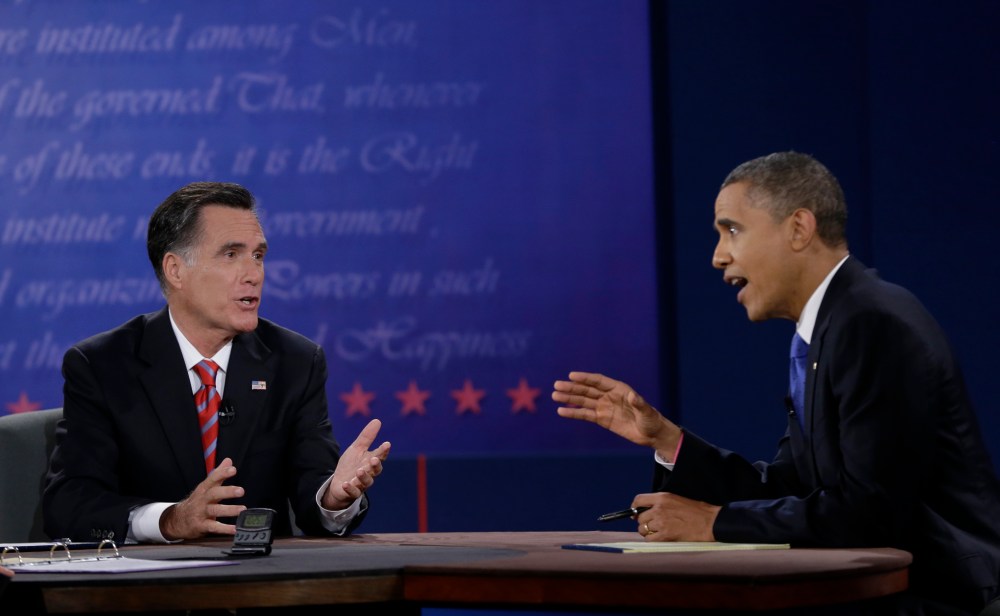
Moments before the final presidential debate began in Boca Raton, Florida, the pending debate already topped the chart of nationwide trends on Twitter.
Even with game seven of the National League Championship Series and Monday Night Football on television, the Twitterverse seemed to care more about the debate. At least, that’s what Romney supporters paid for you to believe.
#Can’tAfford4More began trending in the top spot, with the little purple arrow reading “promoted” hidden underneath the hashtag. Although it is unclear exactly who paid for the top spot, this is not an unusual tactic by the Romney Campaign or supporters.
The Republican National Committee paid $120,000 to purchase, #AreYouBetterOff as the top trending spot on Twitter during the first night of the Democratic National Convention in Charlotte. In addition, the RNC purchased the top promoted tweets that pop up first when you click the promoted hashtag, to avoid any negative backlash from instantly appearing.
This raises the question about the ability to buy a top spot on Twitter. According to Twitter’s own business page, you can “use promoted trends to drive conversation and interest about your brand or product by capturing a user’s attention on Twitter.”
Seemingly, by Twitter’s own definition this puts the Romney Campaign in the same entity as a brand or product. Talk about putting business into the aspect of campaigning.
With the Supreme Court ruling of the controversial case Citizen’s United v. The Federal Election Commission, concerns about the implications of big money have been raised since the very beginning of this election cycle.
Between Citizen’s United and extreme integration of social media, the 2012 cycle marks significant changes in the history of our presidential selection process. Although this social medium existed during the 2008 election, its widespread use has become much more apparent in this race for the White House.
Although the exact numbers are not calculated yet for last night’s debate, the financial impact of Twitter has been made clear. According to a study with Twitter and Compete, “political tweets drive a greater lift in visits to political donation pages (97 percent) than in overall visits to political sites (72 percent). This means Tweets don’t just drive Twitter users to political sites, Tweets drive people to these sites with a greater intent to donate.”
During the first presidential debate in Denver, over 10.3 million tweets were sent out between 9 p.m. and 10:30 p.m, according to Twitter’s advertising blog. The debate became the most tweeted about event in U.S. history. According to Twitter, “Leading up to November, election conversations will likely set even more records as politically active influencers turn to Twitter to discover and share real-time updates and news.”
The first debate seemed to mark a high point for Twitter use within the debate season, with 7.2 million tweets sent during the second presidential debate at Hofstra University. The vice presidential debate was far behind with only 3.5 million tweets. Last night’s foreign policy debate fell relatively short with 6.5 million tweets. During the final presidential debate at Lynn University in Boca Raton, FL, the Romney-sponsored tweet #CantAfford4More remained as the trending topic. Even at 1am, hours after the debate’s conclusion, the little purple promoted arrow remains at the top of the trending list. However, the hashtag “fewer horses and bayonets” was also trending, at 105,767 tweets per minute, according to Twitter. The hashtag stemmed from a comment by President Obama during the debate and was the most heavily tweeted topic during the debate. Ultimately, this hashtag would have won the top spot, had it not been purchased by Romney supporters. This seems to raise the question, is it better to pay to be number one on Twitter, or make it there on your own through your words and performance? This seems to be a microcosm for the differences between the two candidates and the current political climate. Money or words? Just check the Twitter trends.
Gena Wolfson Recommended


