








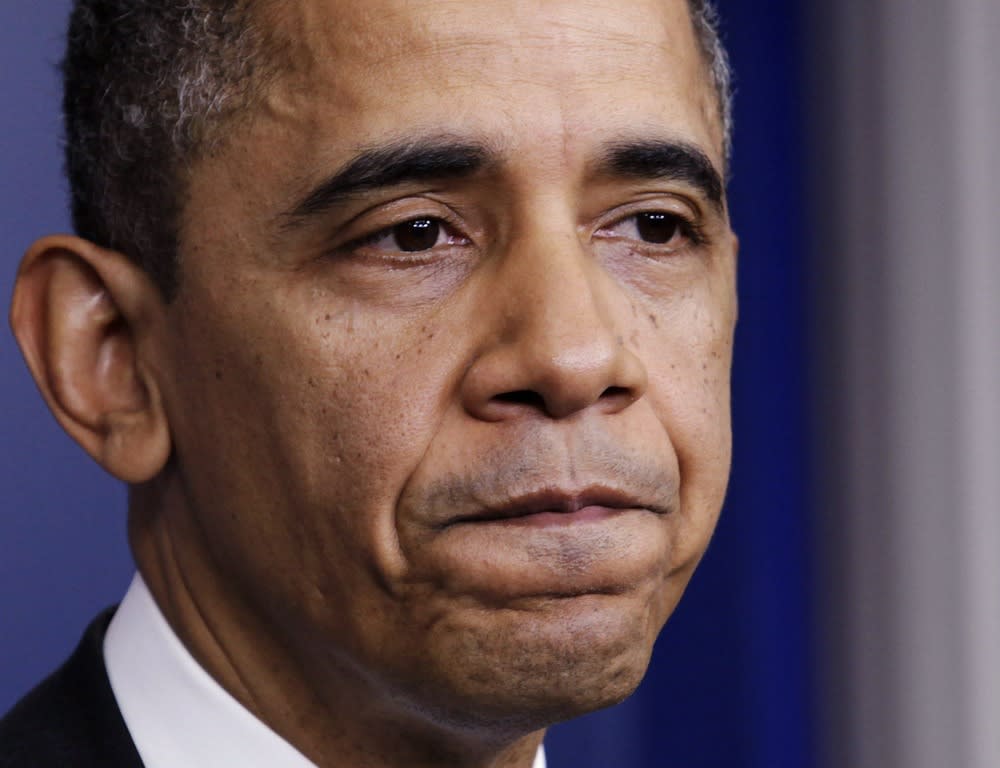
After aggressively campaigning to prevent benefit cuts from becoming part of any fiscal cliff deal, some of the country’s biggest unions are now declining to oppose a deal which includes reduced Social Security payments.
“Obviously we know that there are some changes to the cost of living adjustment under Social Security, and obviously that’s not our favorite part of this bill,” said Mary Kusler, the National Education Association’s director of government relations. However, she said, “we recognize that this is not a game where one side wins on everything.”
The cost of living adjustment Kusler refers to would be a result of a policy formula called “chained CPI,” originally proposed by the Republican Party but now included in the deal proposed by President Obama. CPI stands for Consumer Price Index, which is the measure currently used to calculate Social Security payments. A Chained CPI would reduce those payments.
“We would be talking about an enormous amount of money in the monthly incomes of seniors who are not, as a class, living it up,” said journalist David Cay Johnston on Tuesday’s The Ed Show.
Other labor leaders are also stopping short of attacking the president’s plan. AFL-CIO president Richard Trumka told The Huffington Post that Chained CPI is “bad policy,” but added, “I want to look at the whole deal before we make any decision” about whether to support or oppose it. His remarks echo those of liberal Democrats like House Minority Leader Nancy Pelosi, who said she’s “not thrilled” about Chained CPI, even as she denied that it could actually be considered a benefits cut.
Since the beginning of the fiscal cliff negotiations, when top labor leaders met privately with President Obama to discuss the matter, organized labor has waged a national campaign to prevent benefit cuts and force the expiration of the Bush tax cuts for the top 2%. NEA, AFSCME, and SEIU flew members into Washington, D.C. to lobby their representatives, ran numerous television and radio ad campaigns, and participated in a grassroots national day of action in opposition to entitlement cuts.
Though top Obama adviser David Plouffe hinted at the possibility of welfare cuts shortly after the election, representatives of the AFL-CIO and NEA told msnbc they were “optimistic” the president would hold firm.
“The NEA feels very strongly that the Obama administration is presenting a strong front and negotiating hard in favor of middle-class Americans and working families,” said Kusler at the time.
However, labor historian Nelson Lichtenstein was significantly less optimistic, telling msnbc, “I suspect that they’re going to have to eat some stuff, you know, like limits on Social Security, or some tinkering around entitlements programs.” Other progressive activist groups have taken a harsher line on the president’s proposed Social Security cut. “Washington politicians need to understand that the so-called chained-CPI is a cruel cut, falling hardest on the oldest of the old, those disabled at the youngest ages and the poorest of the poor,” said Nancy Altman, founding co-director of Social Security Works, in a statement. Social Security Works is the advocacy group behind the Strengthen Social Security campaign, whose steering committee includes such labor organizations as the AFL-CIO and AFSCME. President Obama’s proposed deal also lets the Bush tax cuts expire only on those making more than $400,000 per year—not $250,000, as he originally proposed. That concession was not ideal, said Kusler, but: “The important thing is that’s just on the rates. All the other tax changes in this are very much focused on the middle class.” When asked what concessions President Obama would have to make in order for the NEA to stop supporting his position, she replied, “There is no red line yet for us when we don’t even know what’s going to be part of the package.”
Ned Resnikoff is an urban policy analyst, researcher, writer, and editor. His byline has appeared in a variety of publications, including the New York Times, San Francisco Chronicle, Dissent, and The Nation. He writes the newsletter Public Comment, which can be found at publiccomment.blog. Recommended


