








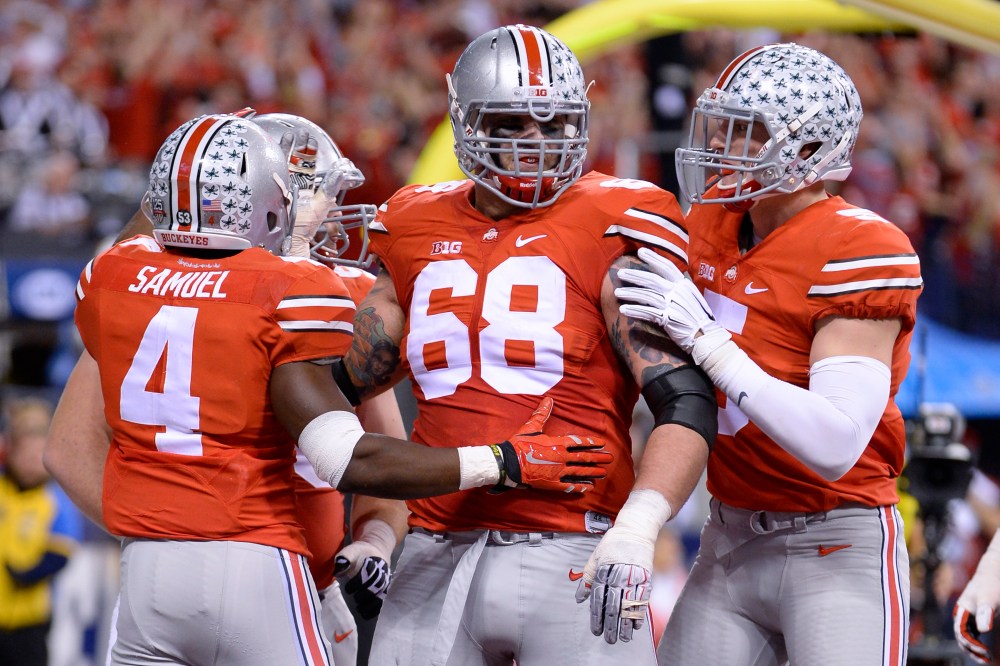
Lucas Oil Stadium in Indianapolis, Ind., stood still on Saturday evening for number 53. Adorned on each of the Ohio State University Buckeyes’ helmets was a small decal honoring their missing defensive tackle.
On Nov. 30, Kosta Karageorge was found dead from what appeared to be a self-inflicted gunshot wound. He disappeared the Wednesday before, sending a text message to his mother Susan Karageorge, reading: “if I am an embarrassment, but these concussions have my head all f—– up.”
Sophia Karageorge, his older sister, told The New York Times, “he had a pretty bad concussion last fall and he told me about differences in his behavior.” She added, “Just, like, confusion, disorientation, being unable to focus, mood swings — not feeling like himself, basically, not feeling quite right.”
Karageorge’s death once again raises serious questions about the NCAA and NFL’s regulations when it comes to concussions. Former NFL players made major waves this year with a lawsuit, alleging that the league had hidden the dangers of concussions from them.
During their annual meeting, the Big Ten Conference opted to take aggressive steps toward changing the way the teams handle concussions.
The Big Ten Council of Presidents/Chancellors “took another step toward improving athlete welfare” on Dec. 7, one day after the big game at Lucas Oil. According to a press release, conference regulations of concussion protocols will now include “reporting requirements, disciplinary action for non-compliance and a higher level of accountability for conference member institutions.”
The new policy also addresses in-game injuries. This particular aspect to the new policy comes after an incident earlier this season at the University of Michigan. The athletic department faced serious scrutiny for their mishandling of an injury to quarterback Shane Morris during the Sept. 27 loss to the University of Minnesota. Former head coach Brady Hoke and the training staff allowed Morris to return to the game shortly after being removed due to an on-field injury. Too often, players return to the field after suffering a head injury. Under the new terms, an independent, neutral athletic trainer will be present in “the replay booth with their own monitor and the ability to directly contact officials on the field.” This adds another layer of security for players safety during the game. The press release does not specify when the new protocols will be put into place. The Big Ten will be represented by Ohio State University in the inaugural NCAA playoffs, after their big win over the University of Wisconsin at Lucas Oil Stadium. This new action taken by the Big Ten shows promise. Such measures hope to prevent future injuries to their student athletes as the team, bearing the number 53 on their helmets, represents the conference taking action against concussions in the Sugar Bowl.
Gena Wolfson Recommended


