








Democrats are fired up after Wednesday’s Supreme Court ruling overturning the Defense of Marriage Act, and one of the first tests of whether they can use the issue to mobilize their base will be in two key governor’s races this November.
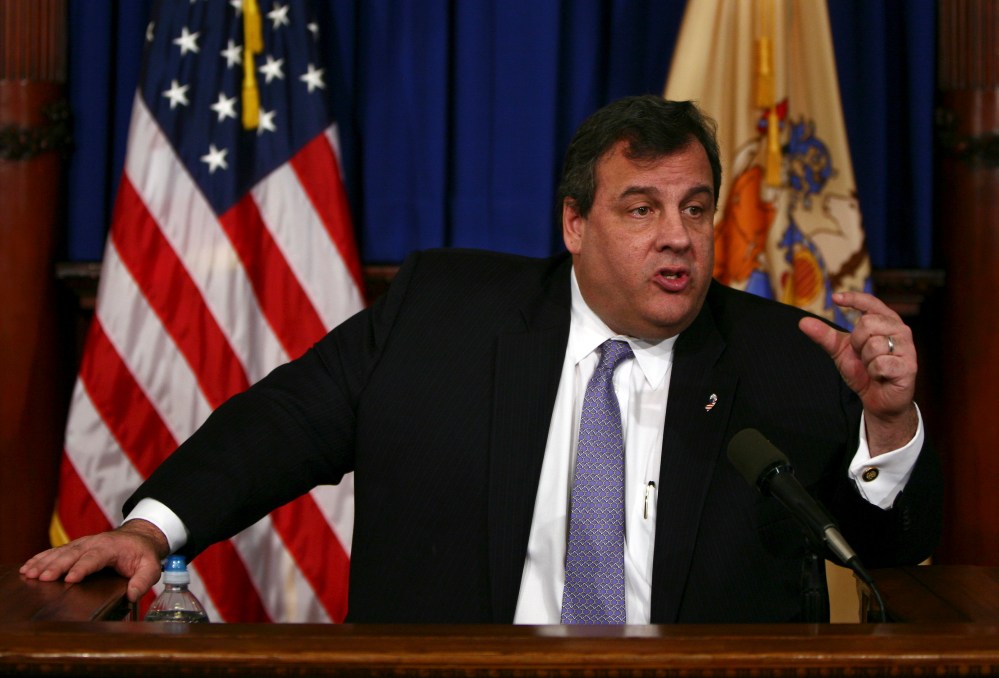
In New Jersey, Democrat Barbara Buono finds herself polling far behind popular Republican Gov. Chris Christie, but she’s seized on Christie’s opposition to gay marriage as a possible boost for her uphill campaign.
And in the much closer Virginia gubernatorial contest, Democrats have always pointed to GOP nominee Ken Cuccinelli’s conservative positions on social issues, but the ruling could be one way for them to get Democrats to go to the polls in an off-year contest where they’ve historically seen substantial drop off.
For Buono, the issue of gay marriage is personal. Her daughter, Tessa Bitterman, is openly gay, and wrote a fundraising email for her mother this week saying that “by failing to support marriage equality, Christie is blatantly delegitimizing an entire group of people.”
Christie vetoed a bill last year from the state legislature that would have legalized gay marriage, arguing instead the issue should be a ballot measure put before the public. A Catholic, Christie has said gay marriage goes against his religious beliefs, but that he supports civil unions.
But social issues haven’t dominated the Garden State contest, with Christie having cross-party appeal and his approval ratings still high after his rebuilding efforts post-Hurricane Sandy last year.
Buono hopes, though, that with gay marriage now back in the national conversation, voters will take a fresh look at the governor’s record on the issue. She told msnbc that Christie’s refusal to answer questions when asked about the Supreme Court decisions at a press conference on Wednesday showed he knows he’s on the wrong side of the state on this issue.
Christie later said during his monthly radio show Wednesday evening that the ruling was a “bad decision” and “another example of judicial supremacy rather than having the government run by the people we actually vote for.”
“For someone who prides himself on straight talking, he’s got a lot of difficulty explaining his opposition to marriage equality,” said Buono.
Christie, governor of a left-leaning state, has a difficult tightrope to walk. He may be the heavy favorite for re-election in the Garden State, but he seems to have an eye on higher office in 2016 and backing gay marriage wouldn’t play as well with a GOP primary crowd.
“Every decision he makes is calibrated very carefully to further his own political interests,” said Buono, who has also criticized Christie for choosing to hold an October special election rather than a concurrent November vote to fill the Senate seat of the late Frank Lautenberg.
According to a Rutgers-Eagleton poll earlier this month, two-thirds of New Jersey voters say they want the chance to vote on gay marriage, and 59% say they would support it.
Christie’s campaign didn’t respond to a request for comment.
Virginia voters already passed a gay marriage ban in 2006 with 57% of the vote, but as in much of the country, public opinion seems to have shifted since then. In a May Washington Post poll, 56% of Virginians said they support gay marriage, including a majority of independent voters.
In the spirited contest, Democrats have worked to paint Cuccinelli as out of step with the swing state’s voters on social issues. Cuccinelli has long been a vocal opponent of gay marriage, and he was one of two attorneys general to file an amicus brief on the California Proposition 8 case, arguing that gay marriage could lead to polygamy. In a statement, Cuccinelli’s campaign reiterated his opposition to the decision, and while the issue may be a tough sell with independent voters, it’s one that will continue to resonate with his conservative GOP base in the state that they need to turn out this November. “Ken Cuccinelli has always believed that marriage should be between a man and a woman,” said Cuccinelli campaign manager David Rexrode. “Going forward, he will continue to defend the will of the people of Virginia, an overwhelming majority of whom voted to protect the definition of traditional marriage under Virginia’s Constitution.” But Republicans also pointed out that McAuliffe said working to overturn the state’s ban, which would face an uphill battle in the state legislature, wouldn’t be among his top priorities. Rexrode said “trying to pin down” McAuliffe on gay marriage “is like trying to nail Jell-O to a wall.” “We just went through this process here seven years ago; it’s in the constitution,” McAuliffe told the Richmond Times-Dispatch in April. Still, while Cuccinelli and his allies have worked to make the tight race about the state’s economy and McAuliffe’s business record, Democrats know they have a wealth of statements to use against the GOP nominee and his ticket. In 2008, Cuccinelli said the “homosexual agenda” only brings “self-destruction, not only physically but of their soul.” And controversial GOP lieutenant governor nominee E.W. Jackson has called gays and lesbians “perverted’ and “sick.” Even though McAuliffe may not call for a repeal of the constitutional amendment, Democrats plan to point out that Cuccinelli’s positions could turn off swing voters and the business community, pointing to his urging of state colleges to end bans on sexual orientation discrimination. “I applaud the Supreme Court for their decision today because everyone should be treated equally. While I support marriage equality, I understand that this is an issue that Virginians of goodwill come down on both sides of,” McAuliffe said in a statement. “My opponent has spent his career putting up walls around Virginia and telling gay Virginians that they’re not welcome…We must make Virginia the best place in the world to live, work, and raise a family, and there is no place in our future for intolerance or discriminatory rhetoric.”
Jessica Taylor Recommended


