We all remember where we were the day that Hillary cried. At least I do. While those tears in a New Hampshire coffee shop did big things for her campaign at that point in the 2008 election, they also spurred much discussion on what it takes to be a viable female candidate running for office in modern times.
Krystal Ball, who once ran for office herself in her home state of Virginia, can attest to the complexities of being a female political candidate–someone who must be “both qualified and likeable” in order to win while male opponents often need to embody only one of those characteristics to win over a voter.
Celinda Lake, President of Lake Research, told The Cycle hosts that there is a strain of voter thought that reads: “I’ll vote for a man” versus “I’ll vote for a woman if she’s qualified.” Lake says that it’s a question of presentation. From the first moments of a campaign, women must communicate that they are qualified and able to lead. She points out that “voters believe that they can decide within 30 to 45 seconds whether a women is qualified or not.” That leaves very little time for a woman to define her public image.
But while conveying their qualifications is crucial, women must also remain likable in the eyes of voters. In 2012’s race for Massachusetts Senate, there was a lot of talk about the “politics of likability” and how, although Warren was qualified, she was not as liked–at least not in the beginning–as her male, Republican opponent Scott Brown. As the campaign went on, though, Brown himself–by attacking Warren personally–became less likable. Warren won. Lake notes that “people are perfectly willing to vote for a qualified man that they don’t like, but they won’t vote for a woman they don’t like.”
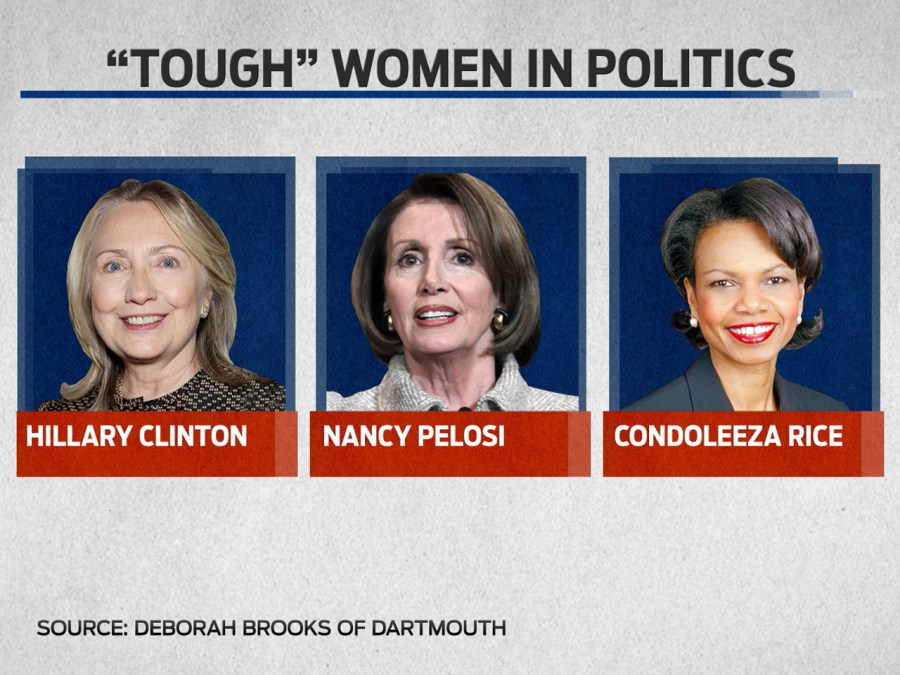
Voters also respond positively to women who are tough, contrary to the popular belief that Toure characterized as, “if [women] are not tough enough then they won’t get elected and if they’re too tough then they’re violating those gender norms and they won’t get elected.” Lake noted a difference between “strength and toughness.” “There are many ways that women can be strong. And voters are very comfortable with that. And actually, many of the things that make you seem strong and qualified also make you seem more likable. People have thought that these are two separate categories; actually, they’re highly correlated.” Whoever the candidate in 2016 (and we’ve all heard the Hillary rumors), the Lake studies seem to do more than prove what voters want from female candidates. They prove that when my mother used to tell me a woman must be all things, she was right.
Ali Vitali is MS NOW's senior congressional correspondent and the host of "Way Too Early." She is the author of "Electable: Why America Hasn’t Put a Woman in the White House … Yet." Recommended