The Rachel Maddow Show WEEKNIGHTS 9PM ETMorning Joe WEEKDAYS 6AM ETDeadline: White House with Nicolle Wallace Weekdays 4PM ETThe Beat with Ari Melber Weeknights 6PM ETThe Weeknight Weeknights 7PM ETAll in with Chris Hayes TUESDAY-FRIDAY 8PM ETThe Briefing with Jen Psaki TUESDAYS – FRIDAYS 9PM ETThe Last Word with Lawrence O’Donnel Weeknights 10PM ETThe 11th Hour with Stephanie Ruhle Weeknights 11PM ET
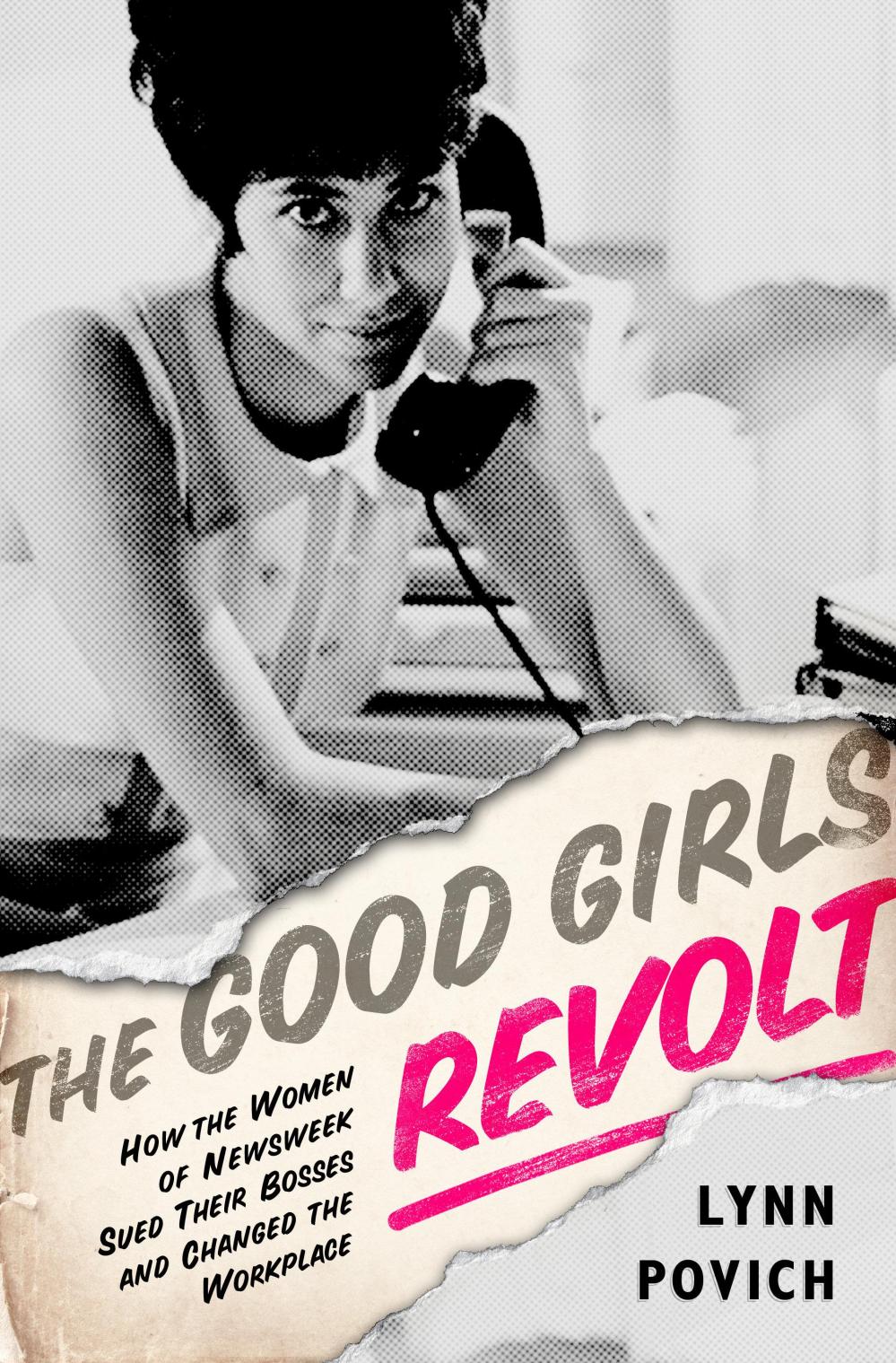
Lynn Povich, author of The Good Girls Revolt: How the Women of Newsweek Sued Their Bosses and Changed the Workplace, joins The Cycle today to discuss her book.
The Good Girls Revolt
By
The Cycle Staff
Lynn Povich, author of The Good Girls Revolt: How the Women of Newsweek Sued Their Bosses and Changed the Workplace, joins The Cycle today to discuss her book. Lynn recaps how along with 45 of her female colleagues they secretly banded together and filed a discrmination complaint, the same day as Newsweek, ran a cover story on the feminist movement. Her book is the story of how the women in the 40’s and 50’s stood up and demaned their rights. Lynn also explores the obstacles that still remain in the workplace for women.
Be sure to tune in at 3:40pm for the full conversation and check out an excerpt from her book below.
When Newsweek’s Editor-in-Chief, Osborn “Oz” Elliott, responded to our lawsuit that Monday in March, he released a statement that served only to confirm the institutional sexism of the magazine. “The fact that most researchers at Newsweek are women and that virtually all writers are men,” it said, “stems from a newsmagazine tradition going back almost fifty years.”
That was true—and most of us never questioned it. Although we held impressive degrees from top colleges, we were just happy to land a job—even a menial one—at an interesting place. Saying you worked at Newsweek was glamorous compared to most jobs available to college-educated women. Classified ads were still segregated by gender and the listings under
“Help Wanted—Female” were mainly for secretaries, nurses, and teachers or for training programs at banks and department stores such as Bloomingdale’s (that wouldn’t change until 1973, when the US Supreme Court ruled sex-segregated ads were illegal). But compared to jobs at newspapers, where women were reporters and editors—even if they were ghettoized in the “women’s pages”—the situation for women at the newsmagazines was uniquely injurious. We were confined to a category created especially for us and from which we rarely got promoted. Not only was research and fact-checking considered women’s work, but it was assumed that we didn’t have the talent or capability to go beyond it.
That infamous “tradition” began in 1923, when Henry Luce and Brit Hadden founded Time, The Weekly News-Magazine. Positioning their publication between the daily newspapers, which printed everything, and the weekly reviews, which were filled with lengthy commentary, these two young Yalies decided to create a conservative, compartmentalized digest of the week’s news that could be consumed in less than an hour. But although Time would give both sides of the issues, it would, they said in their prospective, clearly indicate “which side it believes to have the stronger position.” In the beginning, the magazine was written by a small group of their Ivy League friends, who distilled stories from newspapers and wrote them, echoing Hadden’s beloved Iliad, in a hyphenated news-speak (“fleetfooted Achilles”) and a backward-running sentence structure
(“Up to the White House portico rolled a borrowed automobile”). Time didn’t hire “stringer correspondents” until the 1930s, when the magazine decided to add original reporting.
But from the very beginning, the editorial staff included “girls” known as “checkers,” who verified names, dates, and facts. Thus was created a unique group-journalism model, which, unlike newspapers, separated all the editorial functions: the reporters sent in long, colorful files from the field; the writers compiled the information and wrote the story in the omniscient, Lucean Voice of God; and the researchers checked the facts. Only “lady assistants” were hired as fact checkers, which, according to Oz Elliott, who worked at Time for six and a half years, was a “liberating thing for young fledgling women out of college because they could get into publishing without being stenographers or secretaries.”
Years later, the honorific of “checker” was upgraded to “researcher.” At Time’s twentieth anniversary dinner in 1943, Luce explained that although “the word ‘researcher’ is now a nation-wide symbol of serious endeavor,” the title was originally conceived when he and Hadden were doing some “research” for a drinking club called the Yale Professors. “Little did we realize,” he said, “that in our private jest we were inaugurating a modern female priesthood, the veritable vestal virgins whom levitous writers cajole in vain, and managing editors learn humbly to appease.”
When Newsweek began in 1933, it copied Time’s “tradition” of separating editorial functions. But at Newsweek (which joined its name in 1937 when it merged with the weekly journal Today), women didn’t even start as researchers; we were hired two rungs below that—on the mail desk. At Time, office boys delivered the mail and relevant newspaper clippings. But at Newsweek only girls with college degrees—and we were called “girls” then—were hired to sort and deliver the mail, humbly pushing our carts from door to door in our ladylike frocks and proper high-heeled shoes. If we could manage that, we graduated to “clippers,” another female ghetto. Dressed in drab khaki smocks so that ink wouldn’t smudge our clothes, we sat at the clip desk, marked up newspapers, tore out relevant articles with razor-edged “rip sticks,” and routed the clips to the appropriate departments. “Being a clipper was a horrible job,” said writer and director Nora Ephron, who got a job at Newsweek after she graduated from Wellesley in 1962, “and to make matters worse, I was good at it.”
We were all good at it—that was our mind-set. We were willing to start at the bottom if it led to something better, and in most cases, it did: to the glorified position of researcher. Working side by side with the writers, we were now part of the news process, patrolling the AP and UPI telexes for breaking news, researching background material in the library, chatting with the guys about their stories, and on closing nights, factchecking the articles. The wires were clacking, the phones were ringing, and we were engaged in lively conversations about things that mattered. It was thrilling to feel the pulse of the news and to have that special pipeline to the truth that civilians couldn’t possibly have. “It was everything you wouldn’t think of growing up in Marion, Pennsylvania,” said Franny Heller Zorn, who still remembered the thrill of finding the first wire report about a breaking news event, in her case when Adlai Stevenson collapsed on a sidewalk in London and died later that day. “The guys were great, the women were terrific, and everyone was smart. It was a privilege to be part of the Newsweek culture and to have that job, even with all the crap we had to do.”