








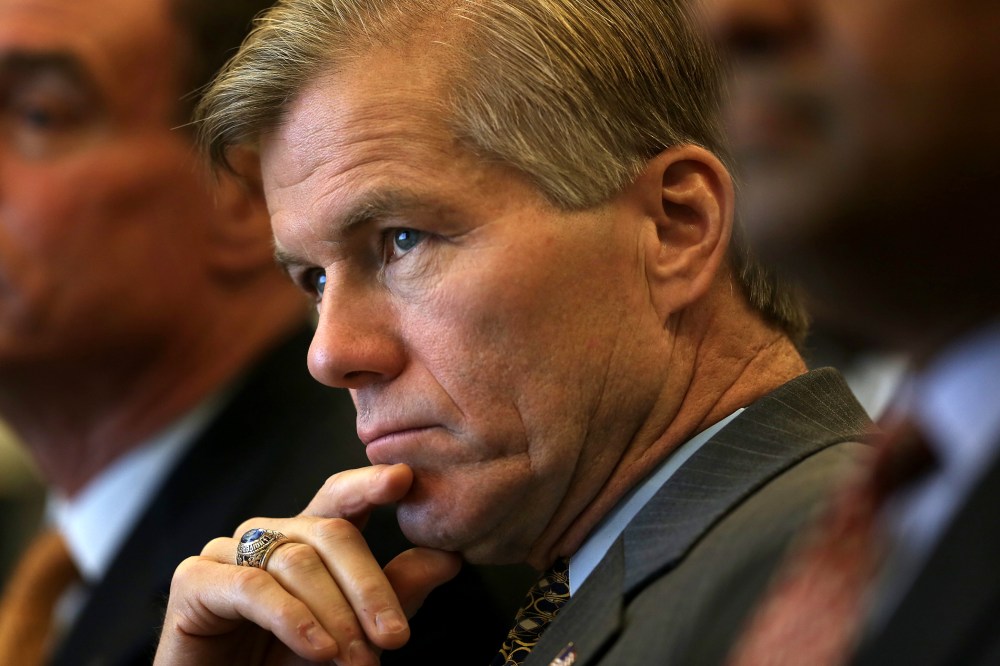
Oscar de la Renta gowns, Louis Vuitton shoes, a Rolex watch engraved “71st Governor of Virginia.” According to a federal indictment, these are just a few of the luxury goods former Virginia Governor Bob McDonnell and his wife Maureen were given by Star Scientific CEO Jonnie Williams. In return, it’s alleged, the McDonnell’s provided Williams with corporate promotion and access.
The McDonnells aren’t anomalies. They are the norm. After all, what, in terms of public impact, is the real difference between the McDonnells’ exchange of political goodies for money and the exchange of political goodies for money that every politician in the country engages in every day? Sure, the luxury items and personal loans that the McDonnells received (and returned) were directed to them rather than a campaign account. But while the designer labels and flashy cars makes their story particularly unseemly, in terms of abusing the public trust and in terms of policy impact, their actions were not substantively different than the operating level of corruption that is the very foundation of our current political system. We call it fundraising. What it really should be called is legal bribery.
If it shocks our conscience that Bob McDonnell gave access to the governor’s mansion in exchange for a few trinkets, why does it not shock our conscience that corporations and large donors buy this type of access every day? And let’s be honest, Lockheed Martin and JP Morgan are expecting a whole lot more in return for their investment than a prime spot at a health care summit or a party at the governor’s mansion. Huge government contracts, tax breaks, regulatory loopholes, and special access are all gained through the simple bauble of campaign contributions.
Politicians–if they’re feeling inclined to defend the legal bribery system–will argue that the campaign contributions they receive from donors aren’t any sort of quid pro quo. They will tell you that they believe what they believe and will vote based on the merits alone: “All this campaign cash is just because these folks like my ideas!” But make no mistake, whether it’s money into personal accounts or money into campaign coffers, money in politics is corrupting to the core because humans are made to reciprocate. It’s part of what makes society work.
Need proof? Just consider your last trip to Costco. (Trust me, I’m going somewhere with this.)
If you’re like me, an integral part of your Costco shopping experience is frantically snarfing the many samples that are cheerfully proffered. Meatballs, protein bars, whatever. Sometimes it’s good, sometimes it’s bad; it’s rarely necessary or on your shopping list, but more often than you normally would, you buy the purveyed object. That’s reciprocity at work.
We have evolved to be reciprocators. It’s literally in our DNA. For our forefathers, it was, “You helped me with the buffalo hunt last week, I’ll help you repair your winter fur blankets.” This tendency is so powerful that Sam Walton, Walmart founder, forbade his purchasing agents from accepting so much as a free napkin from vendors. He didn’t do this because he was stingy to his workers (that was just an added bonus) but because he knew the power of reciprocity. Even small acts of kindness can result in huge benefits.
Do something for me and I’ll do something for you. That’s not a bad part of our nature, it’s actually part of what makes us kind. So even if we assume the best intentions of politicians, assume that the quid pro quo is not their intent, the instinct to reciprocate will cloud their judgment just as it may have clouded the judgment of the McDonnells. Jonnie Williams exploited this character attribute. “Financially struggling? No problem, I can help! Traveling in an elite circle without the appropriate designer apparel? No problem, I can help.” And all he asked in return was friendship. Well, friendship, my friends, is everything. Which is how you can wake up one morning after taking in what you think of as a handful of baubles and some critical personal loans and find yourself facing a Federal indictment. None of this is to excuse the actions of the McDonnells. But as easy as it is to summon our moral outrage at Oscar de la Renta gowns for government goodies, let’s be real. If you design a system that rewards corruption, you are going to get corruption. So let’s use this moment to focus on the real crime being perpetrated on our democracy, the accepted practice of legal bribery via campaign contributions. The benefits of the government belong to the people, they are not the private prerogatives for politicians to give away in gestures of friendship disguised as access and influence. Not for luxury goods and not for campaign contributions. The McDonnells’ journey from possible first family of the United States to possible prison inmates should force us to reassess our comfort with the endemic corruption in our political system. Otherwise, we can look forward to an unlimited future of our government being bought by friends of our politicians, and we won’t even get a sample meatball in return, let alone a Louis Vuitton bag.
Krystal Ball Recommended


