The Rachel Maddow Show WEEKNIGHTS 9PM ETMorning Joe WEEKDAYS 6AM ETDeadline: White House with Nicolle Wallace Weekdays 4PM ETThe Beat with Ari Melber Weeknights 6PM ETThe Weeknight Weeknights 7PM ETAll in with Chris Hayes TUESDAY-FRIDAY 8PM ETThe Briefing with Jen Psaki TUESDAYS – FRIDAYS 9PM ETThe Last Word with Lawrence O’Donnel Weeknights 10PM ETThe 11th Hour with Stephanie Ruhle Weeknights 11PM ET
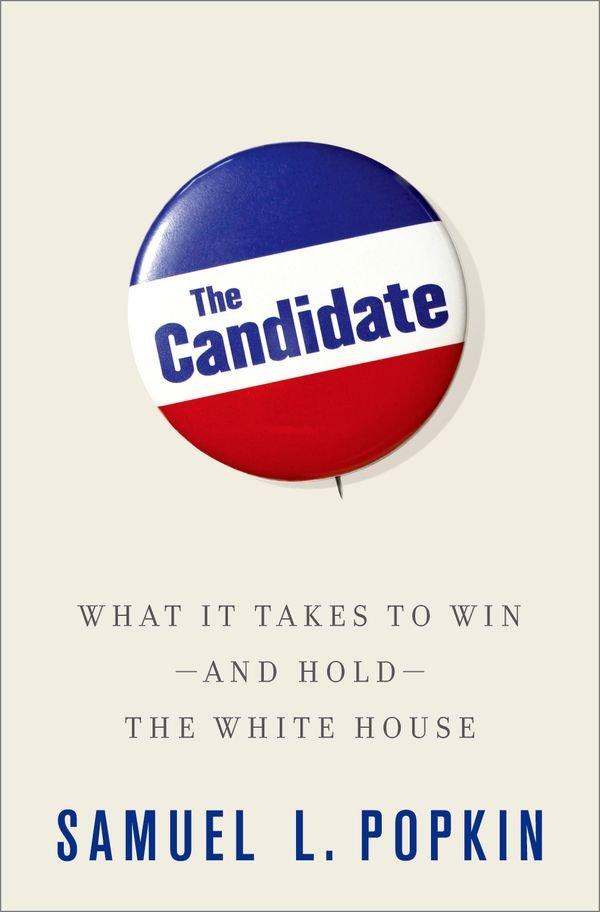
Samuel Popkin author of, The Candidate: What it Takes to Win-and Hold- the White House, will be joining The Cycle team in today's guest spot.
Guest Spot: What it takes to win
By
The Cycle Staff
Samuel Popkin author of, The Candidate: What it Takes to Win-and Hold- the White House, will be joining The Cycle team in today’s guest spot. According to Samuel Popkin there are two winner in every presidential election campaign: the innevtibale winner when the race begins and the innevitable victor when everything is over.
So what lessons can we learn for the 2012 Presidential race? Tune in at 3pm to find out what Samuel Popkin has to say. Below find an excerpt of his book and be sure to tweet us during the show @thecyclemsnbc.
Chapter 9
TEAMS THAT WORK
Th ere is an epic quality to the men and women who decide to run for president, but a candidate’s psychological makeup is but one essential ingredient of a good campaign. I know of no scale or test by which to determine whether Barack Obama, Bill Clinton, and George W. Bush all had more specific inner resources than Hillary Clinton, Robert Dole, or Al Gore. Winners and losers alike had obvious fl aws and displayed lapses of judgment; every single one of them made miscalculations and stumbled badly during his or her campaign.
As I said at the beginning of the book, even sophisticated politicos make the common mistake of falling for the person who seems to have all the inherent God-given leadership traits, including a powerful presence. Time and again we are wrong about which qualities that a candidate must ultimately have are present from birth and which can be learned.1 I have concentrated not on individual character but on the one thing that is essential to any successful campaign: a team that works. Anyone audacious enough to run must also be agile and resilient, and it is the candidate’s assembled team that determines the level of the candidate’s agility and resilience. Candidates are made, not born, and they are made by the team that they—and only they—can build.
A candidate for president is like a captain preparing to take a perilous voyage through uncharted waters. A heroic image will help the captain fi nd patrons and raise money, but in the end, the captains who go the farthest are the ones who prepare carefully, att ract good sailors, and turn them into a strong crew. Candidates only get as far as their team can take them, and the strongest-looking candidates do not necessarily develop the strongest teams.
Agility
Candidates have to be agile to balance confl icting demands, reconcile seemingly incompatible pledges, adjust to changing conditions, and show how an (inevitable) change of an old position is compatible with strong, consistent values. They have to know when to sound strong while being vague and when to sound vague while being strong.
Candidates can build coalitions and make credible commitments only if they know how far they can go without contradicting other commitments or compromising their values. Th is is harder than it sounds: so many people make so many demands about so many issues. Businessmen, union leaders, and the heads of dozens of religious, ethnic, racial, environmental, and social groups make incompatible demands and push for detailed commitments. A candidate must reconcile promises for smaller government with promises for increased defense spending, promises to cut energy consumption with promises to save jobs in manufacturing—all the while establishing her reliability and sincerity. When a candidate can establish trust with one group without making specific promises that will alienate others, the job of juggling and balancing the coalition is easier. Each candidate will attempt to perform triangulation. Unless the candidacy has good balance, all the cleverness amounts to spitting into the wind.
A large part of establishing and maintaining trust requires the candidate to have clear core values. Aft er working with fi ve Republican presidents, Stu Spencer concluded it was inconceivable that anyone could be president who didn’t know what he stood for well enough to know when he was about to compromise himself. He worked with potential candidates to see whether they knew where they stood: You test them. You take an issue and you ask them, “Where do you stand on this issue?” Once they tell you, you start playing devil’s advocate. You start working them over, coming at them. . . . If you can move them . . . you know that they don’t have a very hard-core value system. . . . [You know they have values if] at the end of the day they still smile and say, “All well and good, but this is where I stand.”2 A candidate’s stand is the political equivalent of a dancer’s spot. To avoid losing their bearings, dancers focus on a single spot and return to it as they dance and spin. If candidates know their stand well enough to keep it in focus, they can dance around their positions, adjusting their rhetoric to the audience and occasion without losing their balance.
Resilience
At some point along the trail, every candidate suff ers major setbacks. They all have strategies before they got knocked down, but they cannot pass the Mike Tyson test—having a strategy aft er they get hit—without a team. Endurance will not get a candidate back on track without a team that is prepared to handle the setback. Increased eff ort will not suffi ce, because without an appropriate strategy “they’ll just do the wrong thing with more gusto.”3
In each of this book’s three case studies, the candidate was wrong about his or her major opponent or the political terrain on which the battles were fought. Barack Obama thought Democrats would consider Hillary Clinton too polarizing to win and that she would be unable to explain away her vote to authorize the use of force in Iraq. George H. W. Bush believed he would get credit for his foreign policy successes in 1992 and that he would be able to raise tax rates without a furor. Al Gore thought he needed to separate immediately from President Clinton to become an eff ective candidate and that it was more important to make an immediate splash when he selected his running mate than to have someone who would defend him in debates. Th e winners didn’t make fewer miscalculations than the losers, but they adjusted faster to the changes in terrain, media, and competition. In some cases, they took less of a pounding than their opponents because their team had what it takes to give them both certainty and contingency plans.
Like athletes, candidates have to be forward-thrusting, concentrating on the next play, not brooding on past mistakes. That means they cannot go full speed ahead in front of a crowd of thousands (or in a crucial meeting of two) if they’re worrying about making the right move. While the candidate concentrates on the next pitch, a good team looks several pitches ahead and prepares defenses and attacks.
All candidates feel the urge to let out their road rage and swing at their opponent, but only the ones who have strong teams can remain centered. As David Plouff e said aft erward, even the “No drama Obama” campaihn had to deal with the desire to att ack: “You wake up every day trying to really do damage to them.”4 When the candidate piles it on instead of carefully trying to separate an opponent from his supporters, it is a team failure, not a personality problem. Lashing out is oft en a mistake of timing, a failure of the team to help the candidate wait for the appropriate time and manner to att ack. Karl Rove believed a candidate should “Try to fi gure out how to get your opponent to attack you, because you are always stronger on the counteratt ack.”5 Neither Hillary Clinton nor Al Gore ever fi gured that out.
Teamwork is necessary for candidates to keep their composure and avoid acting like a bully. Th e team can delegate the appropriate attacks to compatriots, so they don’t lose style points or act like the inappropriate aggressor. “To include the rank and file of the opposition in a rebuke is to drive them to be defensive or pugnacious,” counseled James Farley, FDR’s campaign manager in 1932 and 1936. “Always talk to them as if they had been betrayed by the political machine of the opposition.”6 No Silver Bullets
All candidates are overloaded. While the adrenaline of a presidential campaign keeps them pumped up, they face more decisions and issues than ever before. Every step, from the primary to the general to reelection, gets more complicated. At each successive level, the candidates have more natural reluctance to do new, unfamiliar tasks they are not good at. Overloaded candidates, particularly when they are behind or in unfamiliar circumstances, are particularly vulnerable to someone who claims to have a “silver bullet”—a can’t-fail ploy, tactic, issue, or move that will win the battle or even the war. Th e myth of an ultimate winning weapon is what Herb York, the late nuclear physicist and arms control negotiator, called the “fallacy of the last move.”7 Simply put, there are no silver bullets; there is no attack so devastating that the opponent cannot recover to fight and win another day. Every candidate should take it as a given that whatever new media, message, issue, or weapon is credited with providing a unique advantage in the last campaign was overrated then and is widely available now. As baseball analyst Bill James points out, “knowledge is a very dynamic universe— and what is most valuable is not the body of knowledge, but the leading ledge of it.”8 Th at doesn’t keep strategists from selling the last campaign’s sizzle as this year’s steak, nor does it prevent overloaded candidates from looking for an excuse to stay in their comfort zone.
Gurus and sycophants are made, not born. When candidates fall under the spell of one person—as Hillary Clinton did with Mark Penn, and Al Gore did with Naomi Wolf—they enable their gurus by giving them the opportunity to block out all other advisors. Gurus always off er a clean, straightforward reason for a complicated choice that makes everything seem clearer and easier.9 Invariably, they bolster candidates at their moment of greatest insecurity, giving them the words to use or the theme or tactic that will sell—for the moment.
Snake-oil salesmen undermine the candidate’s staff and other team members by keeping everyone in the dark about strategy and tactics. They keep their advice to the candidate as confidential as possible to prevent thorough examination from others that might throw doubts on their position.
To keep the candidate from double checking, they will avoid giving bad news or pushing the candidate to do undesirable tasks. Spreaders of false confidence inevitably downplay the candidate’s vulnerabilitis and their opponent’s strengths. Selling their own strengths and attacking their opponents’ weaknesses is the easy half of the campaign. Candidates all know the dangers of gurus, and yet it is tragically hard to avoid the lure of an easy solution to the immediate crisis, no matt er its impact on strategy. Such dependence can enmesh the candidate in a sycophantic web. Who wouldn’t like to be the person whose advice is valued above all others by a candidate? Who wouldn’t like to be the wise master consulted before fateful decisions?
Robert Shrum is one of the most famous and controversial speechwriters in the Democratic Party. If there were an Olympic event for sound bites, Shrum would take the gold. It appears to take him only thirty seconds to write a better thirty-second statement or ad than most people could create in a day. His speeches for Senator Edward Kennedy and others consistently produced unforgettable lines and received brilliant ovations.
His words aroused true believers and captured the essence of what candidates want to be at that moment. Shrum served as a speechwriter for eight Democratic presidential candidates—all of whom lost. Many of his eloquent, passionate speeches were bridges to nowhere, espousing policies that were never enacted . . . but they always sounded great Joe Klein pinned the blame for the defeats on Shrum—the poster boy, as Klein sees it, for overpaid consultants who rob contemporary politics of the last shreds of authenticity while milking candidates for ever-bigger payrolls.10 But Shrum is a symptom of a deeper problem: a candidate too willing to embrace a sugarcoated quick fix.
There are people like Shrum in both political parties—those who can devise a brilliant statement on the spot or off er an ingenious, allegedly “poll-tested” statement. Frank Luntz convinced Newt Gingrich to enact a “Contract with America,” which played well up until the moment the Republican Congress tried to enact the internally contradictory, unpopular, or expensive pledges in the contract. It gave Gingrich a big short-term gain and then painted him into a corner, even before anyone realized that Luntz’s research did not support the claims he urged Gingrich to make.11 Candidates habitually develop special closeness to their gurus. Carter Eskew explained why: Candidates at Shrummy’s level are all type-A achievers who, for the fi rst time in their lives, aren’t sure they’re going to make it. One of the things Shrum off ers them is a sense of security, that there is a knowable path and answer and that there are things that can be done to aff ect the outcome.12 Because of that tight-knit relationship with the guru, no candidate will ever be able to identify the sycophant herself; only when someone else is vetting the advice can that person determine if the candidate is going down a dead-end path with obvious pitfalls. And that depends upon teamwork.
Teams That Work
There is no magic formula for an ideal team. Teams that work help the candidate in the same ways, but they have diff erent kinds of skills because the mix that works depends upon the candidate, her family and friends, the terrain, the media, and the opponent. Every team that works well completes the candidate and includes: a chief of staff who is a near equal; a peer; an objective navigator; a “body man” or sidekick; a mediator between professionals and family and friends; and a protector of the candidate’s brand name. A team completes the candidate by providing complementary expertise on the roles and subjects where candidates are in over their head (as every candidate is at some point).
No candidate can possibly be knowledgeable on all the issues, interest groups, and tactics. Ronald Reagan didn’t need anyone to tell him how to stand or speak; George H. W. Bush did. George H. W. Bush didn’t need anyone to tell him about foreign policy; Ronald Reagan did. Barack Obama didn’t need anyone to tell him how to talk about law or the constitution; John McCain did. John McCain didn’t need anyone to tell him how to talk about military service; Barack Obama did. None of them have all the necessary virtues and personal and interpersonal skills, either. Richard Nixon didn’t need anyone watching out for women with a gleam in their eye; Bill Clinton did. Jimmy Carter didn’t need a staff er to go through his suit pocket and fi nd all the coasters and napkins on which he wrote down the promises he made drinking with his pals; Gerald Ford did. Barack Obama didn’t need anyone to keep him from overeating on the campaign trail; Al Gore did. George W. Bush didn’t need anyone to keep him away from craps tables and make sure photographers didn’t catch him shooting dice with a friendly blonde standing next to him “for good luck”; John McCain did.