








by Dan O’Shea
Dan O’Shea, a reserve Navy SEAL officer, led efforts at the Hostage Working Group at the U.S. Embassy in Iraq from 2004 to 2006 managing the inter-agency coordination for hundreds of international kidnapping incidents. He served as a counter-insurgency advisor for the Commander of the International Security Forces-Afghanistan from 2011-2012. He is the Vice President for Kidnap & Ransom for GROM Technologies, a security and risk management company based in Tampa.
“Victory is gained not by the number killed but by the number frightened…” is an ancient Arab proverb that succinctly describes the maxim of the Islamic “hostage terrorism” currently on display in the Middle East, Africa and now coming home to roast on Western shores. From Boko Haram kidnapping 260 school girls last year in Nigeria, the Sydney hostage standoff in December, the Paris hostage crisis last month to the latest barbaric propaganda video released showing the burning of acaptive Jordanian pilot that shocked and captivated the entire world this past week. Why do these terrorist groups go to such extremes? Simple answer, hostage-taking is how terrorists negotiate with the West and the Islamic State is seeing the prophecy fulfilled.
Front and center in the hostage terrorism theater of the macabre is the Islamic State in Iraq and Syria (ISIS) simply known as “the Islamic State.” ISIS is orchestrating this spectacle of kidnappings, beheadings and now burnings to their advantage because hostage terrorism works. They have captured the attention of the entire world’s news outlets which is exactly what they want. Media exposure is the oxygen that fuels the fire of this form of terrorism.
So how has America and the West confronted this malicious evil? Most Western nations, including many of our strongest NATO allies, the French, Italians and Germans have paid out multi-million dollar ransoms to save the life of citizens held by the likes of the Islamic State and Al Qaeda affiliates in the Middle East, Africa and Asia. Contrary to widespread public opinion — that the United States does not negotiate with terrorists — that has never been “official” US policy. Until recently, our policy was: “The U.S. Government will make no concessions to individuals or groups holding official or private U.S. citizens hostage. The United States will use every appropriate resource to gain the safe return of U.S. citizens who are held hostage. At the same time, it is U.S. Government policy to deny hostage takers the benefits of ransom, prisoner releases, policy changes, or other acts of concession. The rational for this hardline stance was “that paying ransom or making other concessions to terrorists in exchange for the release of hostages increases the danger that others will be taken. Its policy therefore rejects all demands for ransom, prisoner exchanges, and deals with terrorists in exchange for the release of hostages.”
Following the attacks of 9/11, the U.S. and our closest allies, the United Kingdom, Canada, Australia and New Zealand largely followed that strict protocol refusing to make concessions to terrorists masquerading as kidnappers. A decade ago, the Al Qaeda kidnapping crisis in Iraq was launched with the gruesome Nick Berg beheading video that shocked the world. Over the summer of 2004, kidnappings of foreigners and Iraqis alike became the cottage industry that destroyed the fabric of daily Iraq life and nearly fractured the international coalition fighting the insurgency.
The previous kidnapping crisis in the region was eventually addressed after a hard campaign of sticking to our “no concessions” policy, approving risky hostage rescue missions and equally important, winning the propaganda war. Ultimately it was Iraqis themselves, the principal targets of kidnapping rings, who turned on AQ by partnering with the international coalition to help us wipe out the threat.
So what brought hostage terrorism back? In a word, strategic “messaging” by both the West and radical Islamic groups like the Islamic State, the second generation of al Qaeda. Despite repeated claims by our current Administration that they were “on the path to defeat,” the “jayvee” team has established an Islamic caliphate covering territory from Raqqa, Syria to the outskirts of Baghdad. Coalition airstrikes have kept the advance of ISIS in check but they continue to consolidate their gains in places like Mosul and Fallujah. The one area ISIS continues to put America and the Coalition on the defensive without any offensive counter is hostage terrorism. A criminal tactic that came roaring back from being exterminated only a few years ago, is now front and center in their campaign.
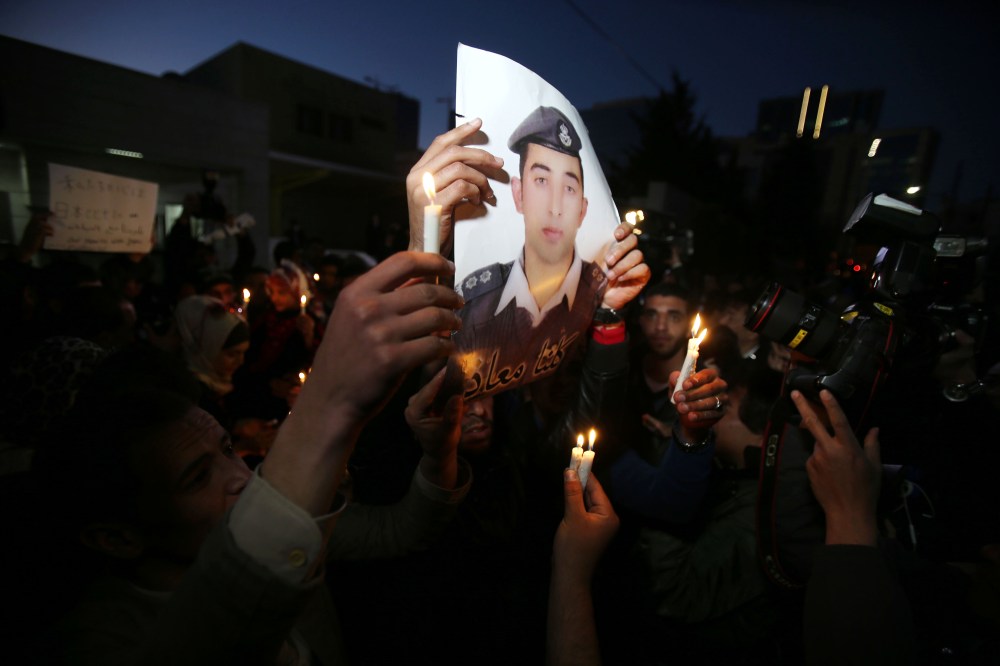
The previous moral high ground the US held about making no concessions to terrorists was shattered on May 31, 2014 – when President Obama announced from the Rose Garden that U.S. Army Sergeant Bowe Bergdahl had been released in exchange for the five ranking Taliban Commanders in Guantanamo Bay detention facility. From the most strategic platform possible, the leader of the free world announced from the White House that yes, the U.S. negotiates with terrorists and will make concessions to terrorism. The tepid response by our Commander in Chief in rebuilding an international and Arab Coalition to defeat ISIS is limited to air strikes and a repeated commitment to send “no combat troops.” In modern aviation history, the only airstrike campaign that ended a war was Hiroshima and Nagasaki during WWII. No military campaign in history has ever regained territory without committing ground troops. No one in his administration can even bring themselves to use the phrase “Islamic extremism” or “Radical Islam” when asked about the threat confronting both the Muslim and Western world. President Obama is effectively telling ISIS and the world, that he doesn’t believe the problem has anything to do with Islam and he won’t commit the necessary troops with realistic options on the table to complete the task of “destroying ISIS.” Chinese general, military strategist, and author of The Art of War, Sun Tzu once said, “It is said that if you know your enemies and know yourself, you will not be imperiled in a hundred battles; if you do not know your enemies nor yourself, you will be imperiled in every single battle.” A week ago, King Abdullah of Jordan, was seriously contemplating a prisoner swap for Lt al-Kaseasbeh for a failed female suicide bomber – Sajida al-Rishawi –involved in an attack that killed 60 Jordanians at a wedding in 2005. Negotiating in good faith, the deal hinged on ISIS producing “proof of life” for the Jordanian flyer. When ISIS released the twenty-two minute long video that ended with Muath being burned alive, the King cut short his visit with President Obama and immediately vowed a relentless’ war against ISIS.” Upon his return to Jordan, King Abdullah, announced on state television, “We are waging this war to protect our faith, our values and human principles and our war for their sake will be relentless and will hit them in their own ground.” The former commander of Jordanian Special Forces and helicopter pilot himself; the King was pictured in military cammies and pilot gear inside a Jordanian military plane on the Royal Hashemite Court’s Facebook page. His first official order was to carry out the capital sentence by hanging Sajida and another convicted al Qaeda terrorist on Jordan’s death row. His second was to launch the largest Jordanian airstrike to date on Raqqa where Lt al-Kaseasbeh was publicly murdered. King Abdullah is sending a message to these Islamic terrorists in the only language they understand. If only our Commander in Chief could do the same.
The place for in-depth analysis, commentary and informed perspectives. Recommended


