








Activists have the room, nay the imperative, to be pure and absolute, but governing requires compromise. Compromise often disappoints the activists and sometimes disappoints the governors themselves.
That’s part of why on Friday we saw the rare scene of a president urging the striking down of a law he signed.
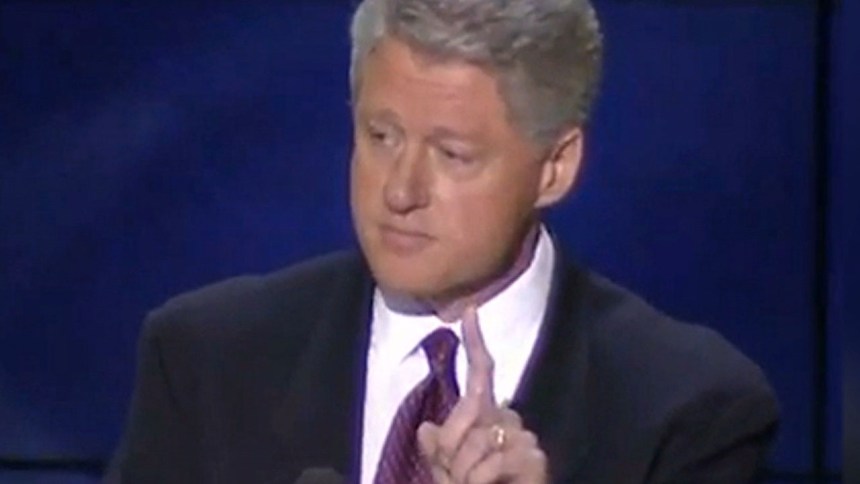
“When I signed the bill,” President Clinton write in the Washington Post about the defense of Marriage Act, “I included a statement with the admonition that enactment of this legislation should not. Despite the fierce and at time divisive rhetoric surrounding it, be understood to provide an excuse for discrimination. Reading those words today I know now that even worse than providing an excuse for discrimination. Reading those words today I know now that even worse than providing an excuse for discrimination the law itself is discriminatory. It should be overturned.”
In the Op-ed Clinton paints his supports for DOMA as a tactical move that staved off a worse fate, a constitutional amendment banning gay marriage.
It seems strange to speak of signing a discriminatory law in order to prevent a more discriminatory law but as the first president to advocate for gay rights, he was forced to play defense.
A president who was far ahead of American sentiment on a third rail social issue like gay rights was vulnerable.
He had not planned to make gays in the military a major first term initiate but he was maneuvered into dealing with it and in ’93, when he tried to change the military so gays could serve openly, he found so much resistance he was forced to retreat to don’t ask don’t tell, a bad compromise.
After losing the battle, Clinton was gun-shy about pushing America to grow too fast on gay rights. A fascinating New Yorker essay by Richard Socardies, Clinton’s adviser on gay rights, paints a White House deeply and passionately divided on gay rights strategy and boxed in by Republicans on DOMA—forced to either sign it or reveal himself a supporter of gay marriage at a time when most Americans found that idea repellent. Many advisers were afraid that if Clinton vetoed DOMA he would lose to Dole in ’96.
So Clinton signed DOMA into law with no joy, Socardies writes, “There are no pictures of this occasion—no pens that were saved.” Of course DOMA had a more negative impact on gay families than they had anticipated. But by playing defense, he kept us from getting worse legislation on gay rights, and preserved his place in the White House so he could have other accomplishments, like a hate crimes statute that includes gays, and an executive order banning discrimination against gays in the federal civilian workforce. If American history has been a slow march toward expanding rights, that march has not always been straight. Without Clinton’s moves, Obama would not have been in a position to repeal Don’t Ask Don’t Tell and oversee the expected end of DOMA. I suspect Clinton did the best he could and he thought he lost some battles, he still helped the gay rights movement reach this moment in which they appear close to winning the war. And as every sports fan knows, defense wins championships.
Toure Recommended


