








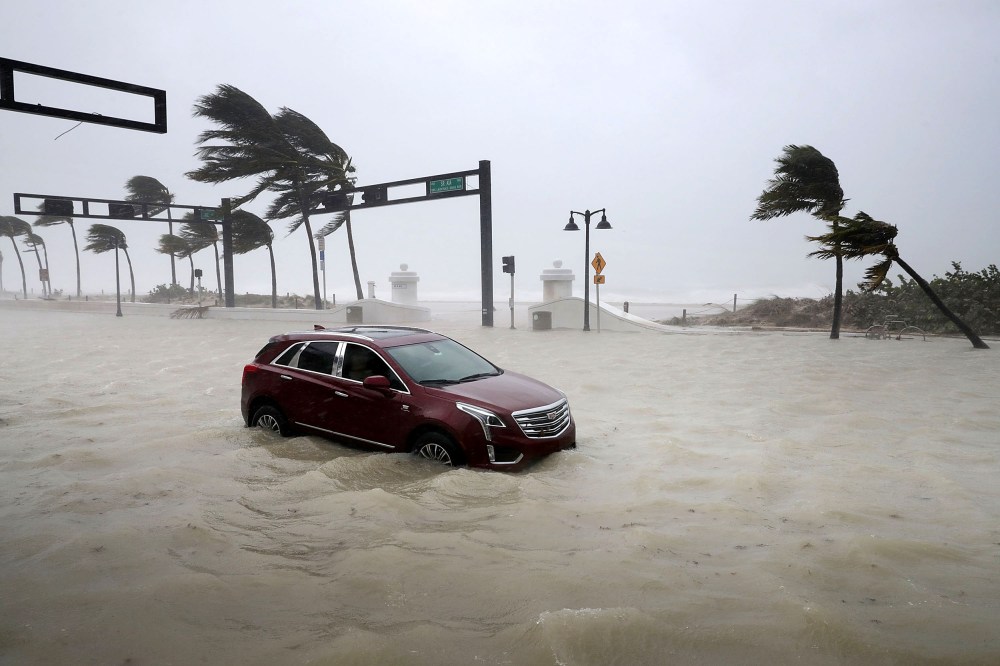
Congress’ pending disaster-relief package — traditionally the sort of thing that passed easily — was stuck for months because of Donald Trump. The president had some specific demands related to border funding and excluding aid for Puerto Rico; Democrats balked; and so the bill languished.
Last week, however, the clouds parted. Trump caved; the Senate passed the legislation with overwhelming bipartisan support; and communities affected by recent natural disasters suddenly felt some hope, knowing relief was on the way.
There was, however, a small problem. By the time the president dropped his objections, much of the House had already left town for the chamber’s Memorial Day break. To pass the bill and get the aid to Americans who need it, the House would need to use a procedure known as “unanimous consent.”
And the trouble with this approach is that it allows just one member to derail important legislation, which is precisely what’s happened.
For the second time in less than a week, the House on Tuesday failed to pass the Senate-approved $19 billion bill providing disaster aid funding to parts of the United States hit by hurricanes, flooding, earthquakes and wildfires after a Republican lawmaker objected.
Rep. Thomas Massie, R-Ky., objected to a request to pass the measure by unanimous consent during a pro forma session.
The bill would’ve passed late last week, but Rep. Chip Roy (R-Texas) blocked it. It would’ve passed yesterday, but Massie blocked it. Democratic leaders will try again tomorrow, but some individual Republican is likely to delay the process again. [Update: on Thursday afternoon, another GOP House member blocked the legislation.]
If so, Democratic leaders will take up the bill next week when the Memorial Day break ends and lawmakers return to their usual work schedule. Republicans won’t be able to derail the bill at that point, because it’ll pass on a majority-rule vote.
All of which suggests a handful of GOP members are engaging in a stunt for the sake of engaging in a stunt.
House Speaker Nancy Pelosi (D-Calif.) asked in a statement. “How many more communities need to suffer before Republicans end their political games?” Even some Republicans seemed annoyed by the antics. Sen. David Perdue (R-Ga), who’s up for re-election next year, chastised Massie’s move yesterday, calling it an example of a politician “putting their own self-interest ahead of the national interest.” The practical implications of these delays matter: there are Americans in many communities that need these relief funds. They were asked to wait, needlessly, because of Trump’s pointless tactics, and now they’re being asked to wait some more because of a handful of House Republicans want to play purposeless games. What’s more, the road ahead appears discouraging. Disaster-relief packages are becoming much harder to pass just as the climate crisis makes the need more acute.
Steve Benen is a producer for "The Rachel Maddow Show," the editor of MaddowBlog and an MS NOW political contributor. He's also the bestselling author of "Ministry of Truth: Democracy, Reality, and the Republicans' War on the Recent Past." Recommended


