








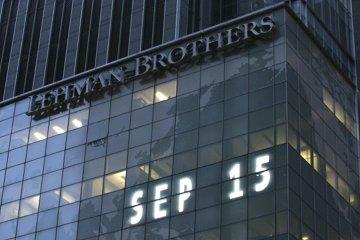
It was five years ago yesterday that Lehman Brothers collapsed, marking the largest bankruptcy in American history and the informal start of the economic collapse often called the Great Recession. The White House sees the anniversary as a fine time to take stock of what’s happened since.
President Obama is scheduled to deliver a Rose Garden speech today, though the shooting at the Washington Navy Yard may well change those plans. If the remarks proceed, however, the president reportedly hopes to highlight the Lehman anniversary “by trying to lay claim to an economic turnaround and warning Republicans against moves that he contends would risk a backslide.”
Though polls show widespread public discontent over the fragile economic recovery, Obama has some trends he’ll no doubt be eager to tout: economic growth, millions of new jobs, an improving housing market, rising stock market indexes, etc. There were many who were convinced the president’s 2009 agenda would make the economy worse, and they’ve been proven wrong. The stimulus should have been bigger, and the focus on deficit reduction has been counter-productive, but the administration’s efforts have largely had a very positive effect.
Indeed, Jon Chait had a terrific item the other day arguing that the grand argument over the Great Recession is over. The right lost.
A few years ago, you could certainly find a lively intellectual defense for the GOP’s position. In September of 2008, conservative pundit and McCain campaign adviser Donald Luskin argued that the economy was in outstanding shape — “on the brink not of recession, but of accelerating prosperity.” In the spring of 2009, The Wall Street Journal editorial page declared that high deficits were already sending bond prices through the ceiling. In 2011, Megan McArdle made the case that income inequality may have peaked and was already falling. […]
All those empirical arguments lent support, at least broadly, to the Republican platform. If the economy were not heading into a massive depression, or if deficits were driving interest rates high, then opposing large fiscal stimulus would make a lot of sense. Likewise, if sky-high inequality were receding, then long-term concerns about the gap between the top one percent and everybody else ought to weigh a bit less heavily on us.
But none of these arguments was true. And conservatives have made precious little effort to replace them with other arguments.
Quite right. There was a global economic crisis, the right offered its solutions, and they were discredited.
The political angle to keep in mind, though, is that these failures have somehow not damaged the right’s credibility.
Indeed, after a while, one would like to think the Republicans’ track record would start to catch up with them. The GOP was absolutely certain that Clinton’s economic agenda would do widespread harm in the 1990s. Republicans were then convinced the Bush/Cheney policies would work wonders and produce widespread prosperity. In recent years, the right believed with every fiber of its being that Obama’s economic agenda would make the Great Recession worse. And in 2013, Republicans believe the way forward is a possible government shutdown, a possible debt-ceiling crisis, more sequestration-enforced austerity, and sabotaging the federal health care system, replacing it with nothing. In many instances, GOP leaders are on record saying some of these ideas would do real harm to the economy, but they’re nevertheless on board with the policies anyway. There’s no broad national outcry, condemning Republicans for any of this, largely because most of the public hasn’t heard about any of this. It’s why, when the GOP officials blame Obama for the state of the economy, they’re not confronted with hysterical laughter. Five years after Lehman, the economy has improved. Republican coherence has not.
Steve Benen is a producer for "The Rachel Maddow Show," the editor of MaddowBlog and an MS NOW political contributor. He's also the bestselling author of "Ministry of Truth: Democracy, Reality, and the Republicans' War on the Recent Past." Recommended


