








First up from the God Machine this week is a look at renewed tensions between the religious right movement and the political party that ostensibly fights for its interests.
The Republican National Committee this week unveiled a lengthy report, providing an “autopsy” of what went wrong in 2012, and offering a blueprint for how the party can get back on track. The RNC’s vision covers quite a bit of ground, detailing possible plans on procedure, tactics, strategy, outreach, and just a pinch of policy.
But to an almost surprising degree, the Republican National Committee’s plan is entirely secular. The “Growth and Opportunity” report uses the word “Reagan” six times, but there are literally zero references to God, Christianity, and/or the Bible. For a party that has spent several decades claiming to be the arbiter of morality and “family values,” the RNC’s secularism was unexpected.
And for the religious right, disappointing. McKay Coppins had an interesting report on this, asking, “When the great Republican resurrection comes to pass, will conservative Christians be left behind?”
To many religious conservatives, the report was interpreted as a slight against their agenda and the hard work they have done for the party.
“The report didn’t mention religion much, if at all,” said Tim Wildmon, president of the American Family Association. “You cannot grow your party by distancing yourself from your base, and this report doesn’t reinforce the values that attracted me and many other people into the Republican Party in the first place. It just talks about reaching out to other groups.”
Sandy Rios, an Evangelical radio host and Fox News contributor, said the RNC report’s proposals amount to a “namby-pamby” abdication of religious values, and warned that the party could soon lose the grassroots engine that has powered its electoral victories for decades.
“They should be deeply concerned they’re going to be alienating their base,” Rios said, adding, “It seems to me that the leadership of the party is intent on that course. Most Christian conservatives are not going to be party loyalists over principle, and so the GOP has a lot more to lose than Christians.”
The RNC’s Sean Spicer defended the report, arguing that the report ignored the religious right because the movement has “always done a fabulous job,” so the party doesn’t see this as an area in need of attention.
The truth is more complicated, and for the party, more politically perilous.
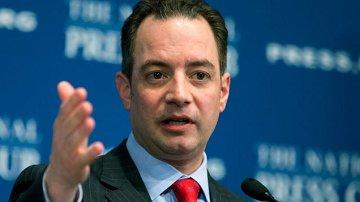
Reince Priebus has spent a fair amount of time lately reflecting on 2012, and it seems clear that he sees the Republicans’ culture war as an electoral loser — the American mainstream, and especially younger voters, just don’t hate gay people, reproductive rights, and the separation of church and state the way the GOP base does. To grow the party, Republicans won’t just have to change the way they talk about issues, they’ll very likely to have to change which issues they’re talking about.
It’s why the RNC’s report also makes no mention of “abortion,” “marriage,” “religion,” or even “pro-life.” These aren’t the issues that will help the party become more competitive on a national level.
But this is where the Republicans’ identity crisis gets tricky. Reince Priebus wants to use religious right activists as the party’s grassroots base — there just aren’t enough oil company lobbyists to work phone banks and engage in door-to-door activism — but also wants to pretend the religious right agenda isn’t at the core of the party. For the movement, this isn’t good enough.
Reince Priebus also wants to signal to the American mainstream that his party isn’t dominated by culture warriors, and the GOP’s support for a right-wing social agenda is purely superficial, but Republican policymakers — at the state and national level — continue to focus on reproductive rights and gay rights, either out of sincere beliefs or motivated by a desire to pander to the religious right movement the RNC is content to ignore.
It’s an untenable, unsustainable dynamic. If Republicans continue to obsess over social conservatism, they’ll struggle as a national party. If they don’t, they’ll alienate the voters they need to compete. The RNC’s report hasn’t papered over this problem; it’s helped put a spotlight on it. Also from the God Machine this week: * Immigration reform advocates pick up faith-based allies: “A coalition including some of the nation’s largest evangelical Christian organizations said on Monday that Congress should include ‘clear steps to citizenship’ for illegal immigrants in any bill to overhaul the immigration system.” * Fox News is shifting its attention from the imaginary “War on Christmas” to the equally-fanciful “War on Easter.” * Not a good sign for the Roman Catholic Church in L.A.: “In an acknowledgment that new revelations in the priest abuse scandal have tarnished the church’s image, lawyers for the Archdiocese of Los Angeles are seeking to postpone upcoming sexual abuse trials or relocate them to a courthouse 200 miles away because they don’t believe they can get a fair trial in Southern California” (thanks to R.P. for the tip). * Speaking of the Roman Catholic Church: “Pope Francis suggested in an interview last year that the Catholic Church’s rule that priests be celibate ‘can change’ and admitted he was tempted by a woman as a young seminarian.” * The Green Street United Methodist Church in Winston-Salem, North Carolina, is so engaged in the right for equality that it won’t perform marriage ceremonies for anyone until it can also perform marriage ceremonies for same-sex couples. * And in one of my favorite Pat Robertson stories ever, the radical TV preacher warned his viewers this week to be fearful of “scamsters in religious garb quoting the Bible. I mean run from them.”
The place for in-depth analysis, commentary and informed perspectives. Recommended


