








Donald Trump, apparently still annoyed that he received far fewer votes than his principal rival, is moving forward with his “voter integrity” commission, whose members will be tasked with finding evidence of widespread “voter fraud,” which doesn’t actually exist.
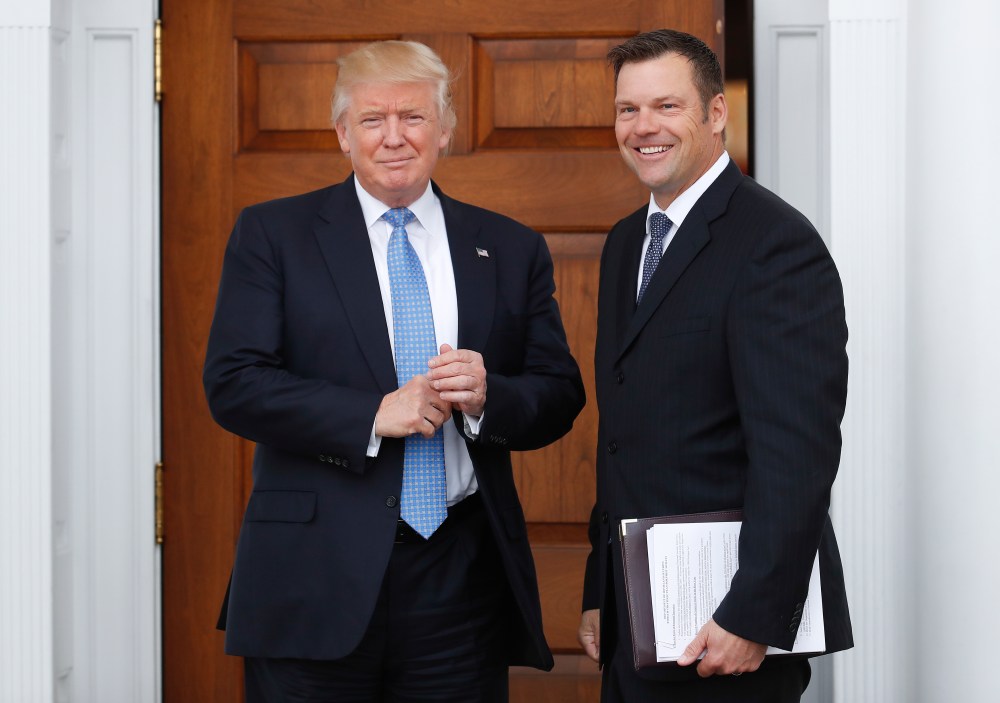
The panel, led in large part by Kansas’ Kris Kobach, a voter-suppression pioneer, held its first formal meeting at the White House today, where the president gave a spirited endorsement of the commission’s work.
President Donald Trump spoke Wednesday at the first public hearing of his vote fraud commission and raised the possibility that substantial voter fraud had occurred in the 2016 election, but he did not repeat past claims that millions of illegal ballots were cast.
“This issue is very important to me because throughout the campaign, and even after, people would come up to me and express their concerns about voter inconsistencies and irregularities, which they saw,” Trump said. “In some cases, having to do with very large numbers of people in certain states.”
None of this should be taken seriously by anyone. Voters may have expressed concern to Trump about “irregularities,” but that’s because conservatives have been conditioned to believe, without proof, that fraud is a scourge on our democracy.
Indeed, it’s largely self-fulfilling: Trump tells people there are “very large numbers of people” casting illegal ballots, which his followers accept as true, which leads conservatives to “express concerns” about the imagined problem they’ve been told to accept.
As part of the scheme, Trump has created a commission to bolster the conspiracy theory that the president believes because (a) it makes him feel better about coming in second; and (b) he’s looking for some kind of justification to impose new voting restrictions.
To that end, the “voter integrity” panel has requested every state’s full voter rolls, including the name, address, date of birth, party affiliation, last four Social Security number digits, and voting history for every voter going back more than a decade. Most states have balked.
“If any state does not want to share the information, one has to wonder what they’re worried about,” Trump said this morning. “What are they worried about? There’s something, there always is.”
I honestly have no idea what that last part of the quote means, but in terms of what states might be “worried about,” a variety of state officials — from both parties — simply don’t trust the White House to collect the nation’s voter rolls, and use them for dubious purposes, without any meaningful security protections in place. (The commission has already been caught failing to protect Americans’ private information.) The Trump administration explained in court this week that the White House has the problem all figured out. Since President Trump’s Election Integrity Commission was last in court, the commission has announced plans to dramatically alter how it plans to collect state voter information in an attempt to avoid a potential legal ruling that could require it to conduct a privacy assessment before collecting the data. The plan, more or less, is to have a few people on the White House staff conduct all of the work of the commission in order to help maintain a legal argument that the “sole function” of the commission is to advise the president. Oh, I see. A “few people” in a hapless White House are expected to oversee the voter rolls for the entire nation — data that’s being collected without a legitimate reason. Is this supposed to make anyone feel better?
Steve Benen is a producer for "The Rachel Maddow Show," the editor of MaddowBlog and an MS NOW political contributor. He's also the bestselling author of "Ministry of Truth: Democracy, Reality, and the Republicans' War on the Recent Past." Recommended


