








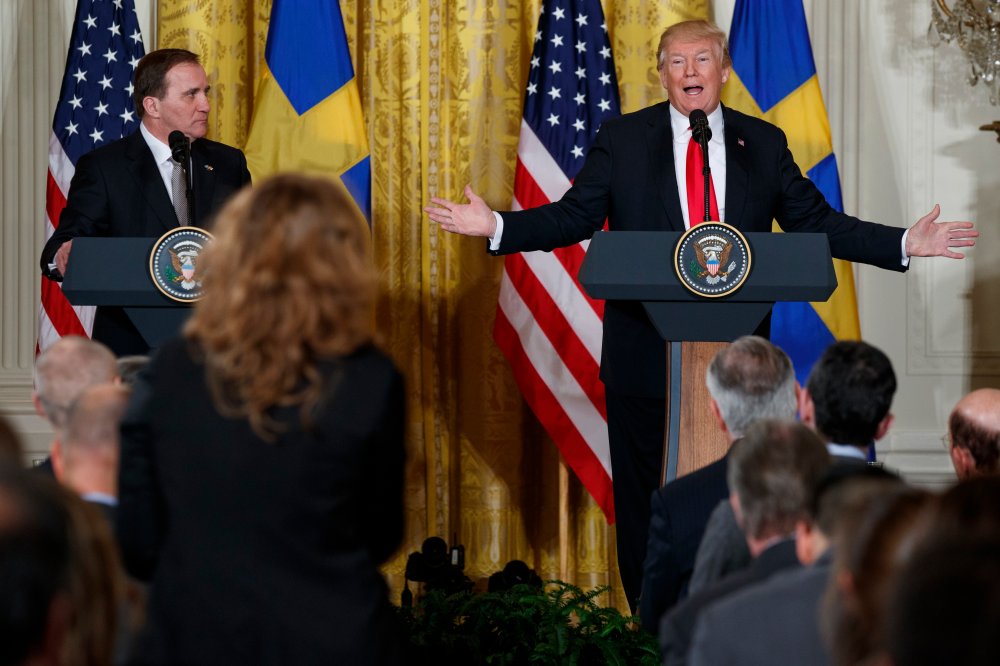
At a brief White House press conference yesterday, Swedish Prime Minister Stefan Lofven explained his belief that increased tariffs, such as the ones Donald Trump intends to impose, “will hurt us all in the long run.” Naturally, that left the American president in an awkward position, having to defend a controversial economic policy, opposed by U.S. allies, including the official standing a few feet to his right.
And so, Trump did his best to present his policy as a gentle economic imposition.
“We’re going to straighten it out. And we’ll do it in a very loving way. It will be a loving, loving way. They’ll like us better and they will respect us much more.”
I honestly don’t know whether the American president was trying to be funny — with Trump, it’s often hard to tell — but the fact that he used the word “loving” three times in reference to his tariff policy suggested he expected people to believe it.
Which isn’t likely to happen. In practical terms, a trade tariff is a tax applied to imports. Trump may want to implement the policy in “a very loving way,” but this isn’t the sort of thing in which politeness or service with a smile makes a difference. Those paying the tax — and/or imposing their own retaliatory tariffs — won’t much care if the American president is being friendly about the new economic burden.
But there’s also a larger context to this: have you noticed how frequently Trump turns to warm and fuzzy rhetoric to defend the most controversial aspects of his agenda?
During the health care fight, for example, Trump described the House Republicans’ proposal — after GOP lawmakers had already voted for it — as “mean” and “cold-hearted.” The president said his preferred approach would have “more heart.” He used similar language in January on immigration. The White House may have demanded a regressive plan that included a border wall and cuts to legal immigration, but Trump assured the public that his approach had “a lot of heart.” Reality doesn’t work this way. A far-right president can’t impose a harsh, regressive agenda, frame it in soft lighting, and expect everyone to celebrate his magnanimity. Simply using words like “heart” and “loving” doesn’t make bad ideas good, or harsh ideas gentle. Trump’s preoccupation with branding is well known, but he should at least try to understand that slapping pleasant words on his proposals will not make them more popular.
Steve Benen is a producer for "The Rachel Maddow Show," the editor of MaddowBlog and an MS NOW political contributor. He's also the bestselling author of "Ministry of Truth: Democracy, Reality, and the Republicans' War on the Recent Past." Recommended


