








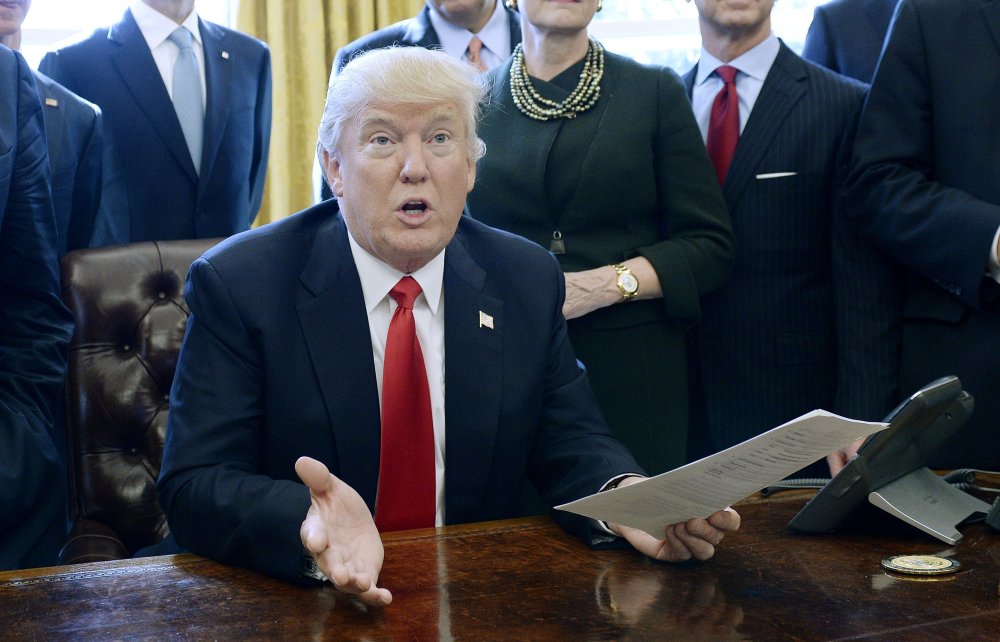
Yesterday morning, Donald Trump, playing the role of a confused low-information voter, published an all-caps question to Twitter. Adjusting its punctuation, the missive read, “Who changed the long standing whistleblower rules just before submittal of the fake whistleblower report?” (In reality, the complaint from the intelligence community’s whistleblower is anything but “fake.”)
A day earlier, Senate Judiciary Committee Chairman Lindsey Graham (R-S.C.) appeared on CBS News’ Face the Nation and asked rhetorically, “What’s going on here? Why did they change the rules about a whistleblower you can use hearsay when you could not just weeks before the complaint?”
At a certain level, this is a fascinating case study in the ways in which far-right propaganda can start out on a far-right website and then spread like a virus to the Oval Office. It’s also, of course, the latest example, of some of the nation’s most power Republicans peddling nonsense to the public. As a Washington Post fact-check piece explained, the apoplexy appears to stem from a change to the form intelligence community whistleblowers can fill out.
The original report in the Federalist focused on a change in the form, suggesting it was somehow related to the recent whistleblower case. There is no evidence that is correct.
In any case, the IG’s process for handling whistleblower allegations is determined not by a form but by the law and related policy documents. The key document, ICD 120, has been virtually unchanged since 2014. Contrary to the speculation, the whistleblower used the 2018 form, not the new online form. The IG then investigated and found that his allegations were credible and that Congress should be notified.
The president seized on reports on the form to falsely claim the rules for whistleblowers were changed just before the whistleblower’s report was submitted in August. That’s false and worthy of Four Pinocchios.
This is in line with similar fact-check reports from NBC News and the Associated Press, as well as the latest statement from the Office of the Inspector General of the Intelligence Community — which is led by a Trump appointee.
It’s of interest that as the broader scandal intensifies, Republicans keep pushing talking points that are quickly and easily discredited. But I’m especially intrigued by Lindsey Graham’s screw-up. Trump’s all-caps nonsense was par for the course, and most Americans have grown accustomed to the president’s strained relationship with reality, but the South Carolinian is the chairman of the Senate Judiciary Committee. It’s a powerful and influential role, especially now, as the unfolding scandal directly implicates the attorney general and the Justice Department — which Graham is responsible for overseeing. So why is it that the GOP senator told a national television audience two days ago that “they” changed whistleblower rules “just weeks before the complaint” — which is not at all what actually happened? Did Graham genuinely believe the falsehood? Did someone encourage him to lie? Is he prepared to acknowledge his misstep? Doesn’t the chairman of the Senate Judiciary Committee have a responsibility to do at least some due diligence before making bogus allegations against intelligence professionals in his own country?
Steve Benen is a producer for "The Rachel Maddow Show," the editor of MaddowBlog and an MS NOW political contributor. He's also the bestselling author of "Ministry of Truth: Democracy, Reality, and the Republicans' War on the Recent Past." Recommended


