








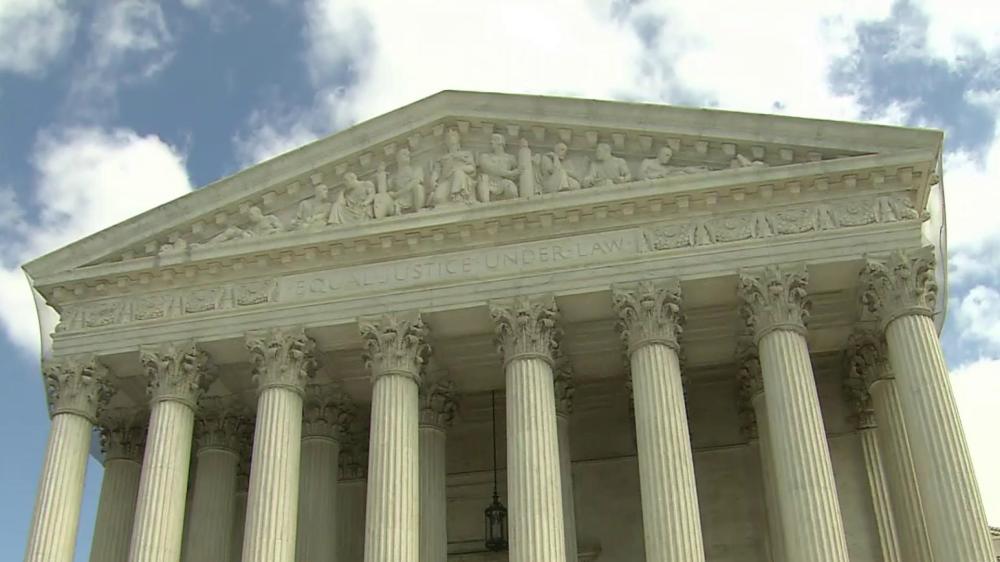
In previous instances in which the Affordable Care Act received Supreme Court scrutiny, “Obamacare” was facing existential questions. The law, we now know, survived those challenges, though others remain.
Yesterday, however, the high court heard oral arguments in a lower-profile case involving a fairly obscure provision of the reform law, dealing with something called “risk corridors,” which involve funds the ACA committed to shield insurance companies from risks. The New York Times helped set the stage:
Paul D. Clement, a lawyer for the insurance companies, said his clients had been the victims of “a massive government bait-and-switch.”
But Edwin S. Kneedler, a lawyer for the federal government, said a statutory promise to cover the companies’ losses was ineffective without a separate congressional appropriation of money. “The appropriations clause of the Constitution is central to this case,” he said, referring to a provision that says, “No money shall be drawn from the Treasury, but in consequence of appropriations made by law.”
Let’s back up and review how we reached this point.
When the ACA was created nearly a decade ago, there was a broad understanding that private insurers would benefit from millions of new customers, but they’d also take on new risks, since the law required insurance companies to treat all customers equally, regardless of pre-existing conditions. That raised the prospect, of course, of some insurers taking on hard-to-predict numbers of unhealthy consumers whose coverage would cost more.
The law’s architects added “risk corridors” — an idea Republicans liked in the not-too-distant past — to help reimburse insurers who took a hit, at least for the first few years as the new marketplace took shape. The same provision also required insurance companies that didn’t take a hit to pay into a risk corridor fund to help the rest of the industry.
As longtime readers may recall, Sen. Marco Rubio (R-Fla.), for reasons that were never altogether clear, helped lead the charge to destroy the risk corridors. (It almost certainly had something to do with the Floridian’s ill-fated presidential campaign, and the senator’s eagerness to falsely claim he “killed Obamacare.”) Rubio and his Republican brethren succeeded, which led to some very unhappy insurers: companies that worked within the system in good faith were suddenly told the money they were promised would never arrive. Litigation soon followed, and the justices heard the case yesterday. And while it’s generally unwise to draw sweeping conclusions from oral arguments, many observers who were in the chamber for yesterday’s proceedings came away with the same impression: most of the justices seemed quite sympathetic to the insurers’ concerns. We can expect a ruling in the spring. Watch this space.
Steve Benen is a producer for "The Rachel Maddow Show," the editor of MaddowBlog and an MS NOW political contributor. He's also the bestselling author of "Ministry of Truth: Democracy, Reality, and the Republicans' War on the Recent Past." Recommended


