








Following up on an item from last month, it appears President Obama’s strategy for immigration reform has come together fairly well. His plan has always been quite transparent: he’d focus heavily on enforcement and border security at the outset, which would, in theory, engender goodwill from Republicans and create some legislative breathing room for comprehensive reform.
And for four years, Obama stuck to his commitment, reducing illegal border crossings, increasing deportations, and boosting enforcement at a level without modern American precedent. By any reasonable measure, this president has been more aggressive on this front than any of his Republican predecessor, all in the hopes of convincing GOP lawmakers to work constructively on a comprehensive solution.
Of course, that only works if Republicans in Congress make an effort to keep up with the basics of current events.
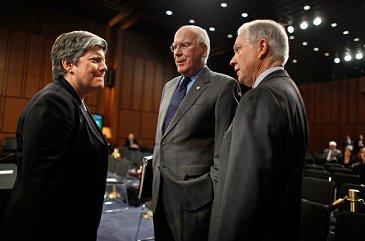
Sen. Jeff Sessions (R-AL) wasn’t sold on DHS Secretary Janet Napolitano’s testimony that border security was vastly improved in recent years by major funding boosts, hiring increases, new technologies, as evidenced by a 78 percent decline in border apprehensions since 2000.
“I truly believe had this administration done a better job at enforcement…you would be in a much stronger position with the American people to ask for a more broad solution to the problem,” Sessions said at a Senate hearing on Wednesday, citing low morale at ICE and complaints from its union.
I don’t seriously expect every senator to be an expert on every issue; it’s just not realistic.
But Sessions’ ignorance — during a hearing on immigration, which he and his staff presumably did some preparation for — suggests there’s literally nothing the White House can do satisfy those Republican lawmakers who intend to oppose reform efforts.
For Sessions, the administration hasn’t done enough on enforcing immigration laws, which is the opposite of reality, and the White House isn’t in a strong position with the public on immigration reform, which is also the opposite of reality.
So how can policymakers have a credible debate?
In fairness, it’s worth emphasizing that there are some GOP lawmakers who better understand the issue, and see Obama’s enforcement efforts as a success. It’s this momentum that DHS Secretary Janet Napolitano tried to build on this morning. “Our borders have, in fact, never been stronger,” Napolitano testified. Boasting of the “unprecedented progress we have made” in border security since the last immigration debate, Napolitano noted that the number of Border Patrol agents had doubled since 2004, border apprehensions had plummeted 78 percent from their 2000 peak, and a variety of new technologies had been deployed to stop illegal crossings. And net migration in recent years has been negative, meaning more people are leaving the United States than entering it. “Speaking as someone who, as Arizona’s U.S. attorney, attorney general, and governor experienced the flood of illegal immigration in the early part of the century,” Napolitano said in her testimony. “That situation no longer exists.” All that’s left is for Congress to step up and approve comprehensive reform.
The place for in-depth analysis, commentary and informed perspectives. Recommended


