









As part of the state’s response to the COVID-19 pandemic, California is limiting all indoor gatherings to members of no more than three households. A group of Californians filed suit, arguing that the safeguards interfered with their Bible study and in-house prayer sessions.
Take a wild guess how the U.S. Supreme Court ruled in the matter.
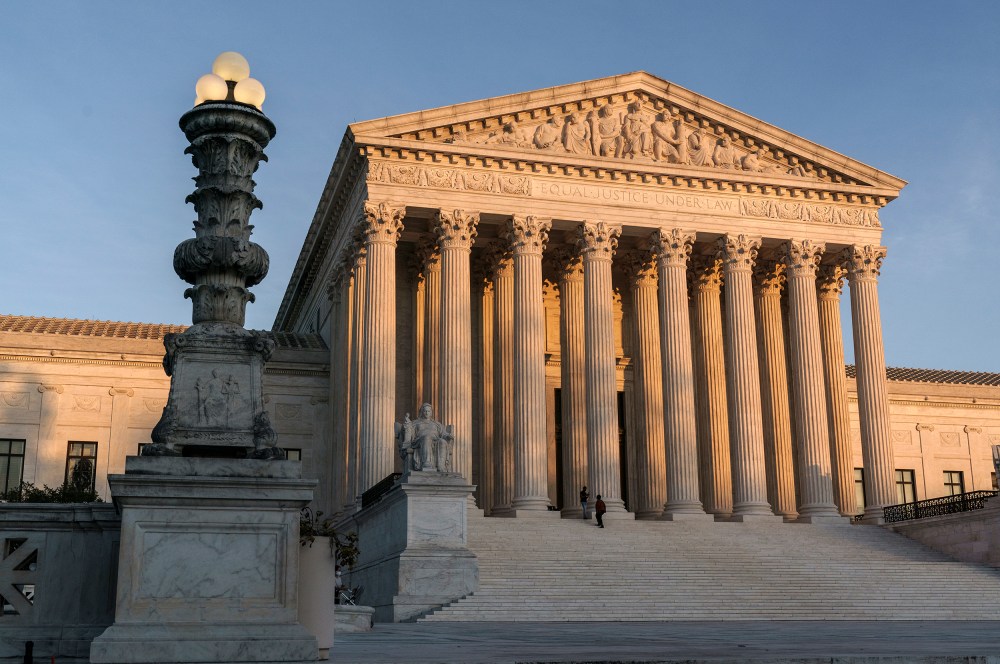
The Supreme Court late Friday night lifted California’s restrictions on religious gatherings in private homes, saying they could not be enforced to bar prayer meetings, Bible study classes and the like. The court’s brief, unsigned order followed earlier ones striking down limits on attendance at houses of worship meant to combat the coronavirus. The vote was 5 to 4, with Chief Justice John G. Roberts Jr. joining the court’s three liberal members in dissent.
The full opinion in Tandon v. Newsom is online here. Note, the majority opinion is unsigned, but by process of elimination, the court’s majority was made up of Justices Samuel Alito, Amy Coney Barrett, Neil Gorsuch, Brett Kavanaugh, and Clarence Thomas. They argued that if California allows residents to gather in retail stores, among other venues, the state cannot ban in-home worship gatherings.
It fell to Justice Elena Kagan to explain why the court’s most conservative justices were making the wrong comparison:
“The First Amendment requires that a State treat religious conduct as well as the State treats comparable secular conduct. Sometimes finding the right secular analogue may raise hard questions. But not today. California limits religious gatherings in homes to three households. If the State also limits all secular gatherings in homes to three households, it has complied with the First Amendment. And the State does exactly that: It has adopted a blanket restriction on at-home gatherings of all kinds, religious and secular alike. California need not, as the per curiam insists, treat at-home religious gatherings the same as hardware stores and hair salons — and thus unlike at-home secular gatherings, the obvious comparator here. As the per curiam’s reliance on separate opinions and unreasoned orders signals, the law does not require that the State equally treat apples and watermelons.”
Evidently, the five-member majority was not persuaded.
But just as notable as the ruling is the larger pattern of rulings. As regular readers may recall, just before midnight, the day before Thanksgiving, a newly Trumpified Supreme Court issued its first big ruling: in a 5-4 decision, the justices blocked New York’s pandemic restrictions on religious institutions. In the hopes of stopping the spread of COVID-19, the state had created occupancy limits, which the conservative Supreme Court said violated religious liberty.
As we discussed soon after, courts have traditionally recognized the importance of state and local officials, working with public-health authorities, creating temporary measures to address life-threatening emergencies. In this case, however, five Republican-appointed justices — not one of whom has a background in epidemiology or pandemic responses — decided to prioritize their opinions about religion above all.
In a striking dissent, Justice Sonia Sotomayor wrote, “Justices of this Court play a deadly game in second-guessing the expert judgment of health officials about the environments in which a contagious virus, now infecting a million Americans each week, spreads most easily.”
Justice Neil Gorsuch, Trump’s first choice for the high court, marveled in a concurring opinion that New York’s policy imposed looser restrictions on outlets such as liquor stores and bicycle repair shops than on houses of worship. It fell to Sotomayor to explain details that should be obvious: “Unlike religious services … bike repair shops and liquor stores generally do not feature customers gathering inside to sing and speak together for an hour or more at a time.” My fanciful hope was that Sotomayor’s stinging dissent was so brutal, the far-right jurists would have no choice but to rethink their approach. They did not. In February, the court’s conservative majority again partly lifted restrictions on religious services, without regard for the public-health consequences. Kagan was uncharacteristically blunt in writing the dissent at the time, reminding her conservative colleagues of truths they ought to know. “Justices of this Court are not scientists,” She began. “Nor do we know much about public health policy. Yet today the Court displaces the judgments of experts about how to respond to a raging pandemic…. That mandate defies our caselaw, exceeds our judicial role, and risks worsening the pandemic.” Kagan added, “To state the obvious, judges do not know what scientists and public health experts do. So it is alarming that the Court second-guesses the judgments of expert officials, and displaces their conclusions with its own. In the worst public health crisis in a century, this foray into armchair epidemiology cannot end well.” Two months later, five justices’ affinity for armchair epidemiology remains unchanged.
Steve Benen is a producer for "The Rachel Maddow Show," the editor of MaddowBlog and an MS NOW political contributor. He's also the bestselling author of "Ministry of Truth: Democracy, Reality, and the Republicans' War on the Recent Past."
Latest Post
Recommended


