








The combination of technology and changes to campaign-finance laws has led to quite a bit of creativity in the field of pressuring members of Congress. Occasionally, however, the legal lines get a little blurry.
Last year, for example, when Betsy DeVos’ nomination to become Education secretary was pending, activists in Pennsylvania hoped to convince Sen. Pat Toomey (R-Pa.) to vote against her. Because DeVos had contributed $55,000 to the Republican senator, one of Toomey’s constituents launched a crowd-funding campaign, hoping to raise at least $55,000 in order to “buy” the lawmaker’s opposition to the nominee.
The folks behind the campaign, concerned about bribery laws, quickly labeled the endeavor “satire,” and Toomey confirmed his former donor to Donald Trump’s cabinet.
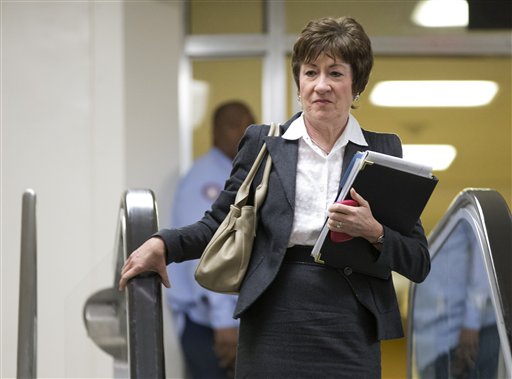
With Sen. Susan Collins (R-Maine) facing similar pressure to oppose Brett Kavanaugh’s Supreme Court confirmation, a related controversy is unfolding, though the differences matter. The Washington Post reported:
For liberals concerned about what a seat for Kavanaugh would do to the court, Collins has been both a source of limited hope and frustration, expressing concerns about threats to Roe vs. Wade, while consulting with the Trump administration through the selection process.
So a group of liberal activists in Maine created an unusual crowdfunding campaign that encapsulated both of these emotions: they raised money in the form of pledges that they said they would give to whoever decided to challenge Collins in 2020 if she voted for Kavanaugh’s confirmation. If she votes no, the money will never be withdrawn from donors.
The effort has been fairly successful — organizers have already raised over $1 million, which would go to Collins’ next rival — though the senator has condemned the “quid-pro-quo fundraising” project, equating it with attempted “bribery.”
Is she right?
Credible experts appear divided on the subject, though Rick Hasen made a compelling case in Slate that the endeavor is legal under the existing campaign-finance system
But of particular interest to me is the oddity of watching Republicans wring their hands over this pressure campaign. A top aide to Senate Majority Leader Mitch McConnell (R-Ky.), for example, said every Maine Democrat should “refuse to accept this tainted funding” as the “principled” thing to do. I’m no fan of the current system — which, incidentally, Mitch McConnell has fought tooth and nail to leave in place — but let’s not be naïve about how it’s structured: lawmakers face financial pressures all of the time, with the all-too-real realization that individual votes can and will affect contributions. Occasionally, members are quite candid on the subject. During the debate over the Republican tax plan late last year, Rep. Chris Collins (R-N.Y.), before his criminal indictment, conceded, “My donors are basically saying, ‘Get it done or don’t ever call me again.’” Around the same time, Sen. Lindsey Graham (R-S.C.) warned his colleagues that if they failed to pass the tax breaks, the GOP’s “financial contributions will stop.” Experts can speak to this with more authority than I can, but Chris Collins and Lindsey Graham weren’t describing “bribery,” per se, so much as they publicly acknowledged the direct connections between a pending vote and donors’ money. Progressive activists in Maine appear to be doing the same thing: they’re effectively telling Susan Collins that they hope she’ll vote a certain way, and if she disagrees, they’ll support her next opponent. As Matt Ford concluded, “Whatever the Maine organizers’ actual legal liability in this case, their real crime seems to be taking the current system to its logical conclusion.”
Steve Benen is a producer for "The Rachel Maddow Show," the editor of MaddowBlog and an MS NOW political contributor. He's also the bestselling author of "Ministry of Truth: Democracy, Reality, and the Republicans' War on the Recent Past." Recommended


