








The Republican tax plan is already a caricature of Montgomery Burns-style policymaking. We are, after all, talking about a proposal that would slash taxes on the richest Americans, give permanent tax breaks to big corporations, increase taxes on many in the middle class, and leave millions of vulnerable families without health security.
It’s the Robin Hood model in reverse: GOP officials are pushing a radical redistribution-of-wealth scheme that rewards those who already have the most.
That’s not, however, the end of the story. The Washington Post reported overnight on the latest data from CBO, and the “large, harmful effects on the poor” imposed by the Senate Republicans’ legislation.
The Senate Republican tax plan gives substantial tax cuts and benefits to Americans earning more than $100,000 a year, while the nation’s poorest would be worse off, according to a report released Sunday by the nonpartisan Congressional Budget Office. […]
By 2019, Americans earning less than $30,000 a year would be worse off under the Senate bill, CBO found. By 2021, Americans earning $40,000 or less would be net losers, and by 2027, most people earning less than $75,000 a year would be worse off. On the flip side, millionaires and those earning $100,000 to $500,000 would be big beneficiaries, according to the CBO’s calculations.
The full report from the CBO is online here. Note that the office’s findings about the poor being punished are not, strictly speaking, entirely the result of changes to tax rates. Rather, the real problem for those at the low end of the income scale is the result of proposed Republican changes to the health care system, which would disproportionately hurt those with the least.
This, when coupled with scheduled tax increases on low-income families once the GOP plan is fully implemented, represent a one-two punch to the working poor.
The findings are largely in line with those released two weeks ago by the Joint Committee on Taxation, which is an official congressional office responsible for scrutinizing tax bills. The difference is, the CBO added a layer of scrutiny related to health care — which in turn made the Republican plan look even worse.
Whether this will matter to Senate Republicans, however, is an entirely different question.
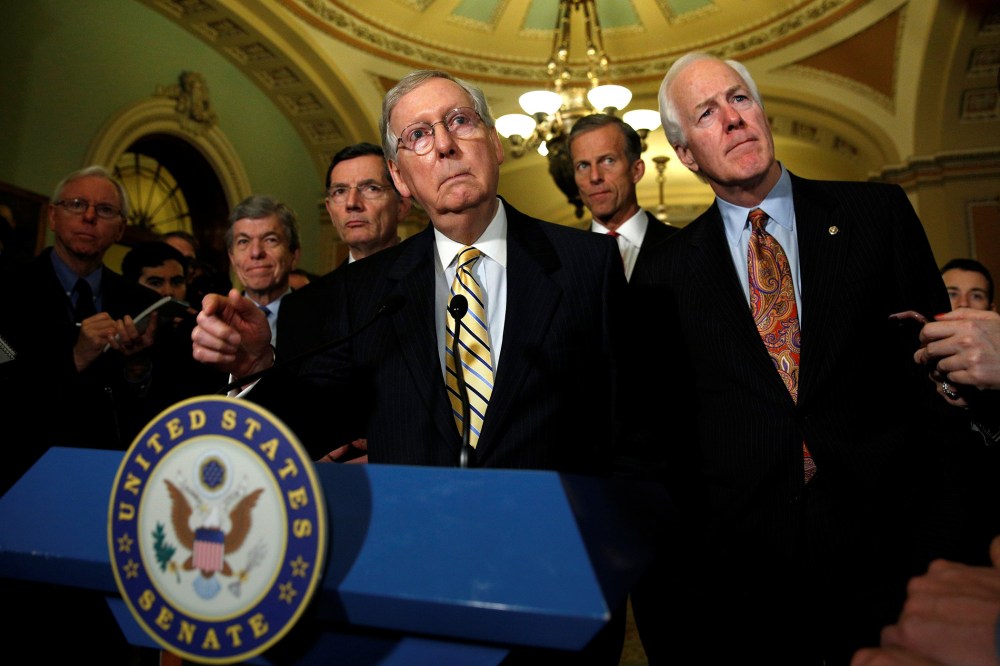
The entire, 515-page proposal was formally unveiled six days ago, just two days before Thanksgiving, when lawmakers were not on Capitol Hill. Nevertheless, GOP leaders intend to bring their bill to the floor for a vote this week, perhaps as early as Thursday. In 1986, when Congress last tried to overhaul the federal tax code, lawmakers took two years to carefully examine a bipartisan package and its potential impact. In 2017, Donald Trump’s Republican Party intends to ram through a slapdash bill in two weeks. To do so, they’ll need 50 senators. Politico reported this morning that Senate Majority Leader Mitch McConnell (R-Ky.) “doesn’t appear to have locked down 50 votes” just yet, though Republican leaders are expressing confidence that they’ll figure something out over the next couple of days. To that end, all kinds of possible changes — ranging from pass-through deductions to property-tax changes — are under consideration. That said, as the Center on Budget and Policy Priorities’ Chye-Ching Huang noted, the ideas on the table “would do nothing to alter the fundamentals of the GOP bill.”
Steve Benen is a producer for "The Rachel Maddow Show," the editor of MaddowBlog and an MS NOW political contributor. He's also the bestselling author of "Ministry of Truth: Democracy, Reality, and the Republicans' War on the Recent Past." Recommended


