








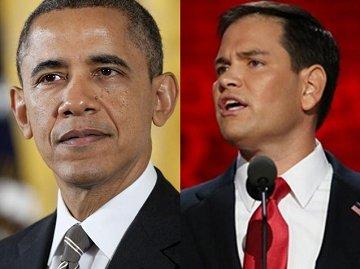
Over the weekend, USA Today published the leaked blueprint of the White House’s comprehensive immigration reform plan, built around an eight-year pathway to citizenship for undocumented immigrants. Sen. Marco Rubio (R-Fla.), demonstrating the kind of devotion to serious policymaking we’ve come to expect over his brief career, immediately condemned the unfinished plan he had not yet seen.
Senator Marco Rubio, Republican of Florida, issued a statement late Saturday calling the president’s reported legislation “half-baked and seriously flawed.” He said its approval “would actually make our immigration problems worse.”
The far-right Floridian added that President Obama’s fallback plan would be “dead on arrival” if sent to Capitol Hill for consideration.
What’s far less clear, at least for now, is why Rubio rejected Obama’s outline with such ferocity.
The White House’s draft, which was circulated among government agencies that deal with immigration and border security, includes provisions that will sound very familiar to those following the larger immigration debate: undocumented immigrants would be eligible for a pathway to citizenship, but they’d be at the back of the line behind those who applied for citizenship legally. Undocumented immigration would also have to pay back taxes, pay a penalty, and learn English.
To be sure, policymakers and stakeholders can and should argue over the details, but there’s nothing in this unfinished White House plan that Republican supporters of reform should find objectionable. Indeed, Obama’s blueprint is entirely consistent with what Rubio himself has said he wants.
So why in the world did the Republican senator immediately denounce a policy outline he ostensibly agrees with? What makes Rubio think it’s a good idea to oppose his own priorities?
Jamelle Bouie framed the question correctly: Is Rubio interested in passing immigration reform, or does he want credit for being the kind of GOP senator who is interested in immigration reform. If it’s the former, then this is just posturing — Rubio knows that he has to placate the right-wing of his party, which is hostile to anything that comes from the White House. But if it’s the latter, then Rubio might be positioning himself for a break with the administration, and a mournful declaration that — despite his hard work — he just couldn’t come to an agreement. I’ve never been entirely clear on Rubio’s motivations. On the one hand, the senator has accomplished nothing during his brief career, and may want to use comprehensive immigration reform as a way to bolster his credibility as a serious policymaker. On the other, Rubio may also want to position himself as the right-wing champion who stopped President Obama from passing one of his domestic policy priorities in his second term. Benjy Sarlin makes the case that Rubio’s alleged outrage over the weekend is actually closer to Kabuki Theater — he’s pretending to condemn the White House’s blueprint, even though he agrees with it, because if a high-profile Republican is seen applauding Obama, it might make reform less likely, not more. What we’re left with is a simple truth: it’s a messy game Rubio’s playing.
The place for in-depth analysis, commentary and informed perspectives. Recommended


