The Rachel Maddow Show WEEKNIGHTS 9PM ETMorning Joe WEEKDAYS 6AM ETDeadline: White House with Nicolle Wallace Weekdays 4PM ETThe Beat with Ari Melber Weeknights 6PM ETThe Weeknight Weeknights 7PM ETAll in with Chris Hayes TUESDAY-FRIDAY 8PM ETThe Briefing with Jen Psaki TUESDAYS – FRIDAYS 9PM ETThe Last Word with Lawrence O’Donnel Weeknights 10PM ETThe 11th Hour with Stephanie Ruhle Weeknights 11PM ET
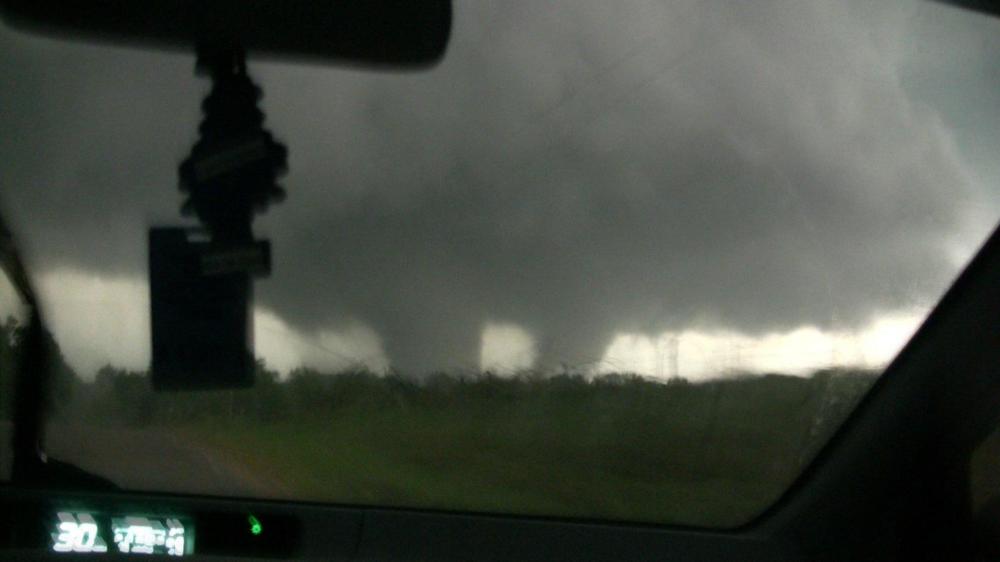
The tiny town of Tushka, Oklahoma, sits a couple hours drive southeast of Moore. And like Moore, Tushka is vulnerable to tornadoes. A twister rated EF-3 struck
In Oklahoma, safe rooms can save lives
By
Laura Conaway
The tiny town of Tushka, Oklahoma, sits a couple hours drive southeast of Moore. And like Moore, Tushka is vulnerable to tornadoes. A twister rated EF-3 struck Tushka in 2011, leveling much of the town. But as the Tulsa World noted at the time, Tushka was not defenseless:
Nearly 100 men, women and children crowded shoulder-to-shoulder into a six-year-old, above-ground, concrete-reinforced safe room adjacent to the Tushka pre-school. A block away, about 100 other residents, their kids and their dogs in tow, rushed into the 90-year-old, below-ground, public shelter — 45-feet long and shaped like a tube, with dirt floors and steel doors at either end.
Tushka lost two people that day who were not in the shelters. The safe rooms saved the others. The superintendent of Tushka schools, Bill Pingleton, says the newer shelter cost about $150,000 to build. Most of that cost got picked up by the Federal Emergency Management Agency. Divided over time, Pingleton says, safe rooms are not all that expensive.
The 2011 tornado destroyed Tushka’s school; the new one they’re building now will include three safe rooms, one each for the high schoolers, the middle schoolers and the grade schoolers. “That was absolutely our first thought, ‘Where are we going to put the safe rooms?’ ” he tells us. “Then we sited the school around that.” The design allows for all 460 kids to reach shelter within moments.
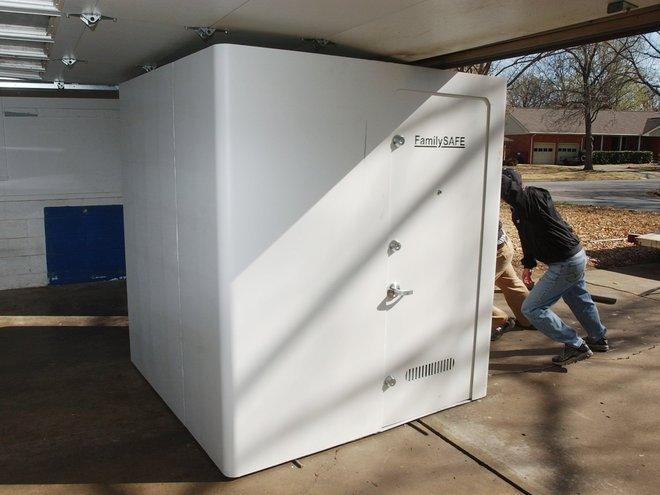
A safe room on the way in Tulsa, 2011.
Already people drive in from surrounding towns to use the existing Tushka safe rooms during bad weather, including yesterday. That is something of a tradition in Oklahoma, where they have at least 77 community safe rooms scattered around the state, most of them funded by FEMA. The federal government is still helping local governments build them. FEMA announced a $2.3 million grant for a community safe room in Victoria County, Texas, this month.
After a tornado struck the town of Moore, Oklahoma, in 1999, people used FEMA grants for safe rooms at home. They would need them just four years later. A FEMA release tells the story of a Moore resident named Charles Atchley, in tornado number two:
During the tornado of May 8, 2003, Atchley and his three grandchildren took shelter in his safe room. His wife was at work at the time of the storm. He quickly took shelter after hearing the warning siren. When the storm passed, his family left the shelter safe and sound. Once again, this family was lucky and had no damage to their home, but Atchley said the storm shelter gives him “peace of mind” he wouldn’t trade.
The shelter unit is neatly recessed into the ground and only the door can be detected nestled within the manicured landscape of the backyard. Atchley has stocked his safe room with the necessary supplies for survival and even included a black-and-white TV that runs on batteries. “I even get reception in the storm shelter,” he boasted.
The town of Moore has continued its safe room program, urging people in town to get one. The city’s website notes that only about 10 percent of homes there have a dedicated storm cellar and not many have basements. With two big tornadoes in the last several years, it does seem like people in Moore have been eager to take advantage of FEMA grants for safe rooms at home. In theory, FEMA will cover $2,000 of the $2,500-or-so cost for a shelter at home. But Moore officials have run into delays. From a February 2013 posting:
The City’s safe room rebate program is still “on hold”, with not a lot changed from our update of last May.
Our county-wide Hazard Mitigation Plan still has not been approved by the State and FEMA. There were changes to the Federal requirements for this plan that occurred while our contractor was writing the document; he has had to rewrite it. We’ve found that the FEMA requirements and their interpretations seem to be a constantly moving target, more so with the new wrinkles. We’re still working out various wording changes with the State reviewers and hope to submit the final document in March.
However, the Plan is not our main obstacle. The Federal grant program which funds local initiatives such as ours is funded by monies set aside during Presidential major disaster declarations. Oklahoma has had few of these declarations in the past couple of years, so there is not a lot of grant money available.
Once our Plan is approved and grant funds become available, we will certainly proceed with our rebate program application.
Moore’s public information officer, Jayme Shelton, says the process has been frustrating. “No one has gotten the money yet,” he tells us.
There’s no way to know for certain, of course, whether having more safe rooms would have made a difference in Moore yesterday, in homes or in the schools. Down the road in Tushka, superintendent Pingleton says he could not help thinking of Moore’s teachers and students clustered in corridors, closets and bathrooms. “It was on my mind last night,” he says. “When they were huddled in those hallways, it’s a tough situation.”