










Because presidents have broad declassification powers, it was notable when Donald Trump published this to Twitter two weeks ago today: “I have fully authorized the total Declassification of any [and] all documents pertaining to the single greatest political CRIME in American History, the Russia Hoax. Likewise, the Hillary Clinton Email Scandal. No redactions!”
The president was apparently eager to tout the move. A day after publishing the ostensible announcement, Trump retweeted this item from Judicial Watch’s Tom Fitton saying that it was a “HUGE” deal that the president had “just ordered” a sweeping declassification of materials. A day later, Trump also retweeted this item from an ABC News affiliate in Virginia on the apparent declassification order.
Of course, it wasn’t long before journalists started seeing this as an opportunity. If the White House was actually declassifying “any and all” documents related to the Russia scandal — with “no redactions” — that opened up some important reporting opportunities.
And so, media outlets took the matter to court, telling a federal judge to accept the president’s public declaration at face value: declassify the materials, with no redactions, just like Donald Trump said. The Justice Department, not surprisingly, pushed back, saying that the president’s tweet was “ambiguous” and shouldn’t be taken at face value.
Last week, Judge Reggie Walton wasn’t satisfied and sought clarification: trust Trump’s own written message or what the administration’s lawyers claim about Trump’s own written message? Does the president mean what he says when he publishes messages to his 87 million followers or not?
The judge gave the Justice Department a deadline of this afternoon to clarify matters. What were the odds that the White House would say, in a binding legal filing, that Trump’s tweets aren’t trustworthy?
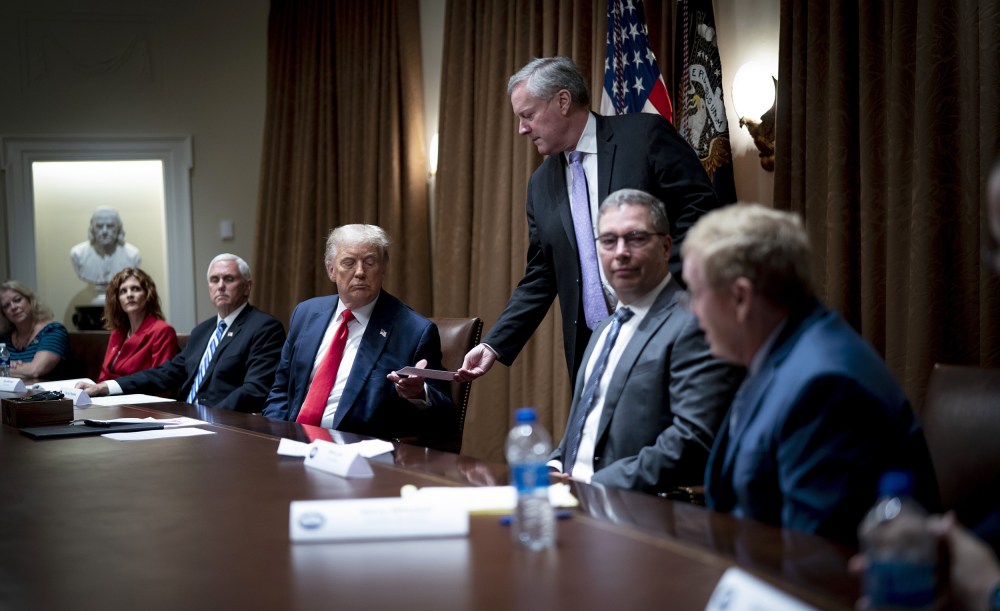
Today, as NBC News reported, the administration’s lawyers answered the question, but not in a way that did Trump any favors. When President Donald Trump tweeted that he had authorized the full declassification of all the documents having to do with the Russia investigation, he didn’t mean it literally and didn’t intend to make public information from the Mueller investigation, White House chief of staff Mark Meadows said in a court filing Tuesday. Contradicting the plain text of what Trump published for the world to see, Meadows said in a sworn court statement, “The president indicated to me that his statements on Twitter were not self-executing declassification orders and do not require the declassification or release of any particular documents.” This isn’t altogether surprising, but it should be seen as embarrassing. Trump published three tweets on this, hyping the developments as an important pre-election move, but as is too often the case, he didn’t mean what he wrote. Let this be a reminder to all about the reliability of the president’s claims on what’s unfolding around him.
Steve Benen is a producer for "The Rachel Maddow Show," the editor of MaddowBlog and an MS NOW political contributor. He's also the bestselling author of "Ministry of Truth: Democracy, Reality, and the Republicans' War on the Recent Past."
Latest Post
Recommended


