









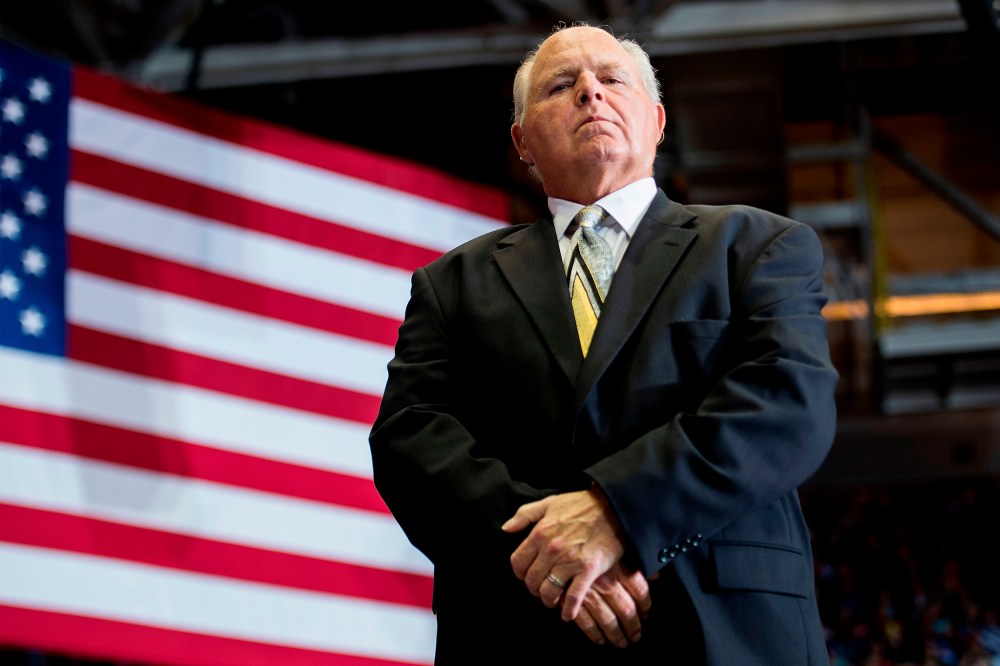

As Barack Obama’s presidency got underway 12 years ago, the Republican Party was noticeably short on leaders. It wasn’t long before many started looking at far-right host Rush Limbaugh as the nation’s preeminent GOP voice.
That did not sit well among some conservative officials. Then-Rep. Phil Gingrey (R-Ga.), for example, derided Limbaugh as a media personality who found it easy to “throw bricks” from outside public office. It took about half a day before the Georgia congressman issued a groveling apology to the conservative media figure.
This happened quite a bit in the early months of 2009. After Limbaugh said he hoped to see Obama fail in his efforts to rescue the country, then-Gov. Mark Sanford (R-S.C.) called the comments the words of an “idiot.” The South Carolina governor backpedaled soon after. After then-RNC Chairman Michael Steele dismissed Limbaugh as little more than an “entertainer” who uses “incendiary” rhetoric, he too scrambled to apologize.
Over and over again, this kept happening, as assorted Republicans initially denied that Limbaugh was effectively leading the GOP from behind a microphone, only to turn around soon after and express their undying affection for the host.
The incidents were emblematic of a larger truth: as the public learns of Limbaugh’s passing, there’s no mistaking the power he wielded over Republican politics.
Rush Limbaugh, the conservative commentator whose fiery rhetoric forged a new landscape for talk radio and inflamed the partisan divide that came to characterize political discourse in the U.S., has died, according to an announcement on his radio show Wednesday…. Limbaugh was 70 years old.
Younger Americans may not fully appreciate the scope of the host’s influence, especially as his radio program reached a national audience in the late 1980s. Before there was social media, before there were ridiculous chain emails, before there was Fox News, there was Rush Limbaugh — and for many years, far-right audiences simply couldn’t get enough of his bombast.
There’s no denying that Limbaugh’s many critics accused him of having an ugly record, especially on matters of race and equality, and those who’ve accused the host of having “trafficked in hate” have a lengthy record to draw upon. There’s also no denying that the Republican Party and conservative politics would look quite different today had Limbaugh not played such a significant role in shaping them. Indeed, it’s hardly a stretch to think Donald Trump capitalized on Limbaugh’s brand of politics en route to the White House in 2016. MSNBC’s Chris Hayes noted this afternoon that Limbaugh, Trump, Newt Gingrich, Roger Ailes, and Rupert Murdoch are the “most important and influential conservative figures in American life over the past three decades.” Chris added, “The conservatism we have is the conservatism they have forged.” I might quibble a bit with others whose names belong in the mix — Mitch McConnell, Antonin Scalia, and Pat Robertson come to mind — but the larger point is absolutely correct: Limbaugh’s legacy is plainly evident throughout contemporary American politics.
Steve Benen is a producer for "The Rachel Maddow Show," the editor of MaddowBlog and an MS NOW political contributor. He's also the bestselling author of "Ministry of Truth: Democracy, Reality, and the Republicans' War on the Recent Past."
Latest Post
Recommended


