










By any fair measure, congressional Democrats deserve credit for being consistent on the issue of COVID relief. Last year, Donald Trump signed two big relief packages, and both enjoyed overwhelming support from Democratic lawmakers. Indeed, when the CARES Act was set to expire, it was Democratic leaders who championed a massive, $3 trillion proposal.
If approved, the bill likely would’ve given Trump a boost in the runup to the 2020 presidential election, but House Speaker Nancy Pelosi (D-Calif.) and then-Senate Minority Leader Chuck Schumer (D-N.Y.) did it anyway, seemingly indifferent to the electoral considerations.
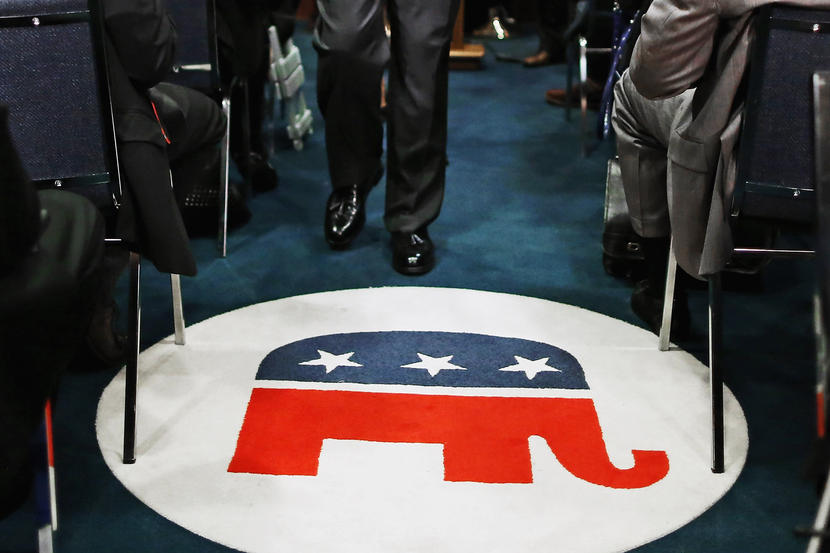
For Republicans on Capitol Hill, it’s a very different story: nearly all GOP lawmakers rallied behind the relief packages signed by Trump, but now that Joe Biden is president, literally zero Republicans in Congress have voted for the American Rescue Plan.
They know it’s popular. They know it’s going to deliver important benefits. They know their obstinance makes plain the parties’ asymmetric partisanship. They just don’t seem to care.
The next question is whether Republicans will pay a price for trying to kill this bill.
Some in the GOP would have people believe that Democrats will suffer for having passed such a popular and worthwhile piece of legislation. “It’s bad politics for them,” Sen. Lindsey Graham (R-S.C.) recently said. “Because the narrative is that they’re liberal, they just spend money like there’s no tomorrow, that every time there’s a crisis they load it up with spending.”
But there is no such “narrative.” No one cares about stale rhetoric and posturing, and congressional Republicans have barely tried to make the case against the bill anyway. The public has heard weeks of discussion about this plan, and as a Pew Research Center survey released yesterday helped show, the American Rescue Plan continues to enjoy broad support.
[A] sizable majority of U.S. adults (70%) say they favor the legislation. Only about three-in-ten (28%) oppose the bill, which provides economic aid to businesses, individuals and state and local governments. While congressional votes on the legislation have been deeply divided along partisan lines, 41% of Republicans and Republican-leaning independents support the measure. The bill draws overwhelming support from Democrats and Democratic leaners (94% favor).
Other recent polls have pointed in the same direction. There’s no modern precedent for a political party passing a popular bill and then facing a political backlash.
The more realistic scenario is the opposite. The more the relief package delivers, and the more the economy improves, the more likely it becomes that Republicans will have a tough time defending their relentless opposition to it.
It’s likely that many GOP lawmakers remember 2009 and 2010, and their ability to run against the Recovery Act — a Democratic plan that rescued the nation from the Great Recession, but which led to a gradual economic recovery that left many Americans frustrated. (It was made smaller and less effective to satisfy GOP senators and overcome a Republican filibuster.) Two years later, there was a “red wave” and Democrats lost the House.
Maybe, Republicans assume, they can just run the same play again. But if that is the Republican plan, it’s badly flawed. As an NBC News piece explained yesterday, “The financial benefits in the Covid-19 relief bill are more immediate and tangible than the 2009 stimulus package. And now, unlike 2009, there is little grassroots enthusiasm against the Democratic push, with many conservatives more fired up over cultural issues. Some Republican lawmakers and activists are highlighting controversies over racist imagery in Dr. Seuss books to rally a disaffected base.” Sen. Brian Schatz (D-Hawaii) added, “We help people, they complain about irrelevant s**t.” Obviously, there are some unpredictable variables at play. Maybe there will be a COVID variant that leads to a fourth wave that strains the economy. Maybe inflation will become a problem and the Federal Reserve will intervene in ways that cause economic pain. Maybe some entirely new problem will emerge that’s not currently on the landscape. But as things stand, Republicans may find it difficult to explain away their universal opposition to a popular bill that greatly benefited the nation. Jon Chait added this morning, “The Republican decision to vote against Biden in unison, without building much of a case against his bill, seems like the worst of all possible worlds. They are setting themselves against a bill that enjoys sky-high levels of support from both economic experts and a large chunk of their own base. It’s possible this gambit somehow works out. But if anybody regrets their political choices in the early weeks of the administration, the odds are it won’t be Biden.”
Steve Benen is a producer for "The Rachel Maddow Show," the editor of MaddowBlog and an MS NOW political contributor. He's also the bestselling author of "Ministry of Truth: Democracy, Reality, and the Republicans' War on the Recent Past."
Latest Post
Recommended


