









Many Republicans have spent the last year and a half looking forward to the 2022 midterm elections. The GOP only needs a net gain of one seat to reclaim a Senate majority, and with history and polling on the party’s aside, the results seemed like a foregone conclusion.
That is, until fairly recently. As NBC News reported, the party’s would-be Senate majority leader is starting to lower expectations.
Senate Minority Leader Mitch McConnell on Thursday downplayed expectations of Republicans capturing control of the Senate in the fall elections, describing “candidate quality” as an important factor. “I think there’s probably a greater likelihood the House flips than the Senate. Senate races are just different — they’re statewide, candidate quality has a lot to do with the outcome,” he said in Florence, Kentucky, at a Northern Kentucky Chamber of Commerce luncheon when asked about his projection for the 2022 election.
The Kentuckian didn’t literally say, “Too many of our candidates are too ridiculous for us to succeed,” but that seemed to be the implicit subtext.
Is McConnell right? There are several dimensions to this, and they don’t all point in the same direction.
Right off the bat, it’s worth emphasizing that the Senate GOP leader is right to be concerned: To the extent that the wind was at Republicans’ backs, that’s no longer the case. On June 1, for example, the FiveThirtyEight Senate forecast said the GOP had a 60 percent chance of winning a majority this year. As of this morning, that number stands at 37 percent.
To be sure, the odds are likely to have plenty of additional peaks and valleys over the next 11 weeks, but as things stand, McConnell’s assessment is rooted in reality.
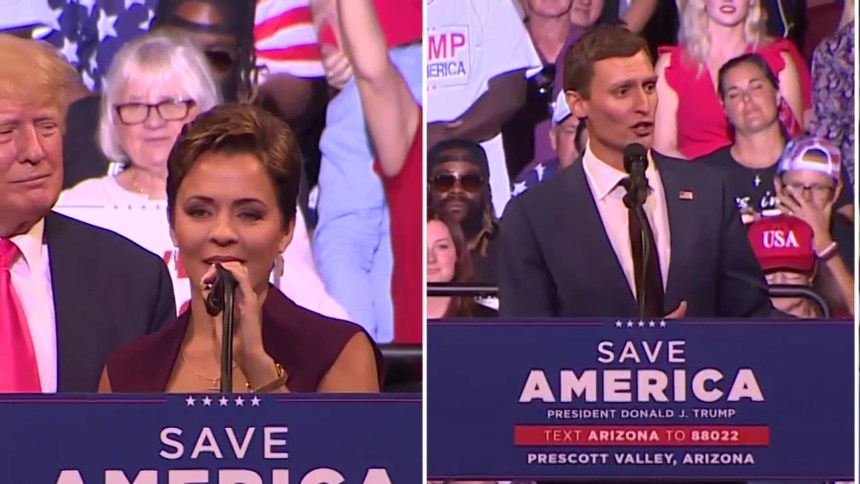
The minority leader is also right about “candidate quality” having a lot to do with election outcomes. This year, Republicans are running several dubious Senate nominees who are seeking elected office for the first time — see, for example, Pennsylvania’s Mehmet Oz, Arizona’s Blake Masters, Ohio’s J.D. Vance, and Georgia’s Herschel Walker — and there’s ample evidence that they’re struggling in their efforts.
It doesn’t help that the GOP’s top recruiting targets in several 2022 contests — including Arizona, Maryland, New Hampshire, and Vermont — rebuffed their overtures.
This isn’t necessarily determinative, and without mentioning names, there are too many recent examples of awful, plainly unqualified candidates winning recent Senate races anyway. But as Republicans know from 2010 and 2012 — many probably remember the likes of Christine O’Donnell, Sharron Angle, and Todd Akin — bad nominees tend to generate bad results. But perhaps most interesting of all was the response from the right to McConnell telling inconvenient truths. The Washington Post reported: The suggestion Thursday by Senate Minority Leader Mitch McConnell (R-Ky.) that his party could fall short of taking control of the chamber this fall — in part because of “candidate quality” — is not sitting well with some conservatives in his party. Stephen Miller, a former senior aide to former president Donald Trump, said McConnell is the one to blame for prospects of a Republican takeover of the Senate that are “shrinking every single day.”
Trump added by way of his Twitter-like platform, “Why do Republicans Senators allow a broken down hack politician, Mitch McConnell, to openly disparage hard working Republican candidates for the United States Senate. This is such an affront to honor and to leadership. He should spend more time (and money!) helping them get elected, and less time helping his crazy wife and family get rich on China!” The expectations in GOP circles was that as the midterms neared, nervous Democrats would be tearing each other apart, while Republicans stuck together and focused on reclaiming majorities. With 11 weeks remaining before Election Day, this dynamic has apparently been turned on its head. Related:
Steve Benen is a producer for "The Rachel Maddow Show," the editor of MaddowBlog and an MS NOW political contributor. He's also the bestselling author of "Ministry of Truth: Democracy, Reality, and the Republicans' War on the Recent Past."
Latest Post
Recommended


