









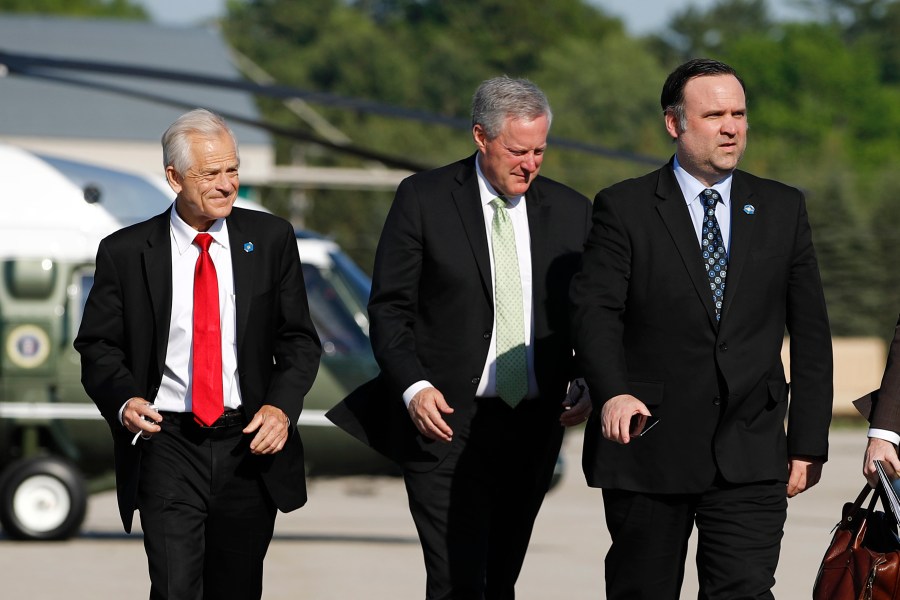
When it comes to the investigation into the Jan. 6 attack, there are some complex dimensions to the probe, but enforcement of subpoenas isn’t one of them. Peter Navarro and Dan Scavino were key insiders in Donald Trump’s White House; they have important information; they were subpoenaed to cooperate with the bipartisan investigation; and they refused.
As we’ve discussed, for the panel examining the insurrectionist riot, this isn’t acceptable. Congressional subpoenas are not supposed to be optional. They are not casual invitations. The more people feel they can ignore these legal commands from federal lawmakers, the more difficult it is for Congress to do its job.
And so, as NBC News reported, House lawmakers took the next obvious step last night.
The House voted Wednesday to refer former Trump aides Peter Navarro and Dan Scavino to the Justice Department for criminal contempt of Congress…. Navarro and Scavino snubbed subpoenas from the Jan. 6 committee to testify and turn over documents relevant to last year’s attack on the U.S. Capitol, which disrupted the 2020 electoral vote count during a joint session of Congress.
The House approved the contempt resolution, 220 to 203.
Broadly speaking, there are a couple of angles to keep in mind. The first is whether Navarro and Scavino will actually be prosecuted. The answer, at least for now, is maybe.
When the House voted to hold Steve Bannon in contempt, for example, and the matter was referred to the Justice Department for possible prosecution, federal law enforcement actually took the matter quite seriously and indicted the former White House strategist. But when the House did the same thing after Mark Meadows defied a subpoena, prosecutors did not act.
It’s difficult to say with confidence why Main Justice treated the two cases differently — there may very well be a rationale tied to a larger case — but for those wondering what’s likely to happen to Scavino and Navarro, the next step is a waiting game.
The other angle of interest was the partisan breakdown of yesterday’s vote: While House Democrats were unanimous in their support of the contempt resolution, only two House Republicans — Wyoming’s Liz Cheney and Illinois’ Adam Kinzinger — voted for the referral.
Similarly, when the House voted on Meadows’ contempt resolution, the same GOP duo — the only Republican members of the Jan. 6 committee — were the only members of the minority party to vote with the majority.
At first blush, the partisan divide probably seems predictable. Circling back to our coverage from October, Navarro and Scavino are Republicans; they’re shielding information at the behest of a former Republican president; that same former Republican president bears responsibility for the attack on the Capitol; and so it stood to reason that Republican House members would balk.
But it didn’t have to be this way. When a Reagan administration official refused to testify to Congress about EPA superfund sites nearly four decades ago, the House voted at the time on contempt of Congress, and the final tally was 413 to zero.
Similarly, as historian Kevin Kruse recently explained, “During Watergate, most Republicans — whatever their politics, whatever they thought of the president — supported efforts to secure evidence and witness testimony. They believed defending their branch of government was more important than defending their party’s leader.” As recently as six months ago, nine Republicans broke ranks and supported the criminal referral for Bannon. Now, that total has dropped to just two. These subpoenas are part of a critically important exercise: Congress is trying to get answers about an attack on our democracy. Nearly every member of the House Republican conference last night suggested that they’re largely indifferent to those answers. As for the state of the Bannon case, there’s fresh evidence that his defense isn’t going especially well. NBC News explained in a separate report: Former Trump adviser Steve Bannon cannot argue at his trial that he is not guilty of contempt of Congress because he was following the advice of his lawyer, a federal judge ruled Wednesday. U.S. District Judge Carl Nichols said such a defense is not available in a contempt of Congress case, dealing Bannon’s defense a major setback. He faces trial in July.
Joyce Vance, a former federal prosecutor, told the network, in reference to yesterday’s development, “It’s a serious blow, because he doesn’t have another good defense. He’ll now have to make a decision about whether to proceed to trial or try to cut some kind of deal.” Watch this space.
Steve Benen is a producer for "The Rachel Maddow Show," the editor of MaddowBlog and an MS NOW political contributor. He's also the bestselling author of "Ministry of Truth: Democracy, Reality, and the Republicans' War on the Recent Past."
Latest Post
Recommended


