









One of the first times I heard a congressional Republican argue against a minimum-wage increase by flubbing the basics of inflation was in 2013. Then-Rep. Marsha Blackburn (R-Tenn.), five years before her election to the Senate, argued against raising the minimum wage above $7.25 an hour because, when she was a teenager, she made $2.15 an hour and she “appreciated that opportunity.”
The trouble, of course, was that in inflation-adjusted terms, that was over $12 an hour. The Tennessee Republican was trying to argue against an increase, but she ended up doing the opposite.
A couple of years later, then-House Speaker John Boehner (R-Ohio) ran into similar trouble, talking about the “rotten jobs” he had when he was younger, which wouldn’t have been possible “if the federal government had kept imposing [a] higher minimum wage.” What he didn’t seem to realize was that when Boehner started working those “rotten jobs,” the purchasing power of the minimum wage was near an all-time high — thanks in part to the federal increases that took effect in the nearly 1970s, when the Ohio Republican was in his early 20s.
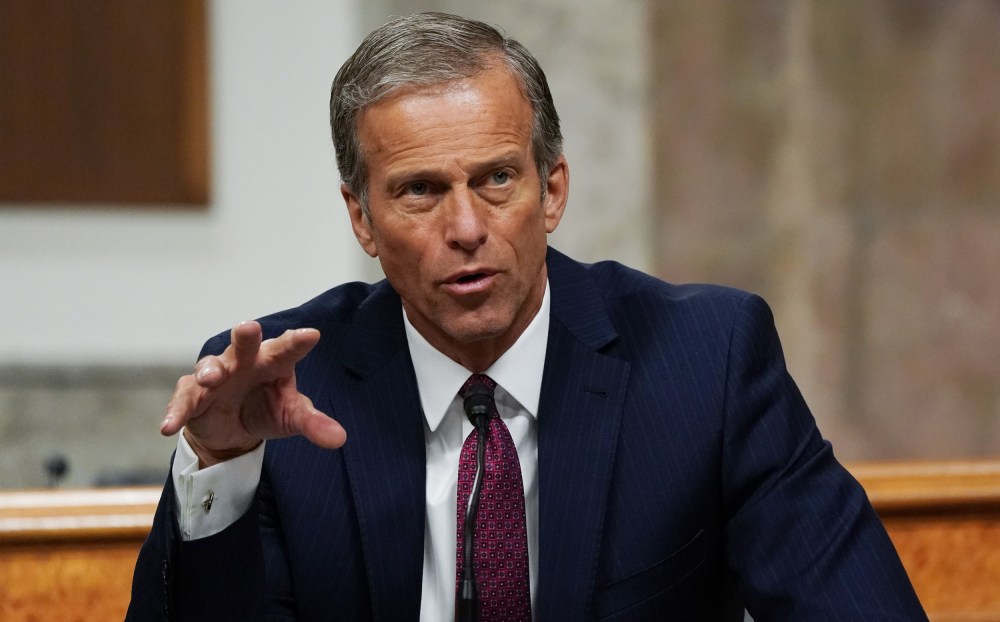
This came to mind again yesterday watching Senate Minority Whip John Thune (R-S.D.) appear at a Capitol Hill press conference and reflect on his youth while making the case against a Democratic proposal to increase the existing minimum.
“I worked for less than the minimum wage, I worked for the minimum wage. I started bussing tables at a dollar an hour, I went up to $2.25 when they moved me up in the place, and then I finally made it to cook — which was big time — that was six bucks an hour.”
The South Dakota Republican wasn’t specific about how old he was at the time, but Thune was born in 1961, so he was likely referring to a period in the late 1970s.
According to the Bureau of Labor Statistics’ inflation calculator, in adjusted terms, someone making $6 an hour in 1979 was making nearly $23 an hour in today’s money — well above what Democrats are proposing in their pending minimum-wage proposal. At the same event, Sen. Roger Marshall (R-Kan.) made related comments about his youth. He’s about a year older than Thune, which means by the time the Kansas Republican was a senior in high school, the federal minimum wage — in inflation adjusted terms — was over $10 an hour. How does any of this help the GOP’s case against a minimum-wage hike? It doesn’t. In fact, these arguments tend to do the opposite, reminding us, once again, that the nation is overdue for an increase.
Steve Benen is a producer for "The Rachel Maddow Show," the editor of MaddowBlog and an MS NOW political contributor. He's also the bestselling author of "Ministry of Truth: Democracy, Reality, and the Republicans' War on the Recent Past."
Latest Post
Recommended


