









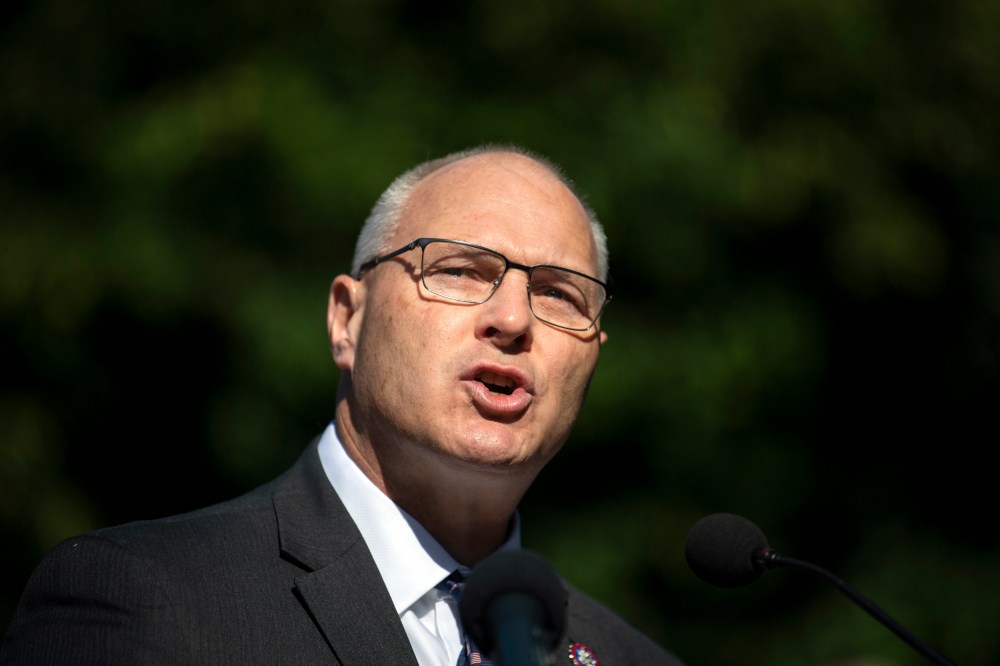

Around this time two years ago, Republican Rep. Pete Stauber generated some unwelcome headlines. The Minnesotan was celebrating some local federal grants from Democratic legislation that he’d voted against, sparking hypocrisy accusations.
This week, it happened again.
Stauber issued a press release roughly 24 hours ago, touting a billion-dollar investment to replace the Blatnik Bridge, which connects Minnesota and Wisconsin. The statement included this quote from the GOP congressman:
“The Blatnik Bridge is aging, and its restoration is essential to ensuring continued economic success, which is why I have long fought for these funds. Securing the money to help replace this bridge has been a top priority for both states, and I am proud to have worked with my Minnesota and Wisconsin Congressional colleagues to secure this critical investment. I look forward to seeing this project benefit countless industries, employers, health care patients, commuters, and tourists for years to come.”
On social media, Stauber added that he was “proud to announce” the investment, which he described as “a HUGE win” for his district.
There was, however, one key detail he neglected to mention: The investment in the Blatnik Bridge came by way of the Bipartisan Infrastructure Law that President Joe Biden signed into law — and which Stauber voted against.
It was a point that Tim Walz, Minnesota’s Democratic governor, felt compelled to note, reminding the public that Stauber “voted against every screw, steel beam, and concrete pier in this bridge.” Walz added, “Luckily, [Biden] worked with Stauber’s colleagues and got it done without him.”
The governor was arguably understating matters. The Republican not only voted against the infrastructure package, he issued a written statement in November 2021, declaring, “I will not be complicit in paving a destructive and irreversible path towards socialism.”
As we’ve discussed, when it comes to Republicans seeking credit for infrastructure investments they opposed, there are degrees and nuances. For as long as there’s been a Congress, there have been lawmakers seeking federal funds for their states and districts — even when those resources came from bills they voted against. The thinking behind the appeals is obvious: They might’ve opposed the legislation, but if the government is going to make the investments anyway, these members figure they might as well make the case for directing some of those funds to their own constituents.
I’m not unsympathetic to this argument. It’s certainly rooted in the American tradition, and Stauber really did make the case for this spending after the bill he opposed became law.
But the details matter. The Minnesotan saw the bipartisan bill as an example of “socialism.” Soon after, he apparently concluded that funding from the infrastructure package would nevertheless improve the economy in his district and give the local community a boost. Several other GOP members said and did the same thing. It’d be one thing for Republicans to make the case that their constituents deserve their fair share of a larger federal pie, but it’s something else when Republicans condemn a bill as “socialism,” only to argue soon afterward that socialism would work wonders in their districts. Biden had a little fun at the GOP’s expense during remarks at an automobile plant in October 2022, saying to laughter, “I didn’t know there were that many socialist Republicans.” He added, “Folks, look, you can’t make this stuff up. I’ve got to say, I was surprised to see so many socialists in the Republican caucus.” The quote is every bit as applicable now as it was at the time. This post updates our related earlier coverage.
Steve Benen is a producer for "The Rachel Maddow Show," the editor of MaddowBlog and an MS NOW political contributor. He's also the bestselling author of "Ministry of Truth: Democracy, Reality, and the Republicans' War on the Recent Past."
Latest Post
Recommended


