








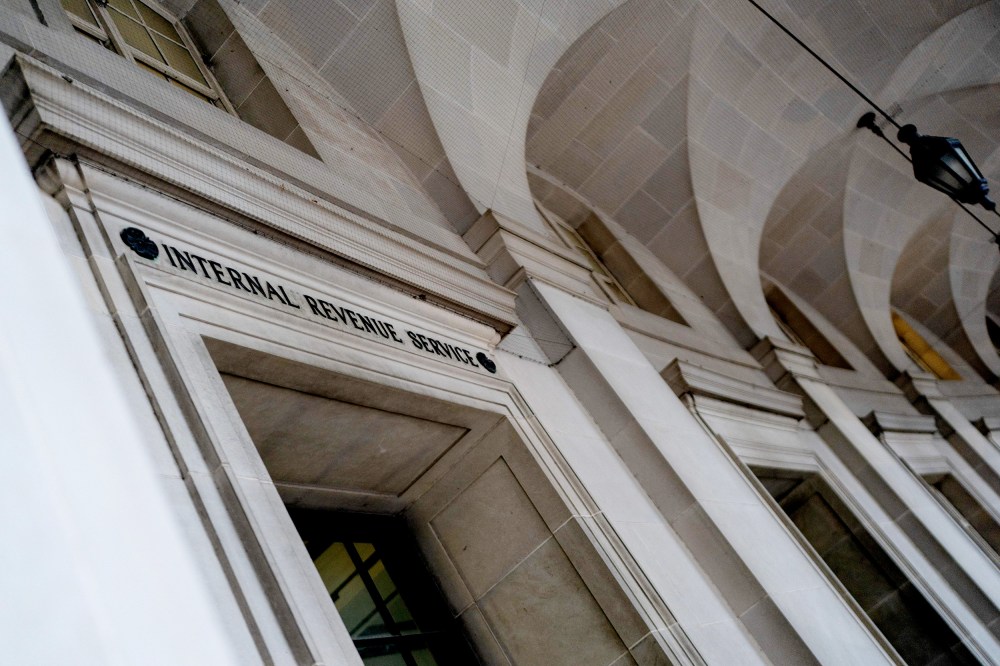

In the post-Watergate era, the Internal Revenue Service has been required to conduct automatic audit of every sitting president’s taxes, every year, regardless of circumstances. As we’ve discussed, a president need not be suspected of any wrongdoing; the reform was simply created to help bolster public confidence.
The assumption has long been that the IRS has followed through on its own rule, and for the most part, that assumption has held true: The tax agency has audited Democratic and Republican chief executives for decades. Donald Trump, however, the only modern president who hid his tax returns from the public, wasn’t audited until his third year in office — and that only happened when congressional Democrats began asking about whether the IRS’s mandatory presidential audit program was working as it should.
With this in mind, Rep. Richard Neal, the Democratic chairman of the Ways and Means Committee, proposed legislation to codify the mandatory audit policy into federal law. As the Associated Press reported, the House passed the bill yesterday.
The House took action Thursday after disclosures that the IRS never fully reviewed Donald Trump’s tax returns during his presidency, passing a bill that would require audits of any president’s income tax filings. The legislation would turn what had been a long-standing post-Watergate norm into established federal policy. The Democrat-led measure provides a capstone to a yearslong investigation of Trump’s tenure as the first president in recent history not to disclose his tax returns to the public.
“These improved guardrails will provide Americans the assurance they deserve that our tax code applies evenly and fairly to all of us, no matter how powerful,” Neal explained, defending his proposal.
At face value, there’s nothing especially partisan or ideological about the bill. It would simply require that the IRS do what it’s already required to do, and it would apply equally to all presidents, regardless of party.
And yet, the final tally was 222 to 201 — and all of the “no” votes came from Republicans. In fact, only five GOP House members — Wyoming’s Liz Cheney, New York’s John Katko, Illinois’ Adam Kinzinger, South Carolina’s Tom Rice, and Michigan’s Fred Upton — voted with the Democratic majority. Of these five, none will be returning to Congress next year: Katko, Kinzinger, and Upton chose not to run for re-election, while Cheney and Rice were defeated in Republican primaries this year. Rank-and-file GOP members complained that the bill was a slap in the face toward Trump, but remember, this bill would apply to all presidents. Indeed, if Trump doesn’t return to the White House, it would never apply to him at all. Nevertheless, 201 House Republicans balked anyway. The bill now heads to the Senate, where members won’t take up the measure before the start of the next Congress. That said, as the AP report added, “it is seen as a starting point for future efforts to bolster oversight of the presidency.”
Steve Benen is a producer for "The Rachel Maddow Show," the editor of MaddowBlog and an MS NOW political contributor. He's also the bestselling author of "Ministry of Truth: Democracy, Reality, and the Republicans' War on the Recent Past."
Latest Post
Recommended


