









When the coronavirus pandemic started taking its toll on the U.S. economy, Florida, like many states, saw dramatic job losses. Unlike most states, however, Floridians had to deal with a dreadful system for the unemployed to try to navigate in order to receive the benefits they’re entitled to.
Adding insult to injury, the system was deliberately designed to be awful.
Michele Evermore, an unemployment insurance expert at the National Employment Law Project, told the New York Times in April, “Florida is a terrible state to be an unemployed person. It’s hard to get in. Once you do, it’s easy to get disqualified. The benefit level is way below average. And that was before the crisis.”
Quite right. When Sen. Rick Scott (R-Fla.) was governor, he and his team designed the benefit-application process to be arduous. The Republican’s plan was simple: by imposing restrictions, adding pointless hurdles, and slashing payments, people would be “encouraged” to remain employed and avoid the state unemployment system.
But when crisis struck, that system was strained to the breaking point — and beyond. Many Floridians who lost their jobs through no fault of their own had to endure lengthy delays before receiving the aid they needed to keep their heads above water. The state’s system quickly earned a reputation as the nation’s worst.
In April, Politico quoted one state official conceding, “It’s a sh– sandwich, and it was designed that way by [Rick Scott]. It wasn’t about saving money. It was about making it harder for people to get benefits or keep benefits so that the unemployment numbers were low to give the governor something to brag about.”
The same article quoted Joe Gruters, the chairman of the Republican Party of Florida, saying “someone should go to jail” over inadequate funding for the state’s unemployment system.
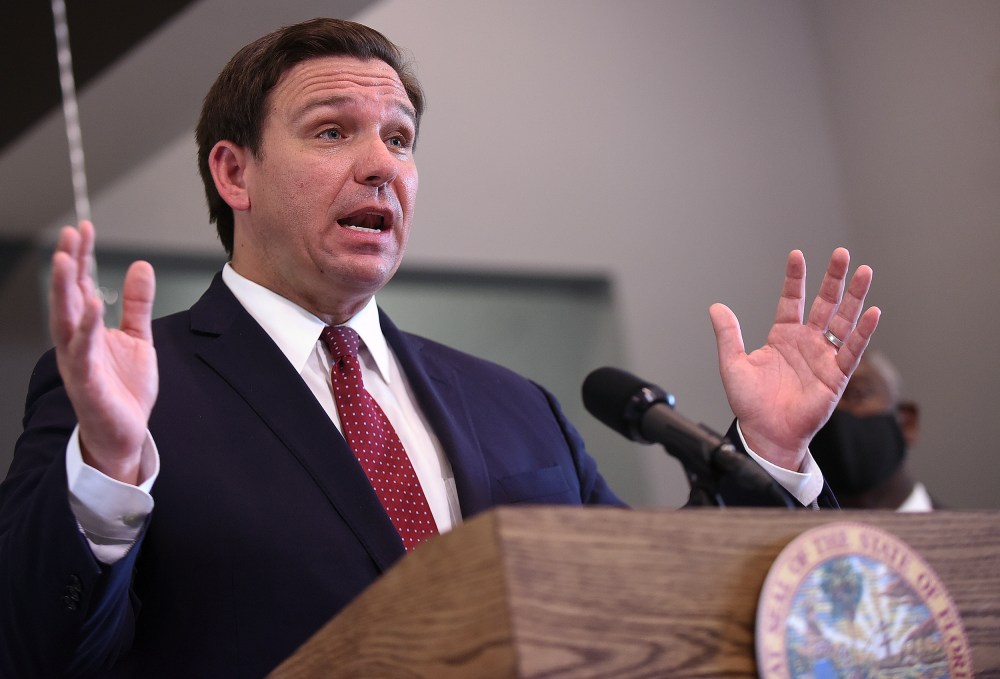
It was against this backdrop that Florida’s current Republican governor, Ron DeSantis, started taking public steps to avoid blame for the mess he inherited. The CBS affiliate in Miami reported this week:
Gov. Ron DeSantis is acknowledging for the first time that the state unemployment system was deliberately designed to frustrate people, making it so difficult for them to apply for benefits that they would give up and just not get paid. The revelation came during DeSantis’ one-on-one with CBS4’s Jim DeFede, which was the governor’s first sit-down interview since the COVID-19 pandemic started. “I think the goal was for whoever designed it was let’s put as many kind of pointless roadblocks along the way so people just say, ‘Oh, the hell with it. I’m not going to do that,’” DeSantis said. Asked specifically if his GOP predecessor tried to block paying benefits to out-of-work Floridians, the governor hedged a bit before adding, “I think definitely in terms of how it was internally constructed, it was definitely done in a way to lead to the least number of claims being paid out.” DeSantis highlighted “pointless roadblocks” added to the application process for no reason. As the Tampa Bay Times reported, Scott is starting to push back in an interesting way. Asked Wednesday on Fox Business News about DeSantis’ “pointless roadblocks” comment, Scott said he “fixed problems” and leaders should “quit blaming others.” “It’s a tough time to be governor,” Scott, now a U.S. senator, said. “Some people are leaders. Some people take responsibility. Some people solve problems. And some people blame others.” In other words, Rick Scott, now a senator, isn’t prepared to defend his record, so much as he’s expecting his Republican successor to simply look the other way, not calling attention to Scott’s failed approach to governance. It’s not common to see Republican governors from the same state quarrel like this, though given the circumstances, it’s not surprising DeSantis hopes to avoid while trying to clean up Scott’s mess.
Steve Benen is a producer for "The Rachel Maddow Show," the editor of MaddowBlog and an MS NOW political contributor. He's also the bestselling author of "Ministry of Truth: Democracy, Reality, and the Republicans' War on the Recent Past."
Latest Post
Recommended


