









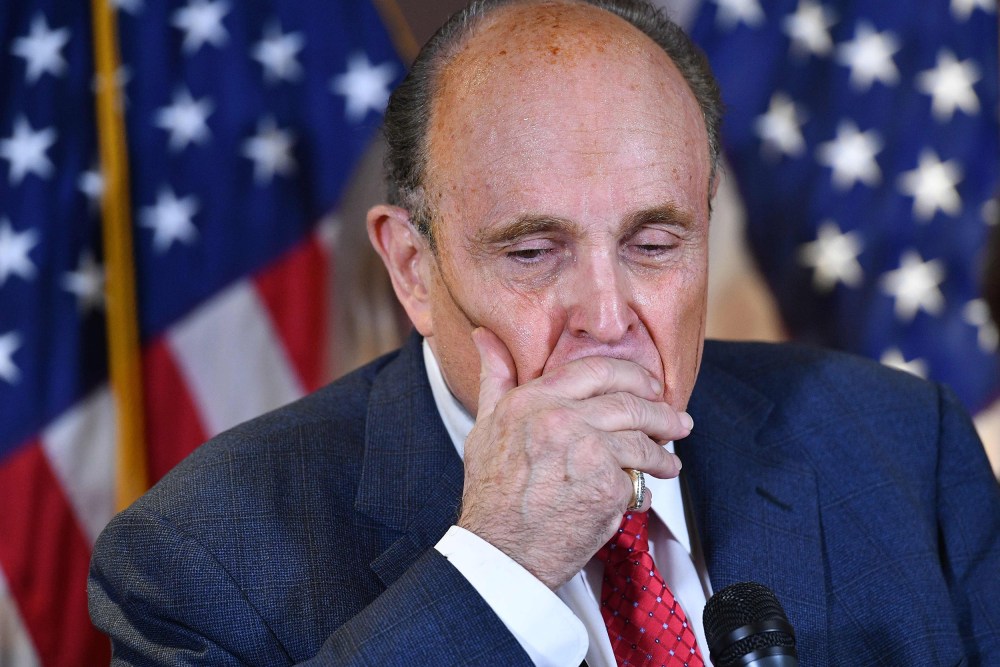

It was four months ago when NBC News and The Rachel Maddow Show first reported that federal prosecutors in New York had been in communication with Justice Department officials in D.C. about trying to obtain Rudy Giuliani’s electronic communications.
There wasn’t much in the way of public revelations in the weeks that followed, but the silence didn’t last: The New York Times reported in early February that in the final months of Donald Trump’s term, senior officials in Bill Barr’s Justice Department “sought to block” federal prosecutors’ efforts in the case, including “delaying a search warrant” for some of Giuliani’s electronic records.
Of course, Barr is no longer attorney general, and there are fewer Republican appointees at Main Justice in a position to run interference for the troubled former mayor. It’s against this backdrop that the New York Times reports today:
Federal investigators in Manhattan executed a search warrant on Wednesday at the Upper East Side apartment of Rudolph W. Giuliani, the former New York City mayor who became President Donald J. Trump’s personal lawyer, stepping up a criminal investigation into Mr. Giuliani’s dealings in Ukraine, three people with knowledge of the matter said. One of the people said the investigators had seized Mr. Giuliani’s electronic devices.
The Times‘ report, which has been confirmed by NBC News, added how “extraordinary” it is see federal prosecutors execute a search warrant against a former president’s lawyer.
The same article went on to note, “To obtain a search warrant, investigators need to persuade a judge they have sufficient reason to believe that a crime was committed and that the search would turn up evidence of the crime.”
As for Giuliani’s alleged misdeeds, Giuliani has faced a variety of accusations, though in this case, federal investigators have reportedly taken an interest in the Republican lawyer’s work with Ukrainian officials — whom Giuliani turned to for help in digging up dirt against Joe Biden — while lobbying the Trump White House on Ukrainians’ behalf.
If Giuliani tried to influence the Trump administration’s foreign policy toward Ukraine because of his associates’ interests, and then failed to disclose his lobbying to the Justice Department, that could be a federal crime under the Foreign Agents Registration Act (FARA).
It’s also worth noting for context that the New York Times reported last December that Donald Trump had discussed “pre-emptive pardons” for a variety of figures in his immediate orbit, including Giuliani. The article added that the then-outgoing president had talked to Giuliani about pardoning him as recently as late November.
We now know, of course, that there was no such pardon — though as investigators entered Giuliani’s apartment, it’s hard not to wonder how much he regrets not having one. Update: Just as I was hitting the publish button on this, the Times updated its report to note that investigators also executed a warrant on the Republican lawyer’s office, too. Second Update: The Wall Street Journal reported that Giuliani’s lawyer, Robert Costello, confirmed the execution of the search warrant. The same article added, “Mr. Costello said authorities, who arrived at Mr. Giuliani’s apartment at 6 a.m., seized Mr. Giuliani’s electronic devices. He said the search warrant describes the investigation as an investigation into a possible violation of foreign lobbying rules. Mr. Costello said the warrant sought communications between Mr. Giuliani and individuals including John Solomon, a columnist who was in communication with Mr. Giuliani about his effort to push for investigations of Joe Biden in Ukraine.” Third Update: The Times appears to have added a new and notable paragraph to its report: “F.B.I. agents on Wednesday morning also executed a search warrant at the Washington-area home of Victoria Toensing, a lawyer close to Mr. Giuliani who had dealings with several Ukrainians involved in the effort to find damaging information about the Bidens, according to people with knowledge of that search. Ms. Toensing has represented Dmitry Firtash, a Ukrainian oligarch under indictment in the United States whose help Mr. Giuliani sought.”
Steve Benen is a producer for "The Rachel Maddow Show," the editor of MaddowBlog and an MS NOW political contributor. He's also the bestselling author of "Ministry of Truth: Democracy, Reality, and the Republicans' War on the Recent Past."
Latest Post
Recommended


