










In late October 2014, as public anxiety over Ebola was near its height, Barack Obama held an event at the White House for medical professionals who were helping combat the virus. The Democratic president, speaking largely off the cuff, framed the U.S. response to Ebola in terms of American exceptionalism.
“[W]hen disease or disaster strikes anywhere in the world, the world calls us,” Obama explained. “And the reason they call us is because of the men and women like the ones who are here today. They respond with skill and professionalism and courage and dedication. And it’s because of the determination and skill and dedication and patriotism of folks like this that I’m confident we will contain and ultimately snuff out this outbreak of Ebola — because that’s what we do.”
He added, “A lot of people talk about American exceptionalism. I’m a firm believer in American exceptionalism. You know why I am? It’s because of folks like this…. We react clearly and firmly, even with others are losing their heads. That’s part of the reason why we’re effective. That’s part of the reason why people look to us.”
In 2014, the president’s comments were undeniably true, and at the time, the United States addressed the outbreak with proficiency and professionalism. The world had reason to be impressed.
In 2020, it’s a dramatically different story. The New York Times reported yesterday that many are looking at “the richest and most powerful nation in the world with disbelief” as the United States struggles with the coronavirus crisis.
The pandemic sweeping the globe has done more than take lives and livelihoods from New Delhi to New York. It is shaking fundamental assumptions about American exceptionalism — the special role the United States played for decades after World War II as the reach of its values and power made it a global leader and example to the world.
The Times spoke to Henrik Enderlein, president of the Berlin-based Hertie School, who said, “When people see these pictures of New York City they say, ‘How can this happen? How is this possible?’ We are all stunned.” Timothy Garton Ash, a professor of European history at Oxford, added, “I feel a desperate sadness.”
Dominique Moïsi, a political scientist and senior adviser at the Paris-based Institut Montaigne, said, “America has not done badly, it has done exceptionally badly.” Explaining the nation’s lack of preparedness, he added, “It raises the question: Has America become the wrong kind of power with the wrong kind of priorities?”
The Times‘ report added that the ongoing pandemic is “perhaps the first global crisis in more than a century where no one is even looking for Washington to lead.”
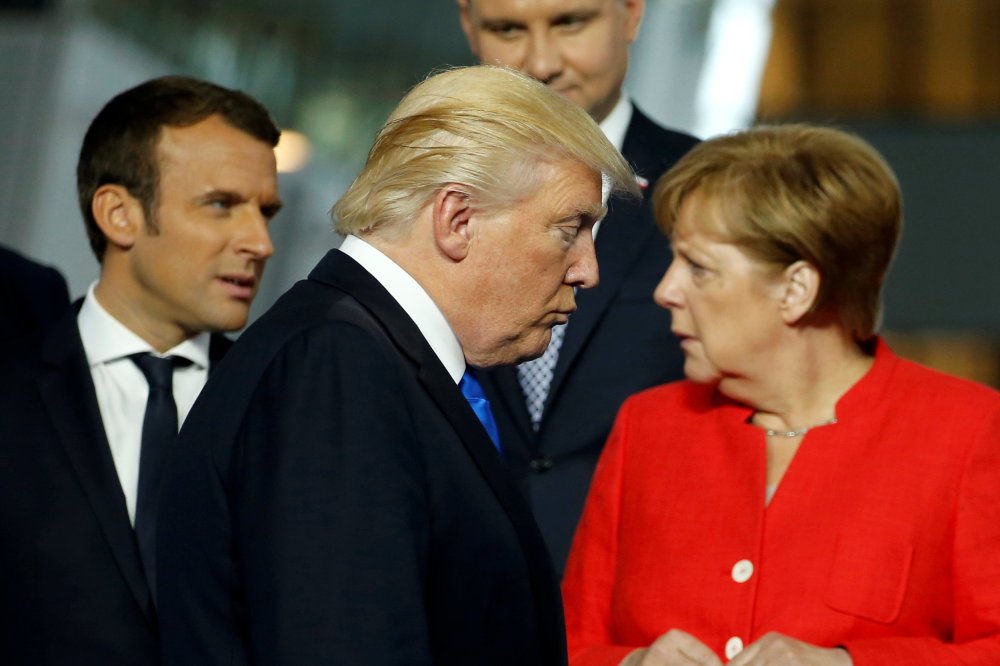
The Associated Press published a related analysis overnight, highlighting a painful contrast: the United States is a nation “with unmatched power, brazen ambition and aspirations through the arc of history to be humanity’s ‘shining city upon a hill.’” But right now, it’s also a nation featuring doctors in the country’s largest city turning into “beggars with hands outstretched for ponchos because they couldn’t get proper medical gowns.” I long ago lost count of how many times Donald Trump, pointing to evidence that exists only in his imagination, has boasted to his followers that the United States is finally “respected again” around the globe. As we’ve discussed, the Republican has convinced himself that we were an international laughingstock before he took office, but thanks to his awesomeness, the world once again reveres and celebrates our country. Long before the pandemic, international surveys pointed in the opposite direction. In many countries, including longtime U.S. allies, global support for the American president collapsed after Obama left office, and opposition to Trump has soured our reputation overall. And now, as the U.S. struggles with the coronavirus crisis, our standing appears to be deteriorating further. Of all of Trump’s many lies, the idea that he’s improved international respect for the United States might be the cruelest.
Steve Benen is a producer for "The Rachel Maddow Show," the editor of MaddowBlog and an MS NOW political contributor. He's also the bestselling author of "Ministry of Truth: Democracy, Reality, and the Republicans' War on the Recent Past."
Latest Post
Recommended


