











About two weeks ago, when Attorney General Merrick Garland held a press briefing nominally about the Justice Department’s firearms task forces, he made news about a different subject: the DOJ’s appetite for investigating whoever is responsible for the Jan. 6 attack, no matter how high up the chain that inquiry takes them. For a characteristically understated man, Garland was emphatic and forceful — and the media took notice that night.
But at the beginning of that briefing, Garland seemed to make other news, even if his comments did not generate the same buzz. In responding to a question about what the DOJ was doing to counteract the demise of Roe v. Wade, Garland suggested that among the options the DOJ’s new reproductive rights task force was considering was affirmative litigation to ensure that any federal law that protects abortion access would be enforced. And he was clear about how the DOJ would do this: by pointing to the Supremacy Clause of the U.S. Constitution, which provides that federal law on a particular topic preempts conflicting state laws. That’s historically not an argument the DOJ, or more fundamentally, the federal agencies it represents, make often or lightly.
At first blush, it might sound like a dull battle over federal health care regulations. But that’s not really what it’s about.
At that same briefing, Garland also pledged the DOJ would push back hard — and seek to dismiss — Texas Attorney General Ken Paxton’s latest complaint against the Biden administration: a lawsuit seeking to invalidate the Department of Health and Human Services’ guidance to medical providers under the Emergency Medical Treatment and Labor Act, or EMTALA. That guidance explains EMTALA requires health care providers participating in the Medicare program — and according to one review of federal data, only 1 percent of non-pediatric practitioners opt out of Medicare — to perform an abortion where necessary to stabilize a woman’s condition in a health care emergency. Garland’s bold embrace of the Supremacy Clause for the sake of women’s health impressed me, and especially given my past criticism of the attorney general, I felt he deserved credit for the DOJ’s muscular, innovative defense of abortion rights.
Tuesday, however, Garland went even further. His DOJ is not simply going to defend HHS’ guidance on EMTALA. It’s now affirmatively suing Idaho, where a soon-to-be-effective abortion ban is so restrictive that pregnant women suffering from unexpected, serious complications are unlikely to receive lifesaving medical care to which they’re entitled.
You might be asking, “Why Idaho?” Aren’t there other states, including states with bigger populations, where bans will have even more deleterious effects on pregnant women’s lives and health? After all, the news is rife with stories about women with urgent pregnancy complications having their medically necessary abortions delayed — or even denied. As The New York Times reported earlier this week, this was the case for a Tennessee woman whose fetus had not developed a skull and whose continued pregnancy threatened her own safety but was nonetheless forced to travel to Georgia for an abortion days after the Supreme Court’s Dobbs v. Jackson Women’s Health Organization decision.
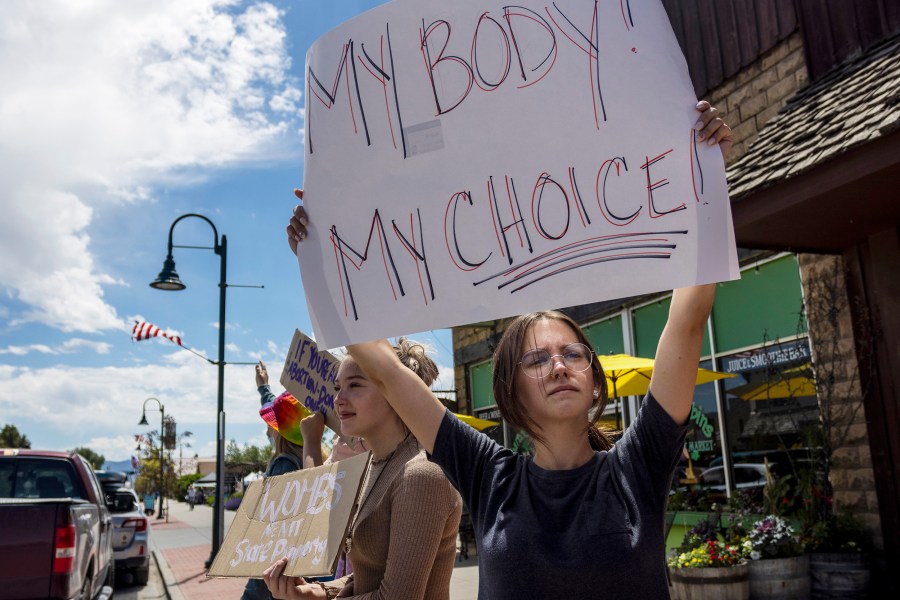
For the Justice Department, however, the answer is as much substantive as strategic. After all, the DOJ affirmatively sued over Texas’ infamous citizen-enforced abortion ban too — and it lost when a three-judge federal appeals court panel found DOJ didn’t even have the right to sue. (The Supreme Court initially allowed the DOJ to appeal, but ultimately let that ruling stand.)
But in Idaho, on the other hand, the DOJ may have better luck for three reasons.
First, the state’s abortion ban is a conventional criminal law, as opposed to an experimental statute meant to evade judicial review. (Without any existing federal constitutional right to abortion, the anti-abortion movement is no longer working overtime to immunize abortion bans from courts’ scrutiny, the feature that made the Texas law litigated last year so troubling to reproductive rights advocates and health care providers.)
Second, the conflict between Idaho and federal law is facially obvious. As the DOJ explains in its press release, once the Idaho ban goes into effect on Aug. 25, “a prosecutor can indict, arrest and prosecute a physician merely by showing that an abortion has been performed, without regard to the circumstances.” Only during an actual trial itself can a doctor establish that she has not committed a felony by establishing one of two exceedingly limited — and equally challenging to document — defenses.
One of those defenses involves cases of rape or incest. To avail oneself of the other, it is not enough for the woman’s health to be at risk; she must be virtually on death’s door. Specifically, the doctor performing the procedure must prove he determined “in his good faith medical judgment and based on the facts known to the physician at the time, that the abortion was necessary to prevent the death of the pregnant woman,” which cannot include the risk of self-harm, and the doctor must also attempt to perform the abortion “in the manner that … provided the best opportunity for the unborn child to survive, unless, in his good faith medical judgment, termination of the pregnancy in that manner would have posed a greater risk of the death of the pregnant woman.”
Given the actual and reputational costs of prosecution and how narrowly the “life of the mother” defense is drawn, Idaho has put its physicians in a veritable vise: Either comply with state law, potentially costing a patient to whom one has ethical obligations her life, or comply with federal law and risk prosecution and the loss of one’s medical license (and livelihood).
And third — and this is where the strategy comes in — Idaho just might be the ideal place for the DOJ to test its “federal law is supreme” theory. Federal courts are divided into three levels: district courts, where litigation begins and cases are tried, correspond to a state or a section thereof (e.g., the Southern District of New York); federal appeals courts are then divided into circuits consisting of multiple states; and finally, the Supreme Court. And Idaho, while a red state, is part of the traditionally blue Ninth Circuit, which currently has more total judges appointed by Democratic presidents than Republican ones — and more active judges appointed by Democrats as well. Both matter because while any of the current judges can be assigned to a three-judge panel to hear a case, only the active judges can vote on whether to rehear a case “en banc.” And in the Ninth Circuit, such an en banc panel consists of the chief judge and 10 other active judges drawn at random. The Ninth Circuit’s ratio of liberal-to-conservative judges therefore differentiates it from the federal appeals courts for Kentucky; Louisiana, Texas and Mississippi; and Alabama respectively. Each of those states have similarly problematic abortion bans but the corresponding federal appeals courts are more clearly stacked with anti-abortion judges — and against the Justice Department. Of course, constitutional law should be more than a reductive numbers game. And whether Garland can succeed in battling Idaho should depend less on which judges the DOJ draws — and more on factors like the plain meaning of EMTALA, the discretion it affords to HHS to issue implementing regulations, and applicable precedent concerning federal preemption. Further, even if the DOJ wins in the Ninth Circuit — which is hardly a foregone conclusion — all constitutional appeals ultimately arrive (or die) at the same destination: the Supreme Court. As the last term proved, our current Supreme Court not only has a majority that opposes abortion rights but also likely has at least five votes for curtailing federal agencies’ regulatory power in areas well beyond environmental preservation. Still, keep your eyes on this new case. At first blush, it might sound like a dull battle over federal health care regulations. But that’s not really what it’s about. As Garland noted Tuesday, when asked whether the Idaho lawsuit is an attempt to circumvent Dobbs: The Supreme Court said that each state can make its own decisions with respect to abortion, but so too can the federal government. Nothing that the Supreme Court said said that the statutes passed by Congress, such as EMTALA, are in any way invalid. It’s quite the opposite. The Supreme Court left it to the people’s representatives, and EMTALA was a decision made by the Congress of the United States. The Supremacy Clause is a decision made in the Constitution of the United States; federal law invalidates state laws that are in direct contradiction.
Ultimately, United States v. Idaho could be an early and critical test of the constitutional trick up Garland’s sleeve. And the stakes — some women’s very survival when their pregnancies go awry — could not be higher.
Lisa Rubin is MS NOW's senior legal reporter and a former litigator.
Latest Post
Recommended


