

UPDATE (Sept. 29, 2023, 8:58 a.m. ET): Sen. Dianne Feinstein, D-Calif, has died at the age of 90, NBC News reported on Friday.
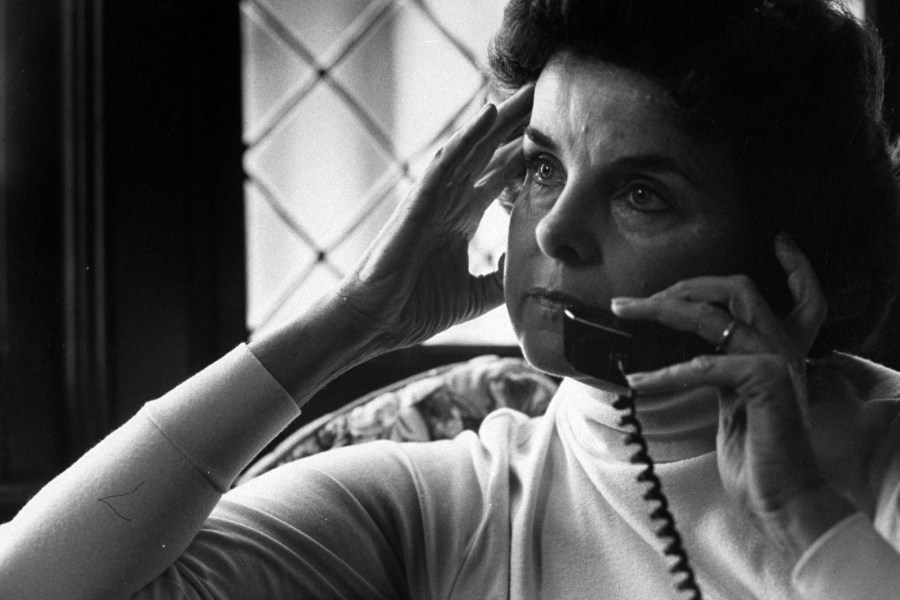
In the fall of 1990, as Californians were on the verge of electing a new governor, I was on the verge of discovering two new obsessions: politics and feminism. And although the victor that fall was Republican Pete Wilson, I was captivated by his opponent, whose three-word campaign slogan seemed to embody the double bind of leading while female. “Tough but caring,” her ads proclaimed. Her name was Dianne Feinstein.
Two years later, of course, Feinstein won election to the U.S. Senate during the so-called Year of the Woman. And thus began her 30 years so far in the Senate, a tenure discussed too often these days in terms of her mental fitness for the job or progressives’ increasing frustration with her embrace of moderate policies and conservative people. (Yes, I am talking about the hug heard around the world.)
Yet the Dianne Feinstein that looms large in my memory, is a different creature entirely. For roughly two years, she was my boss, first during an internship in her San Francisco office and later, when I became a junior member of her Washington, D.C.-based legislative staff. That’s not to say she was my direct supervisor; on the contrary, there were multiple layers of people between us. My interactions with her were mostly limited to large-group staff meetings; occasional briefings; and best of all, handwritten edits and notes on the constituent mail and memos I drafted for her. (Nothing was better than receiving a note that read, in her elegant handwriting, “Good job! DF”)
She could be imperial, distant and unforgiving. She was also unfailingly attentive to what Californians cared about.
That Dianne Feinstein was both commanding and perfectly in command of policy minutia. She was passionate about California’s rich, varied environment, from its coasts and mountains to its deserts and forests; she was ferocious about stemming the gun violence that killed two of her colleagues on San Francisco’s Board of Supervisors and was beginning to wreak havoc in American schools; she was insistent on women’s access to abortion, frequently raising her memory of “passing the plate” during her mid-1950s college years so that classmates could obtain, in Mexico, procedures that were not yet safe or legal in California.
She could be imperial, distant and unforgiving. She was also unfailingly attentive to what Californians cared about, monitoring the volume of calls on various issues or measuring how long it took for her constituents to receive her caseworkers’ help navigating this federal agency or that bureaucratic mess. And she was so regal in her bearing that it was impossible to imagine her relaxed or in casual clothing. In a time well before social media or even reasonably-sized cell phones, she was always “on,” a formal counterpoint to Patty Murray’s earthy “mom-in-tennis-shoes” or Barbara Boxer’s scrappier, sharper press instincts.
What I remember most, however, is how she lived up to that 1990 slogan. In April 1999, the Columbine massacre unfolded during what had been an ordinary work day. I was barely 22. My younger colleagues and I, expecting an education in legislative business, had just lived through the surreal Clinton impeachment trial; and now, an unimaginable tragedy was playing out on every TV screen in our office. By late afternoon, we were summoned to the conference room on the first floor of our Hart Senate Office Building suite. And then, after sharing her own, deeply personal reaction to Columbine, she did something unexpected: She made space for others to share how they were feeling. In an operation oft described as hard-charging and brutally efficient, we became human — and at some point, our boss, the architect of the 1994 assault weapons ban that has not been revived since, quietly exited, tough but caring. We live in a new political era now, one where most of the women in Congress have come to power not through an officeholding relative or a husband’s checkbook or even surviving an awful, historic event but purely through their own gumption and savvy. The Democratic party that crowned Dianne Feinstein its prom queen in the 1980s and early 1990s has given way to Elizabeth Warren & Katie Porter’s Harvard Law-honed populism, Kamala Harris’s “We did it, Joe!” ebullience, Alexandria Ocasio-Cortez’s mastery of social media, and Gretchen Whitmer’s big Midwest energy. By contrast, Feinstein, who once wore an old-fashioned bathing suit to the opening of San Francisco’s Pier 39 after losing a bet to its developer, played in the old boys’ sandbox. Tough but caring was the only way through — and it made her, as Senate Minority Leader Chuck Schumer noted Tuesday, a legend.
Lisa Rubin is MS NOW's senior legal reporter and a former litigator.
Latest Post
Recommended