










As the dust settles on the latest Supreme Court confirmation fight, and Judge Ketanji Brown Jackson prepares to become an associate justice, some senators are pausing to take stock of the process and the political landscape.
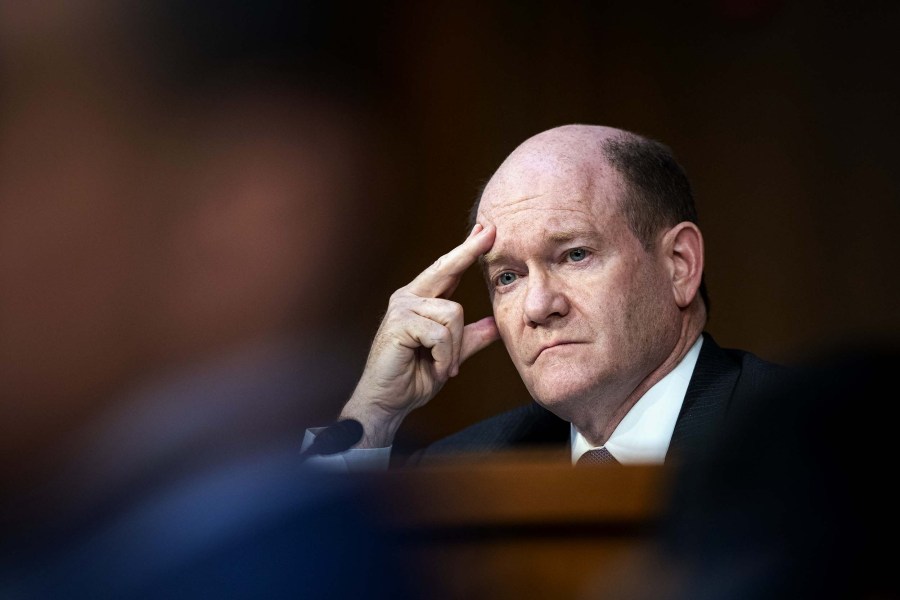
Republican Sen. Lindsey Graham, for example, responded to Jackson’s confirmation by launching a strange attack ad, condemning the new justice. Democratic Sen. Chris Coons, a fellow member of the Senate Judiciary Committee, went in a very different direction during a PBS interview late last week.
In context, the Delaware Democrat and “Firing Line” host Margaret Hoover were discussing the standards senators apply when evaluating high court nominees, and Coons’ perspective when he voted against Neil Gorsuch’s nomination in 2017. The senator did something unusual and criticized his own conduct:
“That was that was the point at which I first voted against a nominee for the Supreme Court…. [He was] eminently qualified, great temperament, good writer, strong record of service. But I disagreed with his philosophy. And Senator Graham and I had a very forceful exchange at that point where he said to me, ‘I voted for Kagan. I voted for Sotomayor. If you’re not willing to vote for Gorsuch. What’s that mean?’ And so I will own that I’m a part of this problem….”
Before digging in on the details, I’m generally sympathetic to Coons’ willingness to self-reflect. It’s also good to see a senator demonstrate some humility, which is a quality too often lacking on Capitol Hill.
I also think it’s healthy to have a conversation about how senators should assess Supreme Court nominees. If a prospective justice is a qualified and respected jurist with an excellent temperament and mainstream record, is that no longer sufficient? If not, why not?
But for Coons to believe his 2017 vote made him part of the larger political problem — in effect, he helped advance the polarization of the process — is a mistake for a specific reason: The senator neglected to note the circumstances surrounding Gorsuch’s nomination.
If this were simply a question of how Senate Democrats approached Gorsuch’s nomination on the merits, it would be the basis for a specific kind of debate. But as regular readers may recall from almost exactly five years ago, there’s more to it than that.
It was in February 2016 when then-Justice Antonin Scalia died unexpectedly. Then-President Barack Obama nominated Merrick Garland, a center-left, compromise jurist — who’d received praise from Senate Republicans — to fill the vacancy, which in turn opened the door to a historic opportunity to stop the high court’s drift to the right.
Senate Republicans responded by imposing an unprecedented high-court blockade for nearly a year, hoping that Americans might elect a Republican president and Republican Congress despite the GOP’s abusive tactics.
It worked: Republicans effectively stole a Supreme Court seat from one administration and handed it to another.
It was, by most measures, a genuine scandal. Indeed, Democratic Sen. Jeff Merkley of Oregon told MSNBC’s Chris Hayes at the time that the Senate Republicans’ treatment of a qualified, moderate jurist was effectively a political crime. A Supreme Court seat, the Oregon senator argued, was “stolen from the Obama administration and the construct of our Constitution. And it’s being delivered to an administration that has no right to fill it.” The American people, Merkley added, need to “understand that this is the theft of the court.” At the time, as Coons noted, Graham boasted about having voted to confirm Elena Kagan and Sonia Sotomayor, and then challenged Democrats to do as he did when the partisan tables turned. But what the South Carolinian neglected to mention is that he didn’t vote for Garland. In fact, Graham refused to even consider Garland, balking at the idea of even giving him the courtesy of a hearing. Looking back, Coons believes Gorsuch was a qualified nominee. Perhaps. But to vote for his confirmation was to legitimize a corrupt process. Coons’ 2017 vote didn’t contribute to a polarized process; it was pushback against a polarized process. The Delaware Democrat tried to take an honorable high ground last week, criticizing his own actions, but the record suggests he was too hard on himself.
Steve Benen is a producer for "The Rachel Maddow Show," the editor of MaddowBlog and an MS NOW political contributor. He's also the bestselling author of "Ministry of Truth: Democracy, Reality, and the Republicans' War on the Recent Past."
Latest Post
Recommended


