









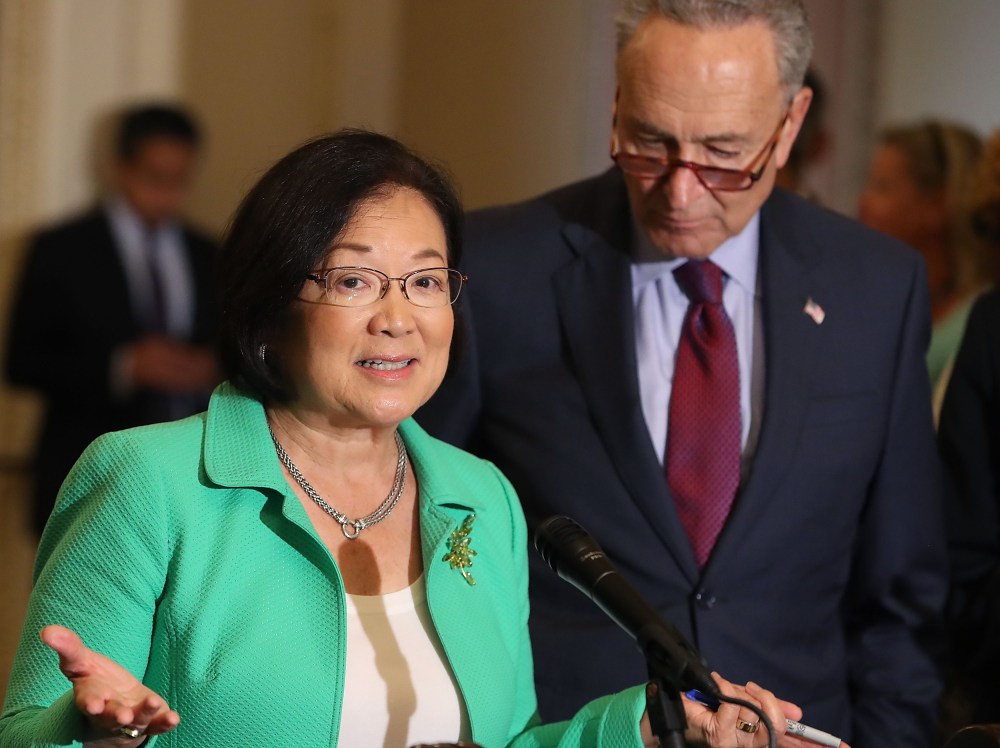

As hate crimes against Asian Americans became painfully more common during the pandemic, policymakers felt increased pressure to act. It was against this backdrop that the Senate voted last month to approve the COVID-19 Hate Crimes Act, championed by Sen. Mazie Hirono (D-Hawaii) and Rep. Grace Meng (D-N.Y.), with overwhelming support — because even most conservative Republicans didn’t want to be seen on the wrong side of the issue.
Indeed, it was a tough bill to oppose. As NBC News reported, the legislation is likely to help make a difference, directing the Department of Justice to expedite the review of COVID-related hate crimes, improve reporting, and expand public outreach. The bill would also “direct the attorney general and the Department of Health and Human Services to issue best-practices guidance on how to mitigate racially discriminatory language in describing the pandemic.”
In the upper chamber, it passed 94 to 1, with Sen. Josh Hawley (R-Mo.) ignoring the bipartisan consensus.
Yesterday, the same measure easily cleared the Democratic-led House — though with far more Republican opposition than was evident in the Senate.
The House on Tuesday passed a Senate bill with a 364 to 62 vote to address the rise in anti-Asian hate crimes during the Covid-19 pandemic…. The bill’s passage in the Democratic-controlled House paves the way for it to head to President Joe Biden’s desk for his signature. White House press secretary Jen Psaki tweeted that the president was “pleased” the measure had passed and “looks forward to signing this important legislation into law at the White House later this week.”
To be sure, the final tally in the House was not close: the COVID-19 Hate Crimes Act passed 364 to 62.
But while the lopsided margin was more than enough to send the measure to the White House, it’s striking that 62 House Republicans — roughly a third of the overall House GOP conference — voted against it anyway.
These 62 Republican lawmakers knew the bill would pass, but they wanted to be on the record opposing the proposal. (One member of the House GOP leadership team, Republican Policy Committee Chairman Gary Palmer of Alabama, was among the 62.) Rep. Chip Roy (R-Texas) told his colleagues ahead of the vote, “We can’t legislate away hate.” I suppose that’s true: Congress cannot pass a bill that forces people to treat others with respect and decency. But at no point did anyone involved in this effort say they were trying to “legislate away hate.” The point of the measure is to strengthen existing laws, improve data collection, and provide best-practices guidance to public agencies. It was a straightforward proposal responding to a crushing societal scourge. Nearly a third of House Republicans voted “no” anyway.
Steve Benen is a producer for "The Rachel Maddow Show," the editor of MaddowBlog and an MS NOW political contributor. He's also the bestselling author of "Ministry of Truth: Democracy, Reality, and the Republicans' War on the Recent Past."
Latest Post
Recommended


