








If you watch the show often, you know that Ukraine plays a critically important role in the investigation into Donald Trump’s political operation and its alleged cooperation with Russia during the 2016 election. You also probably know that Ukrainian officials, for a while, cooperated with Special Counsel Robert Mueller’s investigation.
The New York Times reports today, however, on why that’s no longer the case.
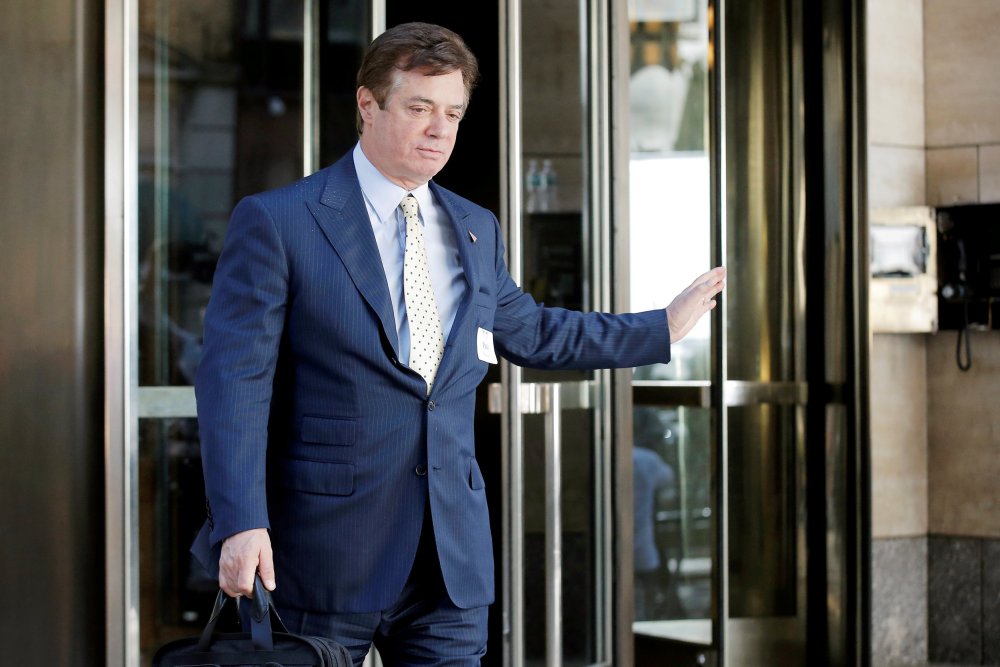
In the United States, Paul J. Manafort is facing prosecution on charges of money laundering and financial fraud stemming from his decade of work for a pro-Russian political party in Ukraine.
But in Ukraine, where officials are wary of offending President Trump, four meandering cases that involve Mr. Manafort, Mr. Trump’s former campaign chairman, have been effectively frozen by Ukraine’s chief prosecutor.
There’s no great mystery as to why Ukraine’s chief prosecutor halted its cooperation with Mueller’s investigation: Ukraine relies on aid from the United States, and officials freely admit that they’re concerned about the Trump White House punishing Ukraine if the country assists in a probe the president opposes.
Indeed, the Times added, “The decision to halt the investigations by an anticorruption prosecutor was handed down at a delicate moment for Ukraine, as the Trump administration was finalizing plans to sell the country sophisticated anti-tank missiles, called Javelins.”
The calculus was simple: Ukrainian officials feared they could get the anti-tank weapons or help Mueller, but not both. Not surprisingly, they prioritized the former over the latter.
“In every possible way, we will avoid irritating the top American officials,” Volodymyr Ariev, a Ukrainian lawmaker told the Times. “We shouldn’t spoil relations with the administration.”
To be sure, the article suggests Ukraine reached its decision about rebuffing Mueller based on its implicit understanding of current events: Trump hates the probe; Ukraine wants to stay in Trump’s good graces; so Kiev no longer returns the special counsel’s phone calls.
But given the American president’s, shall we say, comfort with routine corruption, it’s hardly outrageous to wonder if Trump let Ukrainian officials know how he expected them to act. What if the White House made some kind of connection between U.S. aid and the president’s preferences, as part of a quid pro quo?
I have no information that suggests anything like this happened, but the possibility that American foreign-policy decisions are being influenced by Trump’s concerns about his legal liabilities is an unsettling prospect. In December, when the Republican administration agreed to send Ukraine military aid, much of the right saw it as proof that Trump is not in Putin’s pocket. After all, observers argued, Moscow opposed Ukraine receiving the new Javelins, and the White House delivered them anyway. Two problems, however, remain. First, as NBC News reported in March, Trump instructed White House officials not to talk up the deal — because he was afraid of agitating Russian President Vladimir Putin. Referring to the aid package to Ukraine that the president authorized, one White House official told NBC News, “He doesn’t want us to bring it up. It is not something he wants to talk about.” And second, as Jon Chait noted this morning, is the possibility that Trump approved the deal, not to help Ukraine defend itself from Russian aggression, but to secure Ukraine’s help as part of an investigation that represents an existential crisis to his presidency.
Steve Benen is a producer for "The Rachel Maddow Show," the editor of MaddowBlog and an MS NOW political contributor. He's also the bestselling author of "Ministry of Truth: Democracy, Reality, and the Republicans' War on the Recent Past." Recommended


