








Sen. Mark Warner (D-Va.), the vice chair of the Senate Intelligence Committee, told CNN’s Jake Tapper yesterday, “I don’t understand what the president doesn’t get about the law that says, if you have a foreign nation interfere in an American election, that is illegal.”
Removed from context, one might assume the Virginia senator was referring to Russia’s efforts to put Donald Trump in the White House. He wasn’t. Warner was instead answering a question about this New York Times report published over the weekend.
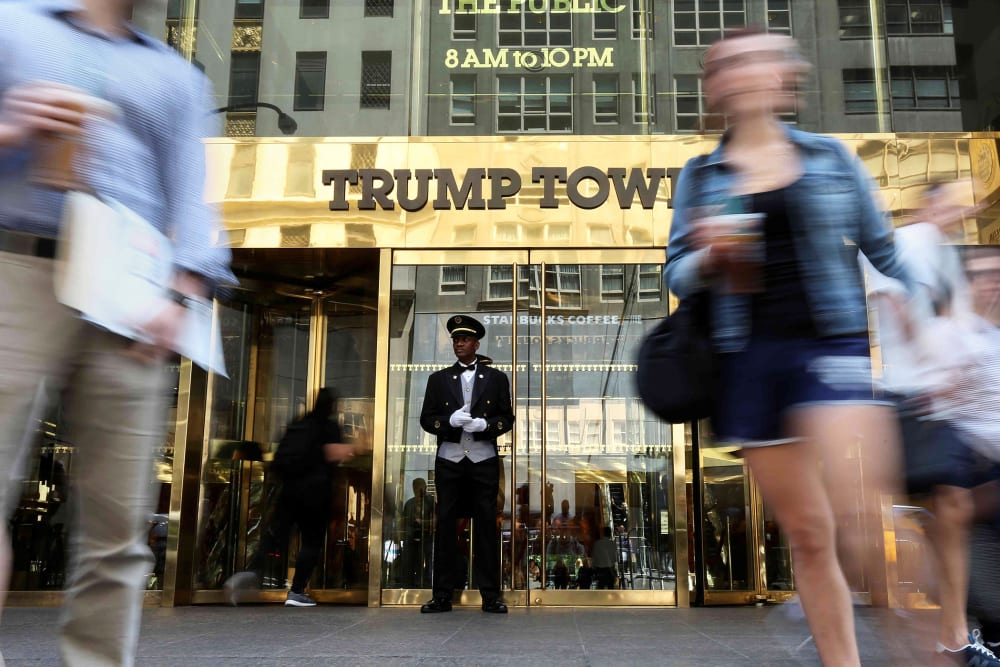
Three months before the 2016 election, a small group gathered at Trump Tower to meet with Donald Trump Jr., the president’s eldest son. One was an Israeli specialist in social media manipulation. Another was an emissary for two wealthy Arab princes. The third was a Republican donor with a controversial past in the Middle East as a private security contractor.
The meeting was convened primarily to offer help to the Trump team, and it forged relationships between the men and Trump insiders that would develop over the coming months — past the election and well into President Trump’s first year in office, according to several people with knowledge of their encounters.
At issue is a Trump Tower meeting held on Aug. 3, 2016, featuring names that will no doubt be familiar to viewers of The Rachel Maddow Show. Erik Prince, for example, of Blackwater notoriety, reportedly arranged the gathering. George Nader was also there to convey a message from Saudi Arabia and the United Arab Emirates about their eagerness to help put Donald Trump in power. Joel Zamel, an Israeli expert in social media manipulation, was also on hand with a proposal designed to help elect the Republican to the American presidency.
Donald Trump Jr., the Times added, “responded approvingly” to the offers of foreign assistance, and Nader quickly became “a close ally” to the top members of the future president’s team. He also paid Zamel “up to $2 million” after Trump won the 2016 election. (The Wall Street Journal reported over the weekend that Special Counsel Robert Mueller has taken an interest in Zamel’s work.)
The NYT‘s reporting is an opening salvo of sorts. We don’t yet know, for example, whether participants at that meeting hatched a plan and/or whether a plan was executed. There’s also no shortage of disagreements among the relevant players about what transpired and why.
But if the article is correct, there’s reason to believe Russia wasn’t the only foreign autocracy that wanted Trump in the White House — and Trump’s political operation was open to their assistance.
Here’s a by-no-means-comprehensive list of questions that came to mind reading the report:
* Just how many autocratic regimes wanted to see Trump win? Why? And what was it about the Republican campaign that made these foreign governments think Trump World would be receptive to legally dubious “help” from abroad?
* If Saudi Arabia and the United Arab Emirates provided Trump World with assistance, what did they want in return? What might they have received in return? Perhaps it’s time to look at Trump siding with the Saudis against Qatar last year in a new light? * Erik Prince told the House Intelligence Committee under oath last fall that he had no formal communications with the Trump campaign in 2016. Doesn’t he now have some explaining to do? * Maybe the House Intelligence Committee shouldn’t have wrapped up its ridiculous investigation quite so quickly? * Was the August 2016 meeting legal? The Times‘ article added, “It is illegal for foreign governments or individuals to be involved in American elections, and it is unclear what — if any — direct assistance Saudi Arabia and the Emirates may have provided. But two people familiar with the meetings said that Trump campaign officials did not appear bothered by the idea of cooperation with foreigners.” The Times‘ report, which includes denials of wrongdoing from several of the aforementioned players, is worth reading in its entirety. I have a hunch it won’t be the last on this subject.
Steve Benen is a producer for "The Rachel Maddow Show," the editor of MaddowBlog and an MS NOW political contributor. He's also the bestselling author of "Ministry of Truth: Democracy, Reality, and the Republicans' War on the Recent Past." Recommended


