








About a month ago, U.S. Ambassador to the United Nations Nikki Haley, weeks ahead of her resignation announcement, took a rather aggressive posture toward Russia and its destabilizing efforts. She called out Moscow on a series of specific fronts, including “election meddling in the United States — which didn’t work, by the way.”
Yesterday, as Reuters reported, another top member of Donald Trump’s take peddled a very similar claim.
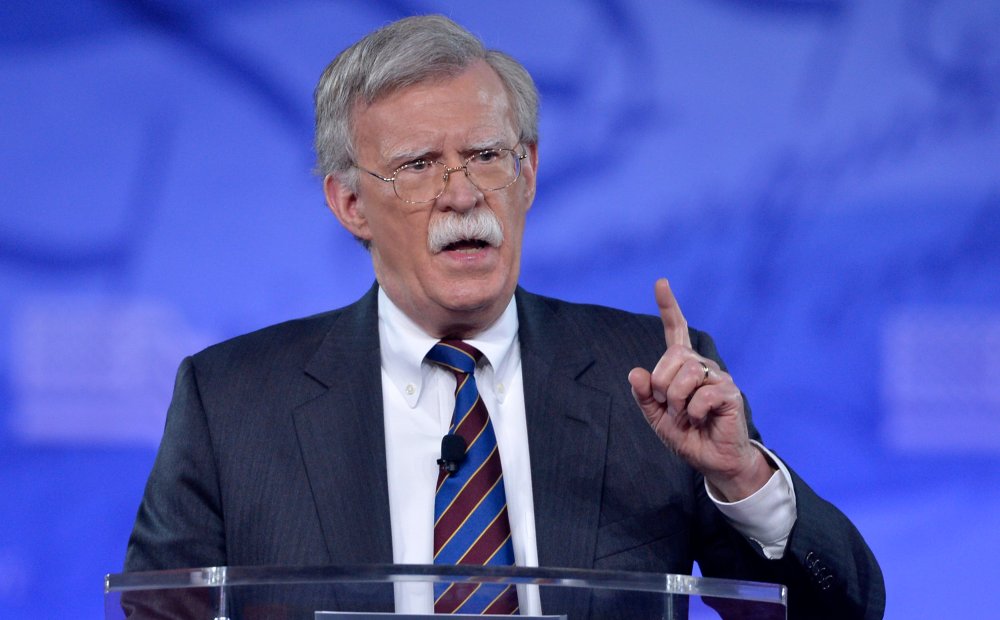
U.S. national security adviser John Bolton said on Monday that Russian meddling in U.S. elections did not have any effect on the outcome, but told Russian officials that it did “sow enormous distrust of Russia” in the United States. […]
“The point I made to Russian colleagues today was that I didn’t think, whatever they had done in terms of meddling in the 2016 election, that they had any effect on it, but what they have had an effect in the United States is to sow enormous distrust of Russia,” Bolton told radio station Ekho Moskvy during his visit to Moscow, according to a transcript provided by the White House.
At face value, it’s all a bit baffling. On the surface, as we discussed after Haley’s comments, it seems painfully obvious that the Kremlin’s attack was a success: Vladimir Putin and his government wanted Donald Trump in power, they implemented a sophisticated intelligence operation in order to help put the Republican in office, and Trump narrowly won a close race.
For that matter, Bolton’s assertion that Moscow’s interference sowed “enormous distrust of Russia” in the United States may have some merit, though it clearly doesn’t apply to the White House national security adviser’s boss — because no American seems to trust Russia more than Donald J. Trump.
But let’s also not overlook the timing of Bolton’s comments. As Rachel noted on the show last night: “On Friday, federal prosecutors charged the chief bookkeeper of the Internet Research Agency — this troll firm led by [Putin ally Yevgeny] Prigozhin — with interfering in the election that we Americans are having right now. And today, because this is our world now, right after that indictment was unsealed, National Security Adviser John Bolton went to Moscow to start work on scrapping a landmark nuclear treaty that was signed by the U.S. and the Soviet Union back when Mikhail Gorbachev was in charge. “Bolton also brought a message with him to Russia on the subject of Russia’s ongoing efforts to interfere in our democracy. The Justice Department unsealed this indictment against this accountant to Prigozhin, talking about the ongoing efforts by the Russians to interfere in our elections even now. They unsealed that on Friday, right before Bolton went to Moscow, so he could really take to it ’em when he went to Moscow. He could confront them with that information and that unsealed indictment. Here is how National Security Adviser John Bolton got tough with the Russians on the subject today. Speaking to a Russian radio station, John Bolton said, “The point I made to Russian colleagues today was that I didn’t think, whatever they had done in terms of meddling in the 2016 election, that they had any effect on it.’” The more this White House talks about its “toughness,” the more we’re confronted with evidence to the contrary.
Steve Benen is a producer for "The Rachel Maddow Show," the editor of MaddowBlog and an MS NOW political contributor. He's also the bestselling author of "Ministry of Truth: Democracy, Reality, and the Republicans' War on the Recent Past." Recommended


