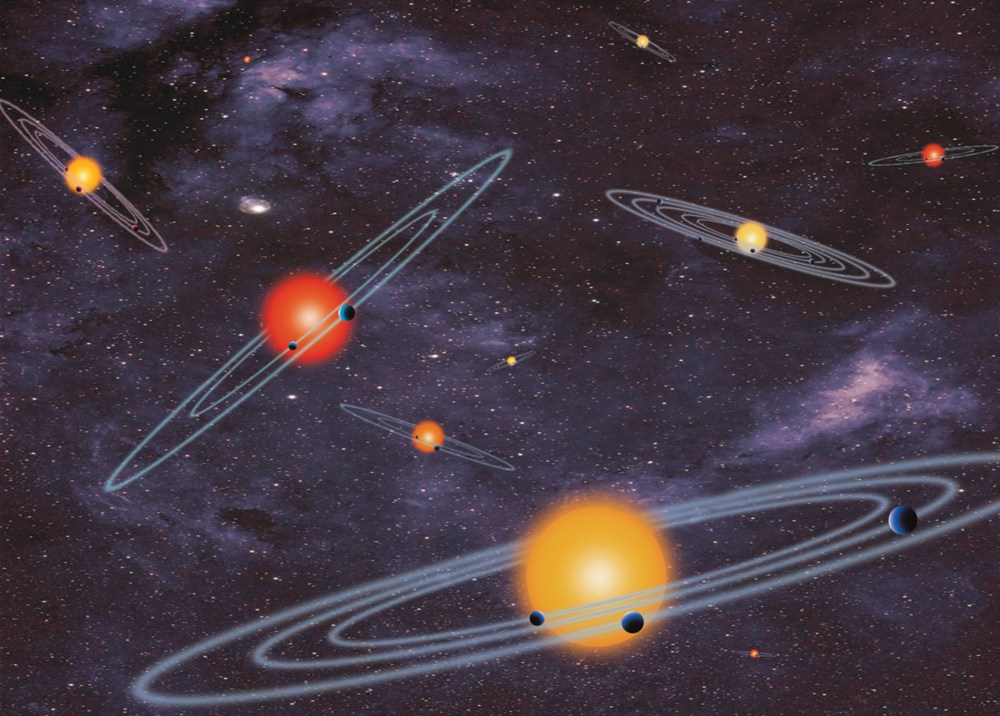
Astronomers working on NASA’s Kepler mission announced 715 new confirmed planets today – an increase of almost 70% in the number of planets outside our Solar System known to date.
Some quick background on Kepler: the spacecraft launched in March of 2009, and observed almost 150,000 stars continuously for just over three years looking for the telltale sign of a transiting planet. The results were slow at first and then steadily, more and more planets were discovered. Large planets that orbit close to their host stars, often nicknamed “Hot Jupiters”, were found first because they were the easiest to see; they blocked a lot of starlight and blocked it often. But the longer astronomers looked, the more they started to see signs of smaller and smaller planets: Neptune-sized and even Earth-sized.
As a caution, Earth-sized should not be confused with Earth-like, as we don’t yet have the technology to fully probe the composition of these planets yet, let alone their habitability. However, it’s at least a place to start. One of the most exciting things about today’s large windfall of new planets is that it represents a 400% increase in the number of Earth-sized planets now known.
Another exciting thing about this announcement is that these 715 new planets were detected in data astronomers already had on hand. Kepler actually stopped working in May of last year and hasn’t been able to make any new observations since. However, astronomers used a new approach to pour back over the data they already had in hopes of extracting additional information. Just goes to show you that your data might always have more to tell you. For more on Kepler, here’s my very first whiteboard video:
Summer Ash Recommended