









The FBI raid on Michael Cohen’s office and hotel room yesterday was, at a minimum, unusual. It’s not often when a sitting president’s personal attorney is the target of federal law enforcement like this.
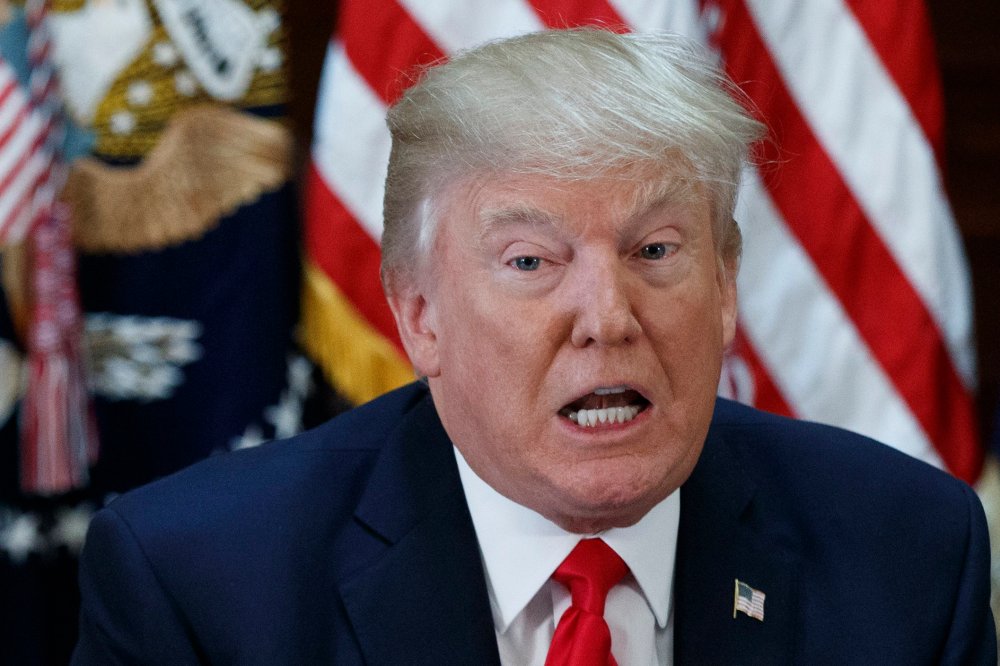
But as part of a larger tantrum, Donald Trump insisted this morning, “Attorney–client privilege is dead!” As NBC News explained this morning, that’s plainly wrong.
The privilege is not dead. It’s just that that the privilege alone won’t prevent the issuance of a search warrant for documents in an attorney’s office.
Of course, the privilege between an attorney like Cohen and his clients may be lost if the “crime-fraud exception” applies. The purpose of this exception is to assure that the secrecy between lawyer and client does not extend to obtaining advice in furtherance of contemplated or ongoing criminal or fraudulent conduct.
It is not enough for the government to just show that these privileged communications between Cohen and a client might provide evidence of a crime. Rather, the communication itself must have been in furtherance of, and intended to facilitate the crime, in order to strip these communications of the protections of privilege.
Or as the Wall Street Journal reported, attorney-client privilege “is intended to allow lawyers to give robust legal advice without worrying about incriminating a client. But attorney-client information may not be protected if the communications were in service of an illegal act.” (Rachel also explored this in some detail last night with Tom Winter, an NBC News investigative reporter.)
What’s more, there’s no reason to believe federal law enforcement cut any corners. A federal judge approved a search warrant, and according to NBC News’ reporting, Deputy Attorney General Rod Rosenstein directly approved the application for that warrant. A New York Times report added today, “The involvement of Mr. Rosenstein and top prosecutors in New York in the raid of Mr. Cohen’s office makes it harder for Mr. Trump to argue that his legal problems are the result of a witch hunt led by Mr. Mueller. In addition to Mr. Rosenstein, all of the top law enforcement officials involved in the raid are Republicans: Mr. Mueller, Christopher A. Wray, the F.B.I. Director, and Geoffrey Berman, the interim United States attorney in New York.” They’re part of a longer list of Republican officials in law enforcement whom the president has whined about incessantly. In addition to Robert Mueller, Rod Rosenstein, Chris Wray, and Geoffrey Berman, there’s also Jeff Sessions, James Comey, and Andrew McCabe, each of whom are Republicans. Even the judges who signed off on FISA warrants against Carter Page were appointed by Republicans. This won’t stop Trump from believing in a partisan conspiracy theory, but it should.
Steve Benen is a producer for "The Rachel Maddow Show," the editor of MaddowBlog and an MS NOW political contributor. He's also the bestselling author of "Ministry of Truth: Democracy, Reality, and the Republicans' War on the Recent Past." Recommended


