









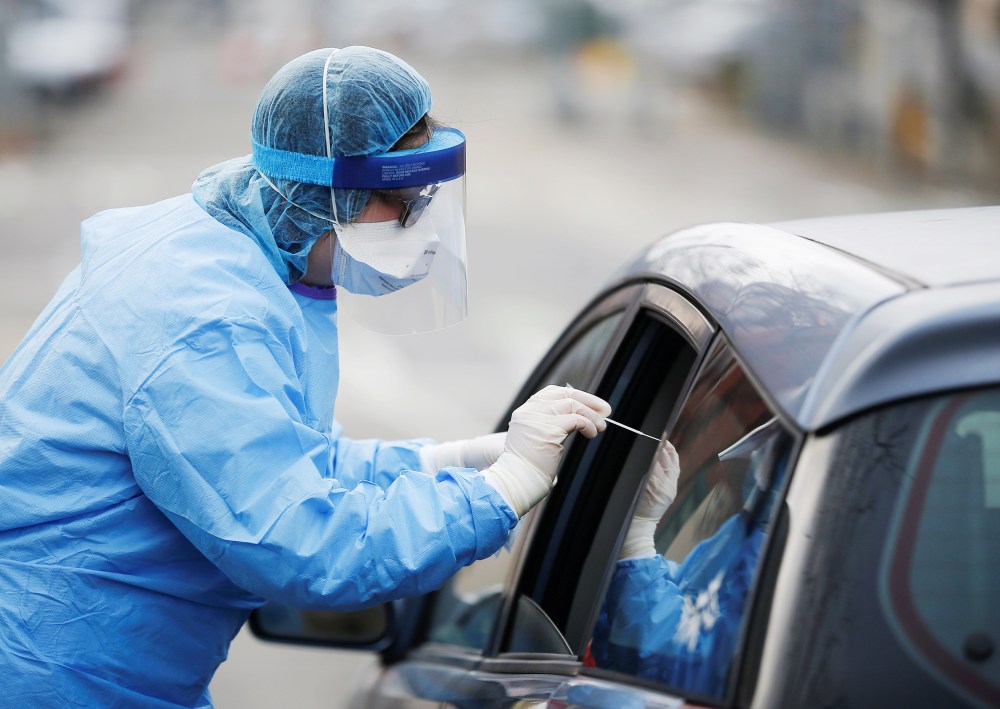

In mid-March, Donald Trump led an event at the White House and described an ambitious vision of national coronavirus testing. One month and one day later, the president was asked about the scope of the federal response to the pandemic, and he replied, “We can’t be thinking about a Wal-Mart parking lot that’s 2,000 miles away where we’re doing testing.”
As part of the same response, Trump said that he expects state and local officials to take the lead, adding, “I think it’s going to be a terrific system.”
I can’t speak to the future, but there’s no sensible way to describe the current testing system as “terrific.” In fact, as Rachel explained on the show last night, by some measures, it’s getting worse, not better. NBC News reported yesterday:
The demand for coronavirus tests at the nation’s private labs, which handle the vast majority of testing for COVID-19, has dropped so much since its peak that the labs now have “considerable” unused capacity and can test more lower-priority patients, according to the American Clinical Laboratory Association. The number of COVID-19 tests conducted daily by private labs peaked on Sunday, April 5, at 108,000. It dropped under 100,000 a day after that. From Sunday, April 12, to Monday, April 13, the number of daily tests fell from 75,000 to 43,000.
Politico had a related report on this, noting, “The number of coronavirus tests analyzed each day by commercial labs in the U.S. plummeted by more than 30 percent over the past week, even though new infections are still surging in many states and officials are desperately trying to ramp up testing so the country can reopen.”
At a time in which the amount of U.S. testing should be soaring, the totals are going in the wrong direction.
It was against this backdrop that Trump started having conversations with business leaders yesterday about the near future and the president’s desire to re-open society as quickly as possible. The Wall Street Journal reported that executives tried to explain to Trump that the administration needs to “dramatically increase the availability of coronavirus testing before the public would be confident enough to return to work, eat at restaurants or shop in retail establishments.”
The article added, “The people involved in the first call, which included executives from banking, financial services, food and beverage, hospitality and retail industries, described current testing levels in the U.S. as inadequate to effectively reopen the economy.” It’s reassuring that corporate leaders delivered this message, because right now, whom Trump listens to is of utmost importance. It appears the president isn’t going to listen to reports from news organizations. He also doesn’t appear inclined to believe members of Congress, many of whom are also emphasizing the need for ramped-up testing. Trump certainly isn’t going to listen to the World Health Organization or foreign officials, and he’s unlikely to take seriously the pleas of governors, leaders from the health care industry, or pesky bureaucrats from various federal agencies. But maybe the president will listen to private-sector giants, who are eager for economic conditions to improve, but who don’t believe the United States is anywhere close to being ready? Postscript: The Financial Times reported yesterday that Germany is moving forward with plans to re-open many businesses and schools in early May. The article added, “Germany has managed to contain coronavirus more effectively than other European countries, partly thanks to a comprehensive testing regime.”
Steve Benen is a producer for "The Rachel Maddow Show," the editor of MaddowBlog and an MS NOW political contributor. He's also the bestselling author of "Ministry of Truth: Democracy, Reality, and the Republicans' War on the Recent Past."
Latest Post
Recommended


