








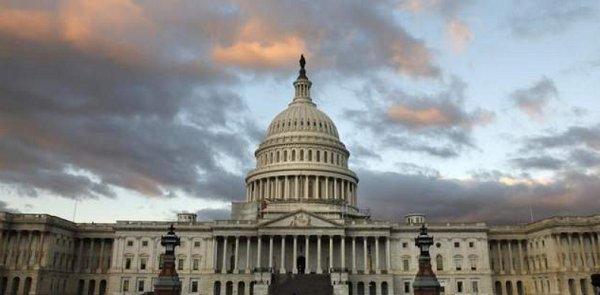
Following up on Rachel’s segment from last night, there’s ample reason to believe the U.S. is moving closer to military intervention in Syria, but whether Congress is prepared to play any role in the policy is far less clear.
A joint letter, spearheaded by Virginia Republican Scott Rigell (R), is urging President Obama to call Congress back into session “to consult and receive authorization from Congress before ordering the use of U.S. military force in Syria.” Rigell told Rachel last night that the letter has been signed by “over 40” House members — about 10% of the legislative body — though that total is expected to grow.
“If you deem that military action in Syria is necessary, Congress can reconvene at your request,” the letter says. “We stand ready to come back into session, consider the facts before us, and share the burden of decisions made regarding U.S. involvement in the quickly escalating Syrian conflict.”
The issue is starting to draw some interest in the Senate, too. While in the House, most of those calling for a greater congressional role are Republicans, in the upper chamber, it’s Democrats.
Senator Chris Murphy, Democrat from Connecticut, one of only three senators who voted against arming Syrian rebels, called for a debate about intervention.
“What I want for us here is to be very sober in our understanding of what a targeted military strike means. It may mean a long-term very expensive, very costly engagement for the United States,” said Murphy on Monday’s All In.
Murphy told Chris Hayes, “I think the president should come to Congress here for a vote,” adding that there’s still time for a congressional debate.
Late yesterday, Sen. Tim Kaine (D-Va.), a close ally of President Obama, issued a separate statement saying, “Absent an imminent threat to United States national security, the U.S. should not be engaged in military action without Congressional approval.”
Obviously, we’re still talking about a fairly small number of lawmakers, but here’s hoping other members take a moment to consider this. Congress may not want to have this debate, but it’s worth having anyway — does the legislative branch of government no longer have a role in whether the United States uses military force? Does the legislative branch of government no longer want a role in whether the United States uses military force?
If President Obama chooses to intervene in Syria because of suspected use of chemical weapons, and does not rely on or even seek congressional approval, there can be no doubt that he would be acting in accordance with recent precedent — nearly all modern presidents have used their authority as Commander in Chief to use military force without much interest in what 535 members of Congress think. And by and large, Congress has been fine with that. Indeed, note that Obama himself did this in 2011, using force in Libya without pausing to consider lawmakers’ opinions on the matter — the White House considered the mission to be limited enough not to constitute “hostilities” under the War Powers Resolution. It’s certainly possible the administration will do the same thing with regards to Syria. But even if we put aside party, ideology, gridlock, and the merit of the mission, Congress needs to understand that it’s forfeiting a policy role it used to take seriously. Even Speaker Boehner, who opposes the president at every turn and presumably has some institutional pride, doesn’t expect Obama to seek congressional approval before launching military strikes abroad. On a conceptual level, it’s rather bizarre — the United States is inching closer to using military force in the Middle East and Congress doesn’t even feel the need to wrap up its vacation a little early. Indeed, Rigell’s letter urges the president to call Congress back into session, overlooking the fact that House and Senate leaders are perfectly capable of doing this on their own. The Constitution suggests this is a power Congress is supposed to take seriously. For the legislative branch to give up its influence voluntarily for the sake of convenience is an abandonment of an important American norm.
Steve Benen is a producer for "The Rachel Maddow Show," the editor of MaddowBlog and an MS NOW political contributor. He's also the bestselling author of "Ministry of Truth: Democracy, Reality, and the Republicans' War on the Recent Past." Recommended


