








As diplomatic talks on the Korean Peninsula continue, it’s not unreasonable to feel some excitement about the opportunities for real, lasting change. It’s also not unreasonable to wonder whether, and how, the Trump administration might derail the recent progress.
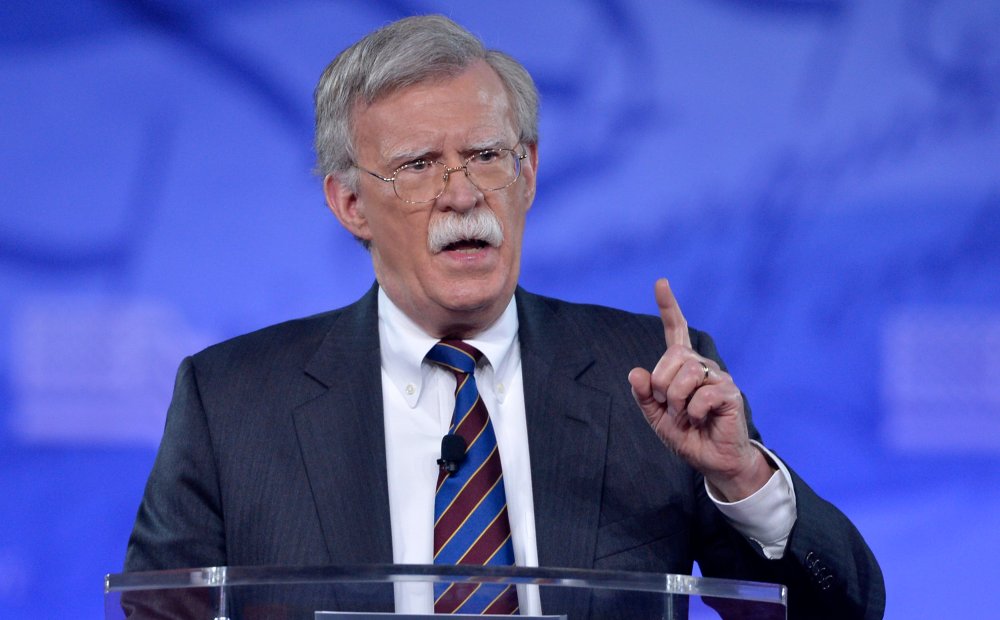
With those concerns in mind, consider this exchange on “Fox News Sunday” yesterday between host Chris Wallace and John Bolton, Donald Trump’s new White House national security advisor and one of the nation’s most extreme hawks.
WALLACE: So, let’s talk about your position, the U.S. position going in, what the U.S. wants from Kim. Will President Trump insist that Kim give up, ship out, all of his nuclear weapons, all of his nuclear fuel, all of his ballistic missiles, before the U.S. makes any concessions?
BOLTON: Yes, I think that’s what denuclearization means. We have very much in mind the Libya model from 2003, 2004. There are obviously differences. The Libyan program was much smaller, but that was basically the agreement that we made.
Bolton went on to make two related references to Libya, as if it offers a blueprint the administration would like to follow when dealing with North Korea and the threat posed by its nuclear program,
“[T]he full, complete, total disclosure of everything related to their nuclear weapons program with full international verification, and I think following Libya, verification by American and other inspectors is — could be very important here,” the national security advisor added.
On CBS News’ “Face the Nation,” Bolton again referenced the “Libya model,” suggesting this is very much on the mind of White House officials.
But while Team Trump may look at Libya as a template to be followed, I have a strong hunch North Korean officials will disagree.
Indeed, later on “Face the Nation,” CBS’s Margaret Brennan asked Ian Bremmer, president of the Eurasia Group, about Bolton’s point of comparison.
BRENNAN: What did you make of National Security Adviser John Bolton, who was on this show and repeatedly mentioned the Libya model as what they want to see happen with North Korea? What does that mean for our audience? BREMMER: Well, what it means for the North Koreans, they know what the eventual outcome of the Libyan model was, which is Gadhafi gave up the ability to put together nuclear and chemical weapons and he ended up dead. And if you are Kim Jong-un, the idea of denuclearization, right, is one that is almost unconceivable for any analyst given Saddam Hussein, given Gadhafi, also given Iran. Right. Nuclear diplomacy can be complicated, but this is simple: Kim Jong-un sees North Korea’s nuclear weapons as the ultimate defense against an attack from the United States. So long as he has this arsenal, and the capacity to launch devastating attacks, the dictator believes he can deter any offensive. The Trump administration, meanwhile, won’t settle for anything less than North Korea giving up those weapons, as part of what John Bolton sees as the “Libya model.” But under that model, Moammar Gadhafi gave up his nuclear program, his government faced a domestic rebellion, his country faced an American military offensive, and he was killed soon after. By all accounts, Kim Jong-un is acutely aware of what happened in Libya. How do you suppose he reacted to yesterday’s interviews with Donald Trump’s top adviser on matters of national security? Antony Blinken, a deputy secretary of state in the Obama administration, told the New York Times, “I heard directly from the Chinese that the Libyan model did not inspire confidence in Pyongyang. I would be very concerned that the combination of Libya and then Trump tearing up the Iran agreement sends exactly the wrong message to Kim Jong-un and undermines whatever hope exists for negotiations.”
Steve Benen is a producer for "The Rachel Maddow Show," the editor of MaddowBlog and an MS NOW political contributor. He's also the bestselling author of "Ministry of Truth: Democracy, Reality, and the Republicans' War on the Recent Past." Recommended


